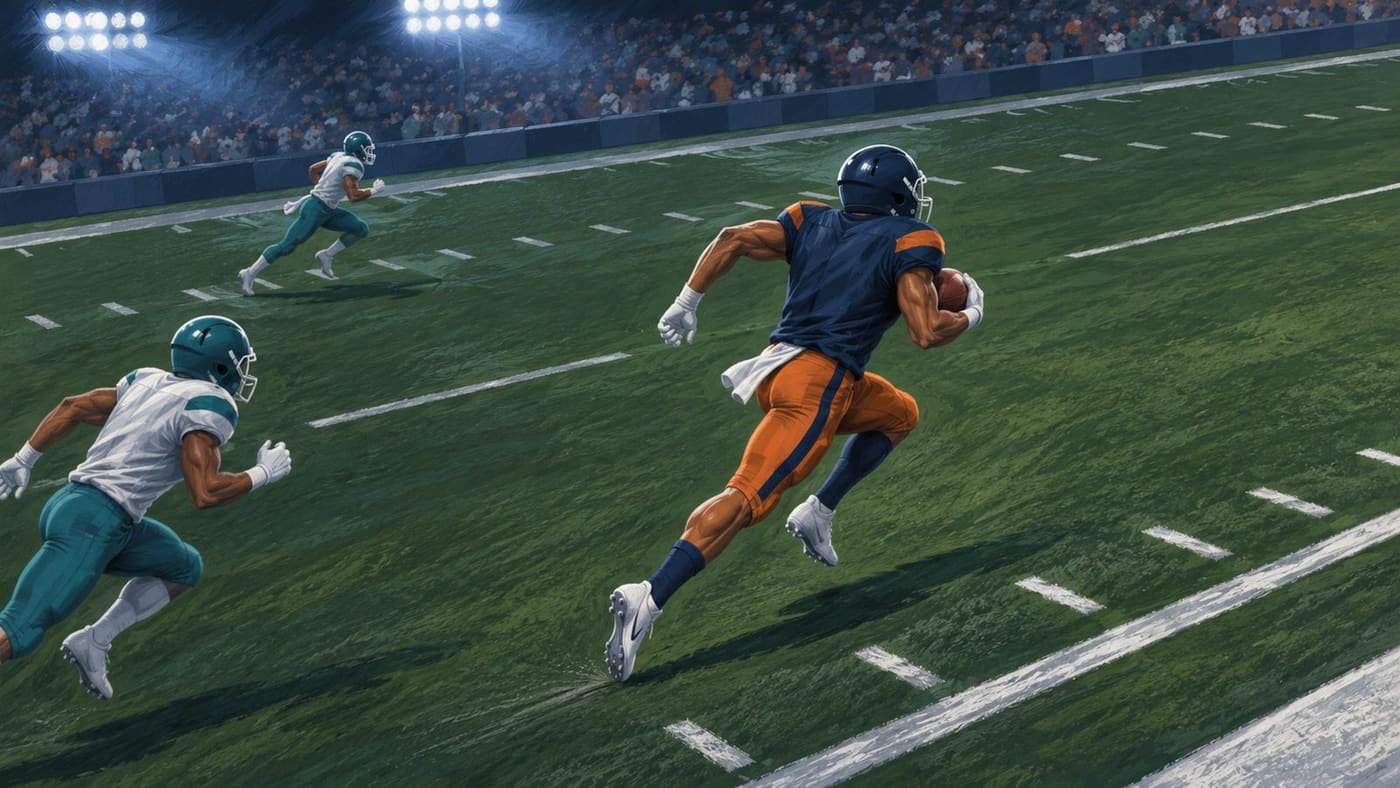
Seattle cut Chicago's lead to three in the fourth quarter on November 2. Cooper Kupp caught a touchdown, and the Seahawks converted for two points. The score was 20–17. At that moment, a field goal could tie the game if Seattle got the ball back. Instead, Chicago put together a six-play touchdown drive. By the next time the teams changed possessions, the margin was ten.
The Bears eventually won 34–17. The final margin makes the game look more settled than it was immediately after Seattle's two-point conversion. Chicago's first answer in the fourth quarter is the place to look if you want to understand how the margin grew. Its later touchdown finished a different job, converting a short field into the last points.
The score before Seattle made it a one-possession game
The Seahawks' official game centre records Chicago's opening touchdown as a one-yard pass from Caleb Williams to Luther Burden. The drive covered 80 yards in 17 plays and took eight minutes and 32 seconds. A short scoring pass ended a long possession. Looking only at the distance on the touchdown would hide most of the work Chicago did to get there.
Chicago led 13–3 before Sam Darnold found Jaxon Smith-Njigba for a 43-yard touchdown late in the second quarter. The kick failed, so the score at halftime was 13–9. Chicago widened the gap in the third quarter when D’Andre Swift scored from one yard after a ten-play drive. That made it 20–9. Those scoring sequences explain why Seattle's fourth-quarter touchdown and conversion brought the score to 20–17 rather than tying it.
What made Seattle's touchdown possible
The Bears' official recap traces Seattle's fourth-quarter possession to a fumble forced and recovered by DeMarcus Lawrence at Chicago's 25. That explains why the scoring drive covered only 25 yards. A touchdown drive that begins there asks a different question of the offense from one that begins deep in its own territory. Seattle still had to convert the opportunity.
Chicago appeared to end the threat when Cam Lewis intercepted a pass in the end zone. The play did not stand because Chicago was flagged for defensive holding. Seattle retained the opportunity and scored on Darnold's seven-yard pass to Kupp. Darnold then found Tory Horton for the two points. The play sequence matters here because a replay of the interception alone can look like evidence that Seattle lost possession. The accepted penalty changed what counted.
With 11:46 left, the score was 20–17. Seattle had reduced an eleven-point deficit to three on a short field. Chicago had not lost its lead, and the next possession was its chance to increase it before Seattle could get the ball again. The practical question was whether the Bears could keep moving once Seattle forced a difficult down.
A penalty changed the down without ending the drive
On that possession, Chicago faced third and four at Seattle's 39. The team recap says Swift appeared to be stopped for a loss, but the play clock had expired before the snap. The delay penalty moved Chicago back. The apparent tackle could not be treated as a completed third-down play. Chicago instead had a longer third down to play.
The next snap produced the largest gain of the drive. Williams found Kalif Raymond near the line of scrimmage, and Raymond gained 39 yards to the Seattle five. Swift ran in from there. Cairo Santos made the extra point. Chicago led 27–17 with 8:28 left.
Notice the size of the space between the catch and the end of the play. The gain is recorded against the pass, but the Bears' description says the ball was caught near the line. That is a reason to look beyond the quarterback's passing yards when reading the sequence. The play moved the offense from a difficult third down to a chance to score from five yards out. Without a complete angle, the record does not settle the contribution of every block or defender.
The two five-yard runs came from different situations
Chicago's second fourth-quarter touchdown also came on a five-yard run by Swift. The identical scoring distances conceal how differently Chicago got there. The first run finished a 56-yard possession. On the second, the Bears began six yards from the end zone. Putting both touchdowns under a single heading in a box score makes sense for counting points. It gives a poor account of how the chances were created.
Between the two drives, Austin Booker deflected a Darnold pass. James Lynch intercepted it and returned it 16 yards to Seattle's six. The Bears then took four plays to cover the six yards, according to the official scoring summary. Swift scored with 4:41 remaining. That takeaway mattered twice: it cut off the possession Seattle needed to answer the previous touchdown, and it gave Chicago a scoring chance that required very little movement downfield.
Field position puts the first Chicago drive in better perspective. Seattle's touchdown had come on a 25-yard possession after a takeaway, and Chicago's last touchdown took six yards after its own takeaway. The 56-yard drive in between was the only one of those three scoring possessions that asked an offense to move the ball from its own half of the field. That is one reason Raymond's gain deserves more attention than the run distance in the scoring summary alone suggests.
The clock made those seven points especially valuable
From Seattle's conversion to Chicago's next touchdown, 3:18 came off the game clock. That amount of time can feel small in isolation. In this case, it came out of the last 11:46 and left 8:28, while the required margin grew from three points to ten. Chicago increased both the work Seattle had to do and the urgency of doing it.
A way to read the sequence is to look at what an ordinary scoring drive could accomplish. At 20-17, a Seattle field goal could tie the game and a touchdown could put Seattle ahead. At 27-17, even a touchdown with a successful two-point conversion would still leave the Seahawks two points short. A field goal could be part of a comeback, but Seattle would still need to score again. That arithmetic describes the options at each score. Seattle still had to win the next possession on the field, and Chicago's interception prevented it from scoring on that opportunity.
Chicago's opening drive offers a contrast in clock use within the same game. The Bears had nearly an entire game ahead of them when they spent 8:32 reaching the end zone. The shorter fourth-quarter drive consumed a greater share of the time Seattle had left to respond. Its value came from getting points within that span, rather than from the duration alone. A long empty possession might still have left Seattle a chance to tie on one drive.
Which numbers help explain the result?
The official Chicago box score shows a 363-252 advantage for the Bears in net yards and a possession split of 35:03 to 24:57. Those are useful descriptions of the whole game. They cannot tell you when the game was closest, or how much of the remaining time one side had at a particular score. The clock and score beside each possession answer those questions.
Chicago gained more yardage overall, yet Seattle produced the longest of the two pivotal passing gains discussed here. Smith-Njigba's touchdown covered 43 yards, four more than Raymond's reception. The gains mattered in different ways. Smith-Njigba put points on the board late in the half. Raymond moved Chicago into a position where it could score on the next play after facing third and long. A scoring summary gives the first play its own line. A reader needs the drive sequence to see the second.
Swift's three rushing touchdowns accounted for three separate changes in the margin. His one-yard run in the third quarter made it 20-9 after the kick. The first five-yarder restored a double-digit lead once Seattle had cut it to three. The last turned the interception into seven more points with the kick. Those are three finishers by the same player. The setup for each run provides a better account of Chicago's offense than the sum of their distances.
Seattle's own postgame account records one third-down conversion in 11 opportunities and one red-zone touchdown in four trips. Those counts show how infrequently Seattle extended possessions on third down or finished trips near the goal line. The fumble recovery in the fourth quarter let Seattle begin close enough to score in three plays. On the next opportunity, the intercepted pass stopped the offense before it could narrow the score again. The two possessions illustrate why the short-field touchdown and the poor overall conversion figures can both be true.
What Seattle's blocked field goal adds to the picture
Earlier in the fourth quarter, Seattle had a chance to cut the lead from eleven to eight with a 33-yard field goal. Chicago's recap credits Booker with deflecting the attempt. A made kick would have changed the score to 20-12 at that point, leaving Seattle within a touchdown and a two-point conversion. Instead, the score stayed 20-9 until the fumble and the Kupp touchdown. The blocked attempt belongs in the account because the scoring summary only shows the plays that put points on the board.
Booker appears again on the interception that set up the last touchdown. The two deflections happened in different phases of the game and changed different things. On the field goal attempt, Seattle came away with zero points and Chicago kept its eleven-point margin. On the pass, the deflection gave Lynch an opportunity to take possession and improve the field position on the return. In each case another part of the sequence determines what the deflection was worth. The kick had to miss, and the tipped pass had to be secured before Chicago could take over.
That sequence also helps explain Seattle's need for the two-point attempt after Kupp scored. An extra point would have left the margin at four, requiring a touchdown to take the lead on a subsequent possession. The conversion made a field goal enough to tie. Chicago's response took that particular option off the table.
How to follow this game in the scoring log
Start with the scoring summary and find Kupp's touchdown. Read the conversion on the same entry before moving forward. If you count the touchdown and overlook the conversion, you get the wrong margin for the next drive. Then find the line for the first five-yard Swift touchdown and check the number of plays and yards beside it. The six-play, 56-yard entry is the drive that began with Chicago only three ahead. The four-play, six-yard entry belongs to the possession after Lynch's interception.
Then compare the scoring summary with the accounts of the plays in between. The official recap explains why the apparent third-down loss does not appear as a stop in the possession sequence. It also explains why the apparent end-zone interception does not appear as a Chicago takeaway. In both cases a penalty intervened, but it changed different things. Defensive holding left Seattle with the ball. Delay of game cost Chicago yardage and left the team with another third-down snap. Tracking who possessed the ball after the ruling makes the log easier to reconcile with a highlight clip.
Finally, check the scoring time before interpreting the final margin. The lead was three at 11:46, ten at 8:28 and seventeen at 4:41. The final score is accurate for the game that ended. Those three entries explain how Chicago got there. The first answer forced Seattle to find two scores in the remaining time. The interception took away its immediate chance to begin that response, and the last Swift run widened the margin again.
For another example of how a single sequence can shape a sporting result, see our guide to the relay baton exchange.
The possession that changed Seattle's task
The hinge of the game was the stretch from 20-17 to 27-17. Seattle had just created a situation where one score would matter immediately. Chicago then survived a longer third down, reached the five on Raymond's reception and finished with Swift. When Seattle got another chance with the ball, one score could no longer even the game. Lynch's interception and the touchdown that followed explain the last seven points. Chicago's answer on the previous drive explains why those points came with Seattle already chasing a double-digit deficit.