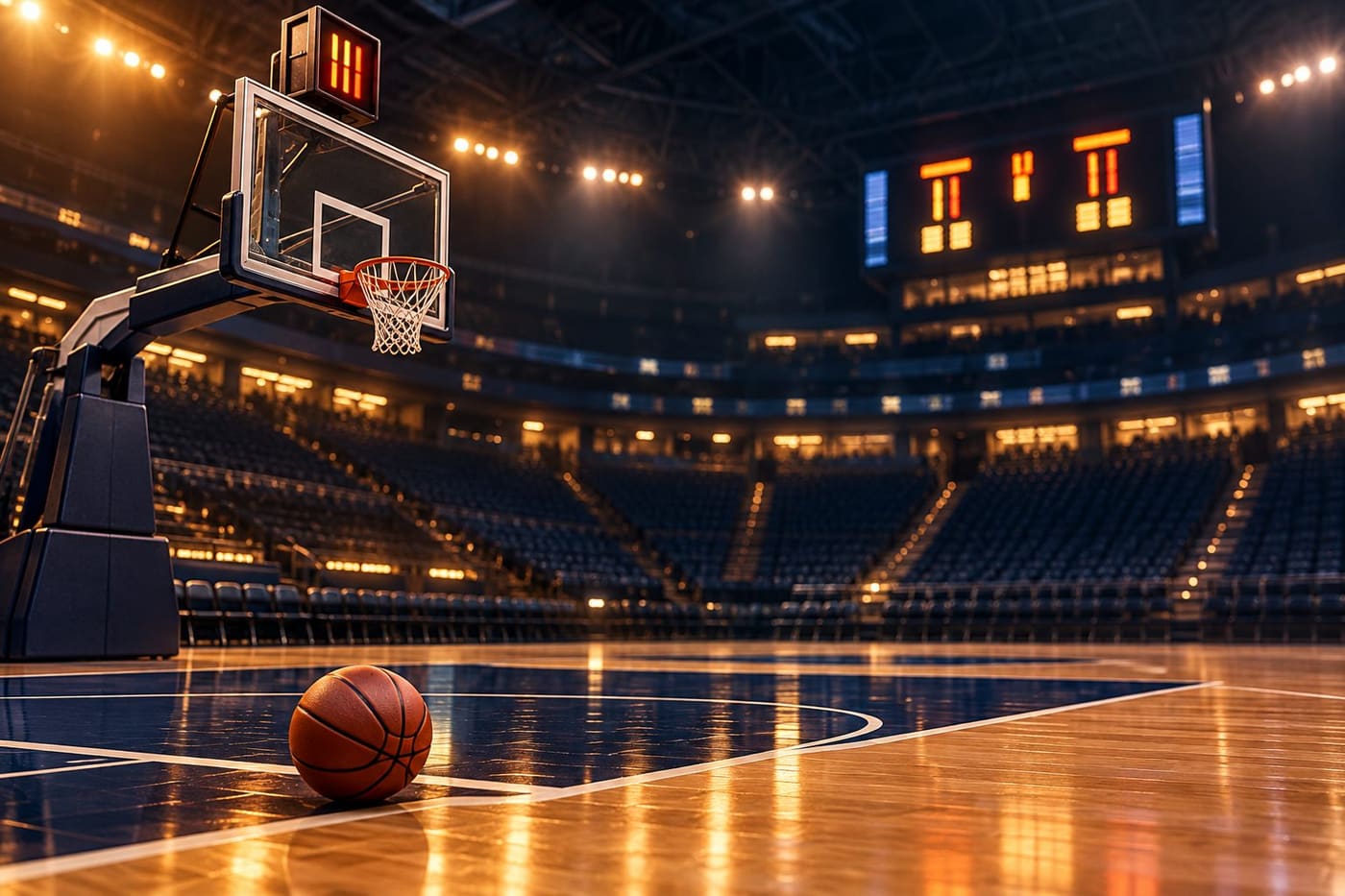
A basketball possession is nearly over. The number above the backboard falls, a player shoots and a horn sounds while the ball is still in the air. From the sofa, it is tempting to decide the play from the horn alone. A better way to follow it is to separate the shot clock from the game clock, then watch the sequence: when possession began, when the ball left the shooter's hand and what happened to the attempt.
This guide concerns the NBA rules available on 2 November 2026. Do not transfer every detail automatically to international basketball, college games or a local competition. The aim is to help a viewer follow ordinary possessions and recognize which question an official is resolving, rather than turn a television replay into an unofficial refereeing verdict.
Two clocks answer different questions
The game clock measures time remaining in the period. The shot clock limits the time available for the team in possession to attempt a field goal. A broadcast may display both beside the score, while an arena also has timing equipment near the basket. Read the label and context before assuming a changing number is the one relevant to the play.
The NBA's scoring and timing rule specifies twelve-minute regulation periods and five-minute overtime periods. Its shot-clock rule starts from twenty-four seconds unless a stated exception applies. Those figures have different jobs. A team can run short of shot-clock time well before the quarter ends. Conversely, the period can end while a possession still has apparent shot-clock time available.
Begin by identifying the team in possession
Watch who actually controls the ball, rather than treating every touch as a change of possession. The NBA definitions of team possession and control use those terms differently: a defensive deflection can end formal team control without ending team possession. For the shot clock, do not confuse a defender touching the ball with the defense gaining possession. A defensive deflection does not automatically give the attack a fresh clock.
Imagine a fictional possession with six seconds showing. A defender reaches toward a pass and tips it, but the attacking team collects the loose ball. The tip alone does not explain a reset to twenty-four. To understand the clock, look for whether the defense gained control or whether another event caused a stoppage or reset. This viewing habit is useful because a rapid sequence can look like a turnover at first and a retained possession on the replay.
The release matters more than the start of the shooting motion
For the relevant shot-clock test, the ball must leave the player's hand before the clock expires. Starting to jump, gathering the ball or beginning an arm movement is not the same event as releasing the ball. A dramatic shooting motion can begin in time while the actual release is too late.
When watching a replay, identify what evidence is visible. Can you see the ball and the shooter's hand together? Is the relevant timing display visible in the same view? If not, avoid claiming that a separate close-up proves the exact relationship. Slow motion helps identify events, but it does not fill a gap outside the frame. Follow the official decision when available and distinguish your impression of the replay from a verified timing judgment.
A missed attempt needs the relevant basket contact
Releasing the ball before expiration is not permission to throw it anywhere and continue the possession. The NBA rule also sets conditions for a qualifying attempt, including basket-ring contact. A missed shot that never touches the ring does not earn an ordinary offensive-rebound reset simply because someone called it a shot.
Keep a made basket separate from the simplified missed-shot examples in this guide; scoring rules also apply to a successful attempt. For a fictional missed shot, follow three moments: release, contact and the next possession. If the ball hits only the backboard, that is not the same thing as touching the ring. A viewer who follows that distinction can understand why a team might retrieve the ball but still face a shot-clock decision rather than a new attacking opportunity.
An offensive rebound is not always a full new twenty-four
Under the NBA's stated reset rule, the offensive team gaining possession after an unsuccessful field-goal attempt that contacts the ring receives fourteen seconds. That is different from an ordinary change of possession to the other team. Remember the event that caused the reset rather than learning a single number and applying it to every loose ball.
For a fictional sequence, the attack shoots with three seconds left, the ball touches the ring and the same team controls the rebound. The relevant new count is fourteen, not a continuation of the earlier three or an automatic twenty-four. That example assumes the ordinary sequence described and no additional event changing the situation. If a foul, violation or out-of-bounds decision occurs, return to the actual ruling and the appropriate reset provision instead of forcing the rebound example onto a different play.
Read a deflection out of bounds as a sequence
If a defender is the last to touch the ball before it goes out of bounds, the offense can retain the ball without receiving a new full possession count. The remaining time matters. A simple deflection is not the same as a defensive foul, and it should not be described as though every stoppage has an identical clock result.
A fictional attack has four seconds remaining when a pass is tipped out. Before the inbound, watch which team is awarded the ball and what the officials put on the clock. Then watch the restart. If the broadcast cuts to a replay and returns after the ball is already in play, acknowledge the missing part of the sequence. You may know the ruling without having seen the exact instant the timer began again.
Notice when the clock starts on an inbound
The NBA rule states that, on a throw-in, the shot clock starts when the ball is legally touched on the court by a player. That is a different event from the inbounder first holding the ball out of bounds. The time available to release a throw-in and the attacking shot-clock count should not be blended into one countdown.
As a viewing exercise, follow an ordinary inbound from the moment the official provides the ball through the first legal touch. Watch the timing display without trying to infer an infringement from the broadcast graphic alone. The graphic can be small, delayed in your perception or absent from the camera view. The important learning point is identifying the event that the rule uses, not asserting a precise fraction of a second from a casual home observation.
A horn during the ball's flight does not tell the whole story
A ball can leave the hand before expiration and remain in flight when the horn sounds. The sound by itself therefore does not establish that the release was late. The attempt and its outcome still need to be considered under the rules. For period-ending plays, the game-clock and scoring provisions also become important.
Separate what you heard from what you saw. “The horn sounded while the ball was in the air” describes an observation. “The shot was released too late” is a conclusion requiring timing evidence. This distinction makes commentary more accurate even before the official decision arrives. It also helps explain why a replay might focus on a hand and clock rather than on the dramatic moment when the ball reaches the basket.
End-of-period possessions require another check
The NBA shot-clock rule includes a provision for a change of possession when twenty-four seconds or less remain in a period, with specified fourteen-second reactivation situations. Do not assume that an absent or inactive shot-clock display means the timing system has failed. Check the period time and the event that just occurred.
For a fictional ordinary possession beginning with eighteen seconds on the game clock, the quarter can end before a full twenty-four-second count would expire. The game-clock deadline remains meaningful even if a separate shot-clock countdown is not operating in the usual way. This is a reason to look at both devices, not a shortcut for resolving every late-quarter exception. A rebound or another event can change which provision applies, so follow the actual sequence rather than relying only on the number eighteen.
Resets after fouls and violations need the actual ruling
This guide's rebound and deflection examples cover common situations, not the complete NBA reset table. The official rule distinguishes several events and can make frontcourt or backcourt location relevant. If you are unsure why the operator set a particular number, first identify what the referee called and where play will resume.
Do not reconstruct the rule from a commentator's quick phrase alone. “They keep the ball” describes possession after the stoppage but does not necessarily explain the time allowed. Pause and consult the relevant subsection if you want to understand a specific decision. An accurate explanation of one clearly identified event is more useful than a sweeping claim that all defensive contact produces fourteen seconds or that every change on the display proves an officiating error.
Practice with a short possession note
For an ordinary recorded sequence you are permitted to view, write four short entries: team controlling the ball, starting clock information, key event and next ruling or restart. Keep your observation separate from an interpretation you have not yet checked. This is a learning method, not an official scoresheet or replay-review procedure.
A fictional note could read: “Blue controls; six seconds shown; defender tips pass; Blue retains and prepares an inbound.” You can then add the actual restart time if the video clearly shows it. If it does not, write that the display was out of view. A small accurate gap is preferable to inventing a count. Over several possessions, this method helps you notice how possession, contact and stoppages interact without needing to memorize every provision at once.
Keep clock events separate from the box score
A final score or shooting percentage cannot reconstruct every detail of a possession. A successful late-clock basket and an early-clock basket can contribute the same points while coming from very different sequences. Likewise, the timing of a turnover may matter to how a possession felt without changing the simple fact that it ended without points.
Use a box score for the information it actually records and a reliable play sequence or video for timing details. Our analysis of Trier's fourth-quarter shooting at Vechta illustrates the separate task of reading basketball performance numbers. That game belongs to a different competition; linking the analysis does not imply that every NBA timing provision governs it. Always identify the competition before transferring a rule explanation.
Avoid turning the rule into a universal tactical instruction
A short clock can make an attack urgent, but knowing the legal deadline does not establish the best play in every situation. Available players, defensive positioning, the score and the time in the game all affect choices. This article explains timing, not a guaranteed method for producing a good shot or winning a possession.
When watching, ask what options were visible and what the clock allowed. Do not assume that a player who released quickly necessarily made a mistake, or that using the entire count was automatically better. Those are tactical judgments requiring more context. The rules create boundaries within which decisions occur; they do not assign a single correct basketball decision to every number on a display.
Conclusion: follow events before judging the countdown
To understand an NBA shot-clock sequence, identify the team in possession, distinguish the two clocks and watch the release and relevant basket contact. Then connect any reset to the event that caused it. A touch, a rebound and a change of possession do not all mean the same thing.
You do not need to make an instant officiating verdict to enjoy the game more intelligently. A clear observation, the applicable rule and the official decision give a better foundation than a horn heard in isolation. Start with one ordinary possession and follow it from control to restart. The changing numbers become easier to understand when they remain connected to what happened on the court.
Sources and research note
Research checked on 2 November 2026 using the NBA's Rule 7 on the shot clock, Rule 5 on scoring and timing, and Rule 4 definitions. This is a selected viewer explanation, not a complete rulebook, authorized refereeing manual or account of a particular match. All color-team and countdown examples are fictional. NBA provisions are not presented as universal rules for other competitions. The image is an original conceptual illustration of basketball timing equipment, not an actual game, official diagram or verified scoreboard.