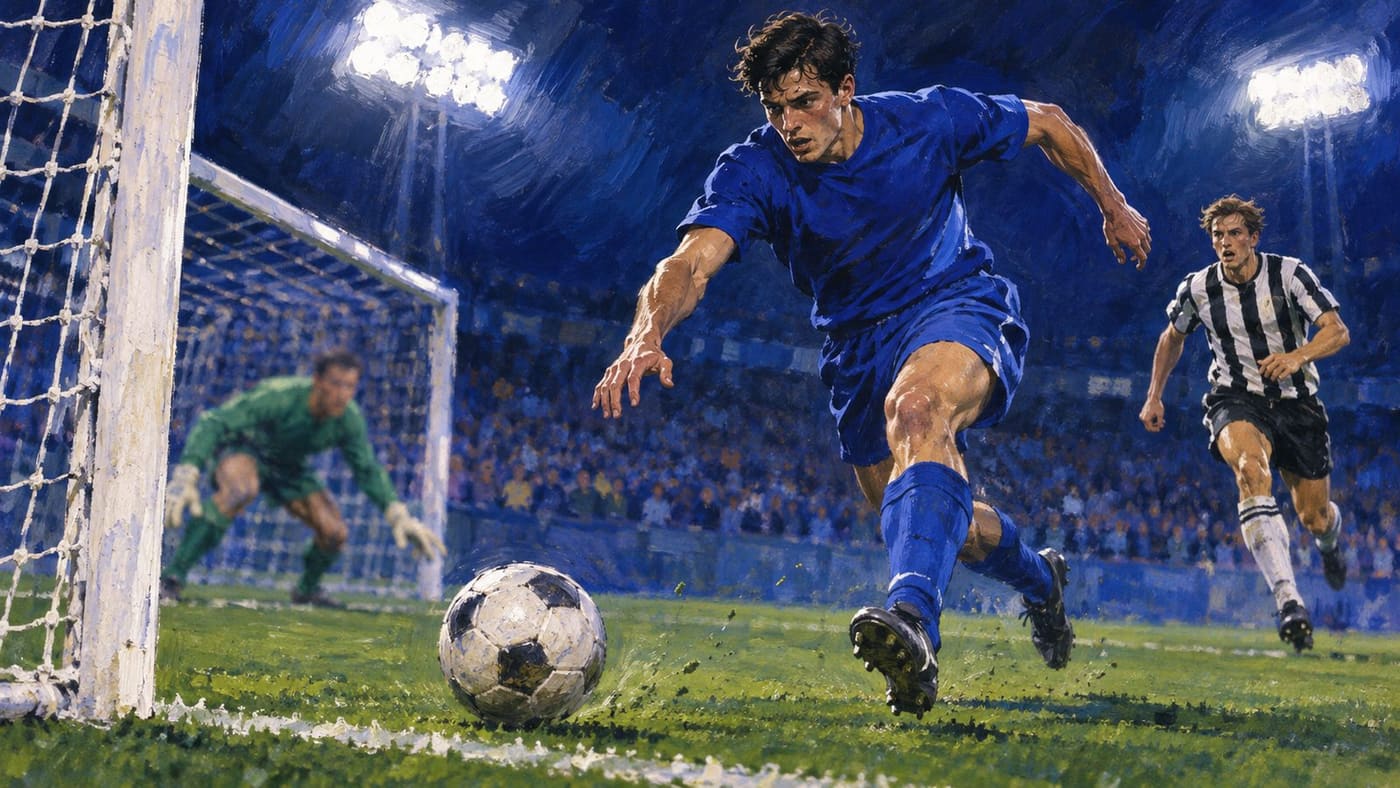
Everton beat Newcastle United 1–0 at St James’ Park on November 2. Thierno Barry scored shortly after half-time when Lukáš Horníček could not hold Tyrique George’s low shot. Everton took three Premier League points and moved up to seventh at the end of the match, according to the Premier League’s match report. Newcastle missed a chance to move into the top half.
The result came days after another Everton win against the same opponents. The earlier fixture was a 3–1 Carabao Cup tie at Everton’s ground. This time the match was away, the score was narrower and the points counted in the league. It was possible to see both scorelines in a search for the same pair of teams. The date, ground and competition tell you which result changed the standings.
Everton needed a second action to score
A shot can create a chance for another player even when the first attempt stays out. That is what happened just after the break. George took a low shot, the ball escaped Horníček, and Barry reached it close to goal. The Everton match report puts the finish four minutes after the restart. The scorer and the player whose shot produced the loose ball belong in the same account of how the goal happened.
The finishing distance tells you why the chance was inviting once the ball reached Barry. It does little to explain how it arrived. Compare his opportunity before the break. Everton’s report describes Jarrad Branthwaite heading down a Kiernan Dewsbury-Hall free kick, with Barry unable to make a clean connection from farther out. Both passages put him near goal, but the ball came to him in different ways. The second ended in a simpler finish after the goalkeeper’s attempt to stop George’s shot.
A match report establishes the order of those events. Assigning responsibility for the space Barry occupied would require seeing the positions and movements before George shot. The goal itself gives readers a clear sequence they can follow without guessing what a defender saw or how either side had been instructed to respond.
Why the score was still level at half-time
The Newcastle match report recounts several openings for the home side. Harvey Barnes sent deliveries across the area, William Osula’s cross took a deflection that Jordan Pickford had to adjust to save, and James Tarkowski blocked Joelinton’s effort on the turn. The resulting corner ended in a Dan Burn header off target. Those passages were different tests for Everton. A defender could block the shot from Joelinton. The deflection on Osula’s cross required a reaction from the goalkeeper.
Everton also had chances to take the lead before the interval. Merlin Röhl sent an effort over, Barry did not connect cleanly with his chance and Harrison Armstrong missed after Dewsbury-Hall found him late in the half. Everton’s account describes a cross from Dewsbury-Hall narrowly escaping Jake O’Brien at the back post around the same time. The two reports give different emphasis to those early passages. Everton highlights its opportunities. Newcastle gives more space to Barnes and the attempts that followed from his deliveries. Both accounts have the match level at the break.
That distinction matters when reading the scoreline. A first half can end without a goal because chances go wide, defenders get in the way or a goalkeeper adjusts in time. A reader who starts with the winner sees the payoff from one attack. A reader who follows the earlier attempts also sees how many promising situations had ended before anybody changed the score.
Newcastle had chances to change the result after Barry scored
Everton still had to protect the lead. Newcastle’s account describes Fabian Schär trying a half-volley from range and Barnes sending in a ball that struck Vitali Mykolenko before Anthony Elanga was unable to force it in. Later, Osula sent a header wide. Those were chances for an equaliser, and Everton also had opportunities for a second goal. Horníček had to deal with two Branthwaite headers and a Dewsbury-Hall effort, according to the home club’s report.
The late Yoane Wissa attempts give a clearer sense of the final margin. Pickford dealt with a drive and subsequently used his feet to stop a shot on the turn. At 1–0, conceding either would have put the teams level unless another goal followed. The importance of the second save comes from that match situation. A shot that might be remembered as one of several routine entries at a larger margin was here part of the difference between retaining the lead and facing a level score late on.
Jacob Ramsey was sent off after two bookings in stoppage time. That belongs at the end of the chronology. The decisive goal had already been scored and the major late saves came before the dismissal. Treating the red card as an explanation for Barry’s goal would reverse the order of the match.
How the two matches answer different questions
The cup tie identifies the side that went through. The league fixture adds points to the season table. Everton's 3–1 cup win was useful context for the rematch because the coaching staffs had just seen many of the same players face one another. It had no bearing on how many points Everton could earn from the second game. The second fixture started at 0–0 and carried the ordinary league stakes.
The teams also made changes. According to the Newcastle report, Joelinton and Elanga came into the home starting side after the cup match. Everton's account points to Branthwaite's return in central defence and Armstrong's inclusion in midfield. Those changes are worth checking when comparing chances across the two games. The names of the clubs stayed the same while some of the players involved in creating or defending those chances changed.
The venues are a second way to distinguish the meetings. Everton hosted the cup tie, while Newcastle hosted the league match at St James' Park. In a search result that lists only two team names and a score, the venue and date give you a quick check against using the wrong result. The competition field tells you whether to look for a bracket or a table afterwards.
How a restart can change the next phase of a match
The opening minutes after half-time matter here because Everton turned the first goal into a lead it could defend for much of the second half. At the break, both teams could still win with one unanswered goal. After Barry's finish, Newcastle needed a goal to level the game and another to lead. Everton could still try to score again, as the later saves by Horníček show, while Newcastle had a reason to take more chances as time ran down.
The timing is a firmer observation than an explanation based on a half-time team talk. The reports establish when the goal came and how the ball reached Barry. They do not establish that the manager ordered a particular adjustment at the interval. To test that idea, a reader would need either an account from the team or a longer view of how Everton moved the ball before and after the break. In this match, the visible chain from shot to rebound to finish is enough to explain the scoreboard change.
What seventh place meant at the final whistle
A league table describes the results counted up to a particular point. Everton's report and the league's summary both put the club seventh after the 1–0 win. That is the position associated with this fixture at the time of reporting. As teams play later fixtures, the table can move while this result stays fixed.
It helps to separate points from position. Barry's goal and the clean sheet gave Everton three points rather than the one they would have received from a draw. The position depends on the other clubs' totals and the competition's tie-breaking rules. A standings page consulted on a later date can therefore display a different position even though it lists the same match result. Newcastle's report makes the parallel point from the home side's perspective by noting that the club missed a chance to climb into the top half.
The small margin also tells you how close the points allocation remained to changing. A Newcastle equaliser with no subsequent goal would have reduced Everton's return to one point and given Newcastle one. An Everton second would have required Newcastle to score twice to draw. Neither happened. The 1–0 score preserved the value of Pickford's saves and Horníček's stops in different ways. The former kept Everton ahead and the latter kept a draw within one Newcastle goal.
Reading the chances by what each player had to do
Consider three moments involving the Everton goalkeeper. Osula's deflected cross in the first half changed direction before it reached him. Barnes's delivery that looped after a touch from Branthwaite called for Pickford to push the ball over. Wissa's late attempt on the turn ended with a save using his feet. A list that simply counts saves misses how differently the ball reached the goalkeeper in those passages. The accounts give enough detail to tell one test from another.
At the other end, the Newcastle goalkeeper's role also changed from one incident to the next. George's shot left a loose ball for Barry, while the efforts by Branthwaite and Dewsbury-Hall required further stops after Everton had scored. Each successful intervention after the goal left Newcastle in a game it could still draw with a single finish. That is a useful way to read the losing goalkeeper's later contributions even when the first goal dominates the recap.
The same approach applies to defending before a shot reaches goal. Tarkowski's block on Joelinton removed the need for Pickford to make the first intervention on that attempt. The corner then gave Newcastle another way to attack. Keeping those actions separate makes the sequence intelligible. A shot, a block and a resulting corner can all belong to one spell of pressure without each being a clear chance in its own right.
A way to reconcile the match reports
Begin with the facts both reports agree on. The match was level at the interval, Barry scored soon after it, and Newcastle did not equalise. Then follow one passage at a time. Use Everton's report for the attack through George and Barry. Use Newcastle's report for the late Wissa attempts and Ramsey's dismissal. Check the league report for the result and its table consequence. That order helps distinguish what happened on the pitch from what changed in the standings.
When the reports use different language, pay attention to whether the difference concerns a fact or an assessment. Everton gives its first-half performance a more favourable description. Newcastle spends more time on its own openings. The score at the interval is the same in both accounts. It is possible to recognise the different emphasis without treating it as a disagreement over the score or the goal.
Readers can use the same check when a search engine returns a report written during the game. An update may say Everton lead 1–0 and omit the chances that followed. The completed report says Everton won 1–0 and includes those later passages. A headline containing the same numbers can therefore describe either a temporary score or the final result. Use a final report when the question is how many points were awarded.
For another example of how a single sequence can shape a sporting result, see our guide to the relay baton exchange.
The goal and the saves explain the margin
Everton's winning move took two efforts. George's initial shot created a ball Barry could finish from close range. Newcastle then had time to respond and came close enough for Pickford's late saves to matter. Horníček's later stops kept the lead narrow but Newcastle could not turn that narrow margin into a point.
The consequence was three points for Everton from the league match and seventh place when the result was reported. The earlier cup win explains why the two teams had faced each other so recently. The loose ball after George's shot and the chances that followed explain why this meeting ended with a different score and a different consequence.