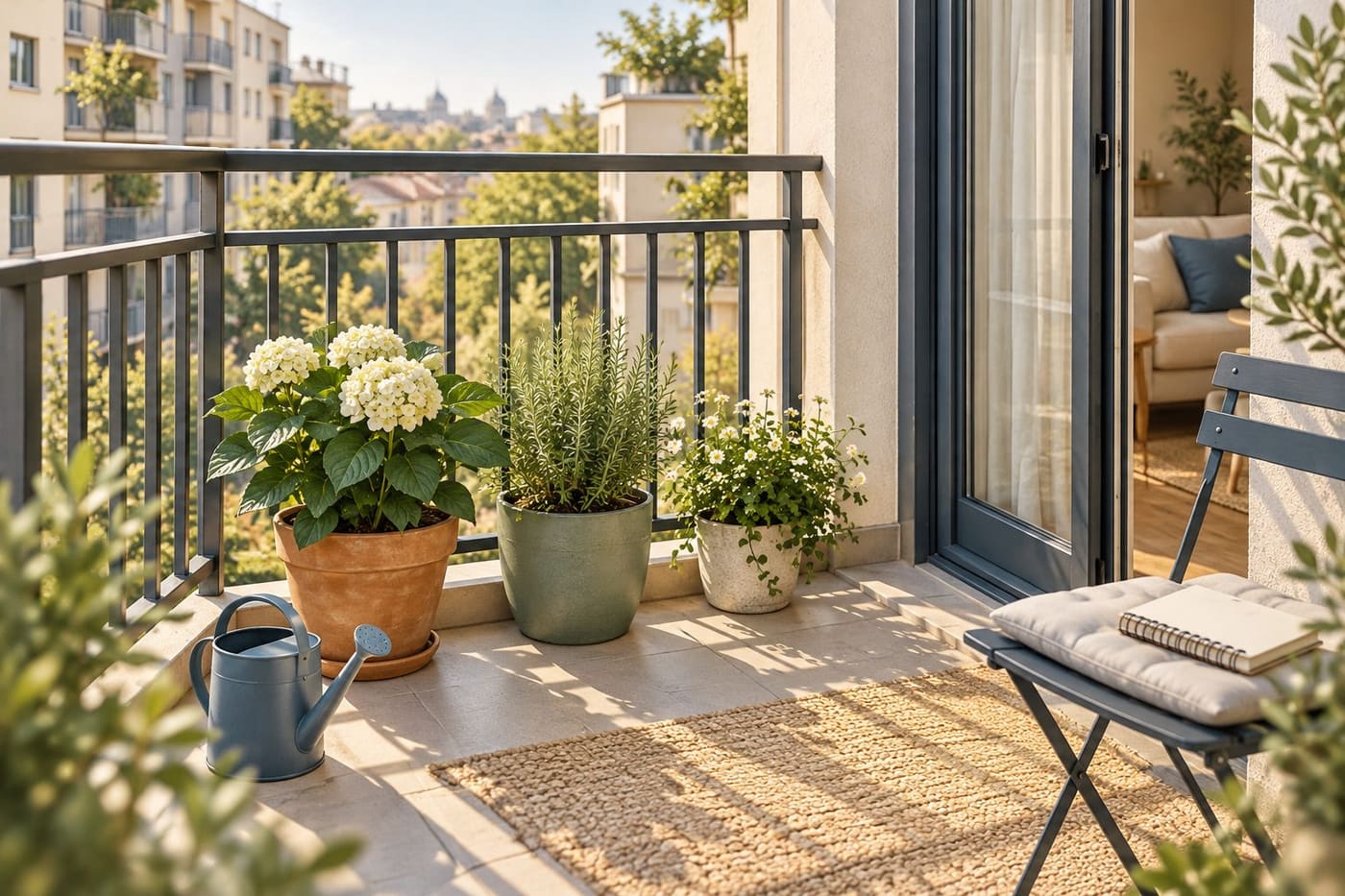
A balcony can look like empty space waiting for plants, but it already has a pattern of sun, shade, wind, movement and everyday use. The most useful first gardening purchase may be no purchase at all. Spend a little time noticing the space, checking what the building permits and deciding what you can realistically care for. A small, workable arrangement is easier to enjoy than a collection chosen for a photograph and squeezed around the door afterwards.
This is a planning guide for an existing balcony, not instructions for constructing a roof garden or assessing a structure. The aim is to help you prepare a modest container garden suited to your actual conditions. Plant choices and seasonal timing vary by location, so use the plan to ask better questions of reliable local advice rather than treating a general list as a guarantee.
Establish what the space is allowed to hold
Before bringing in filled containers, confirm relevant building rules, weight limits and any restrictions with the responsible building manager or appropriately qualified professional. The RHS roof and balcony guidance, checked on 2 November 2026, identifies structural capacity and building restrictions as important practical considerations. Pots, wet growing medium, water, people and furniture all contribute to the real situation.
Do not estimate structural safety from how solid the floor feels or from a similar balcony in an online picture. A general gardening article cannot determine your balcony's capacity, safe fixing points or local requirements. If that information is unavailable, resolve it before adding loads or attachments. Keep the first planning stage on paper. Choosing a smaller-looking pot does not by itself establish that the proposed overall arrangement is suitable for the building.
Keep the door and necessary access usable
Draw the balcony as it is, including the door's opening arc, any drainage points and the route you normally use. Note where you stand to open a window, reach a service point or move furniture. A plant arrangement should work around those activities rather than require you to lift pots every time the door opens.
The New York Botanical Garden's balcony-garden guide specifically raises the need to keep a fire escape clear and avoid damaging a waterproofing membrane. Follow the requirements that apply to your building. Do not drill, fasten or cover a surface merely because a decoration would fit there. An attractive plan that obstructs necessary access is not a finished plan. Put the usable route on the sketch before choosing the decorative arrangement around it.
Observe sunlight rather than guessing from a direction
Look at the balcony at several times of day when practical. Record which parts receive direct sun, which remain shaded and whether an overhang or neighboring building changes the pattern. A compass direction is useful context, but it does not show every obstruction or seasonal change in your particular space.
Garden Organic's balcony-growing advice recommends noticing where sun and shadows fall. Turn that into a short observation note. For example, a fictional balcony might receive direct light near the railing in the morning while its rear corner stays shaded. That is more helpful when choosing plants than calling the whole balcony sunny. Do not assign exact sunlight hours from a single quick look, and remember that one week's observations do not describe every season.
Notice wind and shelter from inside the safe space
Watch how ordinary conditions affect the balcony: does a light chair move, do existing leaves bend strongly, or does the open door create a draft? You are identifying questions, not conducting a structural or weather test. Do not place objects on an edge to see whether they blow away, lean over a railing or experiment during dangerous conditions.
Wind exposure is one of the limitations discussed in RHS balcony guidance. If the site needs screening, fittings or other alterations, confirm that the building permits an appropriate design and installation. A screen can create new loads and should not be treated as a harmless sheet added wherever convenient. For the first plant arrangement, use reliable local advice about plants suited to the conditions already present. A sheltered-looking corner may also be the darkest part, so keep both observations together.
Decide what you want the garden to do
Choose a small purpose. You might want a view of flowers from the kitchen, a few suitable herbs or a place to sit beside foliage. Those goals lead to different arrangements and levels of care. Trying to satisfy every garden idea at once can fill a small balcony before you have learned what grows well there.
Write one sentence describing the first version. A fictional beginner might choose: “Three manageable containers that leave the chair and door usable.” That sentence creates a useful limit when an appealing extra plant appears. You can expand later if the existing arrangement works and remains suitable for the building. A clear purpose also helps avoid buying a plant because its display label promises a spectacular mature size that your balcony cannot accommodate in practice.
Check mature size and local suitability
Read the plant's full growing requirements, including its eventual size and the conditions it needs. The small specimen in a shop is not necessarily the plant's long-term form. Ask whether the container, available space and local seasonal conditions will still suit it as it develops.
Avoid importing a plant list from another climate without checking. Advice written for a UK spring does not automatically become a November planting calendar in Bangladesh or an Australian city. Even within one city, exposure and shelter differ. Use the correct plant identity when seeking local guidance, because common names can be ambiguous. For a first arrangement, select a manageable number of plants whose requirements you can understand and meet. This article does not recommend a universal species list or promise a harvest from a particular exposure.
Choose containers as working equipment
A container has practical jobs: holding an appropriate root environment, allowing suitable drainage and fitting the approved space. Its appearance matters, but it is only one part of the choice. The RHS container-growing guide emphasizes drainage and explains that materials and dimensions affect how containers behave.
Check the actual product and the needs of the plant before buying. Does it have suitable drainage? Can you move or maintain it appropriately when filled? Will you be able to reach it without climbing or leaning? Keep containers safely within the space and follow building requirements for placement and security. Do not assume that a decorative outer pot provides the same drainage as an inner growing pot. Make the arrangement understandable enough that someone helping with care can see how it works.
Distinguish growing medium from whatever soil is available
Use guidance appropriate to the plant and container when choosing a growing medium. The RHS distinguishes potting composts from garden compost used as a soil improver. A bag labeled compost can therefore refer to different materials and uses; read its intended purpose rather than relying on the single word.
This is a good moment to keep the project modest. Buy the amount needed for the approved first arrangement, not a large supply that creates a storage problem on the balcony. Consider how bags will be carried, where they will be opened and how loose material will be contained during planting. A small tray and a planned cleanup can make the activity easier to manage. Do not improvise a growing-medium recipe from unrelated online tips if you have not checked that it suits the plant and situation.
Plan the care route as well as the display
Imagine carrying a small watering container from its source to each pot. Can you reach the growing medium comfortably? Where will excess water go? Could it affect a neighbor, a wall or a walkway? Check the building's drainage and water-use requirements instead of letting runoff become someone else's problem.
Container plants need ongoing attention, as the RHS container guide explains. Make a routine for checking their condition, while following plant-specific guidance rather than applying an identical quantity of water to every pot. Our guide to houseplant watering describes the related habit of checking a plant's actual conditions. Outdoor containers have different exposure and weather, so transfer the observation habit rather than copying an indoor schedule unchanged.
Give each plant a simple record
Keep the plant's identity, purchase or planting date and care reference in a notebook or a small digital note. Add its position on the balcony sketch. If you later move it, record the change. This turns a vague memory of what happened into something you can review when the plant's condition changes.
A fictional note might say that a container moved from the shaded rear corner to the brighter side on a particular date, followed by an observation a week later. Describe what you see rather than immediately assigning a cause. A yellowing leaf after a move does not by itself establish exactly why it changed. Use reliable plant-specific advice when diagnosing a problem, and avoid applying several treatments at once merely because each was suggested somewhere online.
Start with a trial arrangement
Before buying the full set, use the sketch to test how the space will function. You can mark a proposed footprint on paper and compare it with actual container dimensions. Do not use this as a way to test a balcony's load capacity; that question must already have been resolved through the appropriate information or professional advice.
After establishing the first permitted arrangement, live with it long enough to notice practical issues. Perhaps the chair needs more space, or a pot is awkward to reach without moving another one. Adjust the layout within the approved boundaries before adding more plants. A trial is successful when it reveals what needs changing early. It is not a failure because the second arrangement differs from the first attractive drawing.
Include holidays, busy weeks and seasonal changes
Think about a normal week and a difficult one. Who can check the plants when you are away? Can they reach everything and understand the care instructions? A plan that depends on one person being available every day may need a simpler first version or an agreed alternative arrangement.
Also consider what will happen when local weather changes. Your first observations may have been made during a mild period. Ask a reliable local source how the chosen plants and containers should be managed through the relevant hot, wet, cold or windy season. Do not assume that equipment sold as self-watering removes every need for checking. If you choose any additional system, understand its actual operation and limits before relying on it during an absence.
Keep the view from indoors in mind
A balcony garden is often seen from a room more frequently than it is visited. Sit where you normally sit and look at the proposed arrangement. A few well-positioned plants may create a better view than many pots hidden below a window or crowded into an inaccessible corner.
This is a design preference, not a botanical rule. You can experiment with the visual arrangement on paper without adding costly furniture or fixtures. Notice the space between containers as well as the plants themselves. That space may preserve the route, make maintenance easier and allow a plant's shape to be seen. A tidy first arrangement does not need to imitate a magazine balcony filled from floor to ceiling. It should suit the way you actually use the room and outdoor space.
Review before adding the next pot
After the first plants have settled into your routine, review what you learned. Which positions worked? Which tasks were easy to keep up with? Did runoff, access or storage create an issue? Check any proposed addition against the same building and care constraints rather than assuming the original approval covers unlimited expansion.
Choose one improvement at a time. That might be a clearer care note, a better position within the permitted layout or replacing an unsuitable plant after obtaining appropriate advice. Expansion is only one possible improvement. Keeping the same modest number of containers and caring for them well may be the result you wanted all along. The useful measure is whether the garden remains manageable and enjoyable, not whether every visible patch of floor contains a plant.
Conclusion: let the place guide the planting
A balcony garden begins with understanding an existing space. Confirm its permitted use and capacity, observe the conditions, protect necessary access and choose a small purpose. Then select suitable plants and containers with a care routine you can actually maintain.
The first version can be simple. A few appropriate containers, a clear route and a useful record give you something to learn from without committing the whole balcony to an untested idea. Good planning does not guarantee that every plant will thrive. It helps you recognize the conditions, make informed adjustments and keep the garden suited to both the building and your everyday life.
Sources and research note
Research checked on 2 November 2026 using RHS roof and balcony considerations, RHS container-growing guidance, Garden Organic's balcony-growing overview, and the New York Botanical Garden's balcony-garden guide. Local rules and climate require local checking; no structural capacity, plant-health diagnosis or yield guarantee is supplied. All sample balconies and notes are fictional. The image is an original conceptual illustration, not a certified safe design for a particular building.