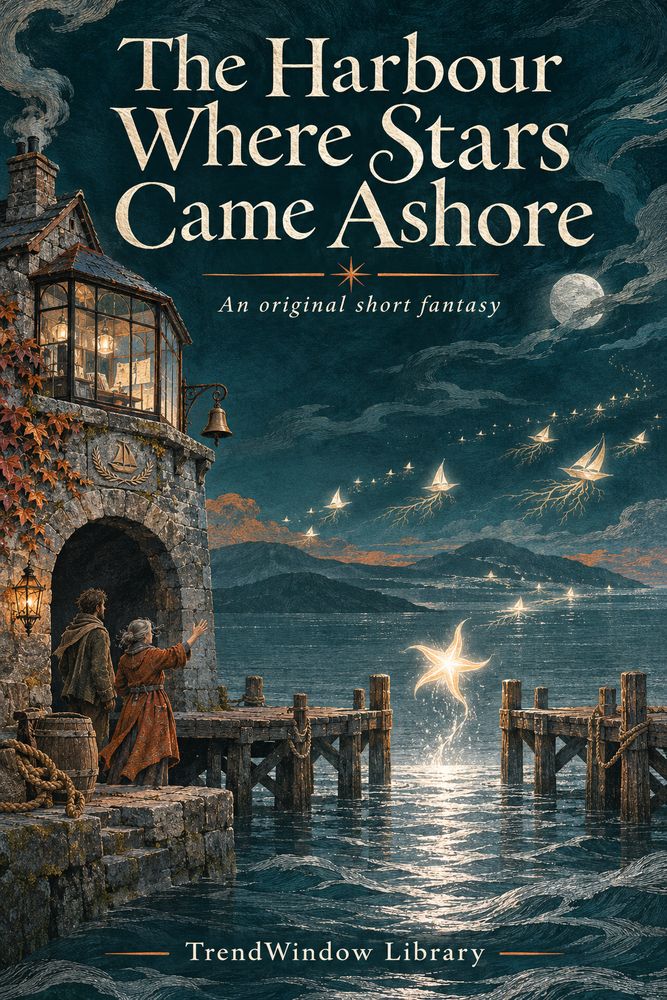
Corren was planing a seat when she reached his shed. He let her finish describing the pictures before he put down the plane.
"It wants the launchway?"
"I think so."
"You think, or you've decided?"
That was the voice she disliked: not angry, merely unwilling to help her jump over a missing answer.
She took him to the glass room. Corren laid his palm beside the star. The ceiling filled with moving lights, then the water under the arch. He asked whether a boat would do. The star showed a little vessel with bright sides. For a moment Tessa felt relief. Then the picture continued: the vessel stayed on the sea while the lights went overhead. Something inside it knocked against the boards.
"Not a boat," Corren said.
Below them, the pier divided the water into thin black lanes. They went down with a lamp and found the old curved launching cradle, half buried in stones. It was wide enough for the star. Beyond it stood three of the pier's supports.
Corren knelt to look along the cradle.
"We'd have to open the middle of the pier."
"I paid for those supports."
"So did I. Some of the bill is still in my drawer."
She looked at him. He wiped grit from a wooden roller and did not look back.
Tessa had kept the star comfortable. She had argued for fresh seawater when the councillors thought any water would do. She had slept beside it during a week of thin, shivering light. Yet she had never asked whether comfort meant it wanted to remain.
"I'll take the bill," she said.
"That won't make it cheaper to take the pier apart."
"No. But I owe it."
He stood, knees cracking. They measured the gap together, each holding an end of the cord. It was their first shared job in nearly two years.