BOOK LIBRARY · Complete books · Purchases disabled
TrendWindow

← Book Library · Complete book

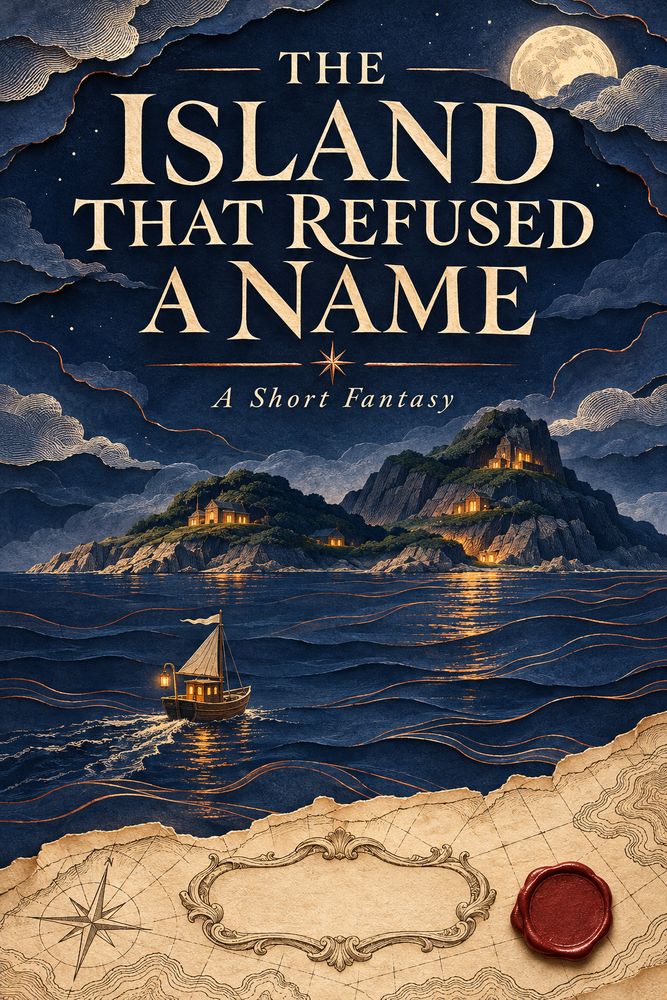
Front cover of The Island That Refused a Name

Fantasy & Science Fiction

The Island That Refused a Name

By TrendWindow Library

Sent to name an island, surveyor Iona discovers that an official place-name can take a stranger’s memory. With local boat repairer Sera and trader Pell, she must find a way to describe the coast without claiming it. A complete eight-chapter fantasy about responsibility, trade and the limits of repair.

Read this complete edition, including its ending and notes. No purchase is required.

About this book

A complete short fantasy. The island, institutions and magical rules are invented; this is not a description of any real community or navigation system.

Original complete short fantasy prepared with AI assistance. All characters, places, institutions and magical rules are invented; this is not real navigation guidance. Translation meaning reviewed with AI, without independent native-language certification. Not a full-length novel.

1. A blank space worth money

Iona arrived with thirty sheets of waterproof paper and a commission that required only one word.

The word would be a name. The Survey Office had left a pale gap between the western shoals for seventy years, and the Shipping Council now wanted that gap filled. Ships were already stopping there for fresh water. A named island could have a scheduled landing, a warehouse and regular cargo accounts. Iona's fee would pay the final instalment on her father's workshop.

From the boat, the island looked ordinary: two dark ridges, a harbour bent like a finger, laundry above a row of low houses. Its strangeness began at the landing. There was no sign.

“What do I call this place?” Iona asked the woman taking the mooring rope.

“You can call to us,” the woman said. “We answer.”

Her own name was Sera. She repaired boats and had agreed to show Iona the coast. She accepted the survey fee in advance and gave a receipt. The island was not beyond paperwork.

When Iona unfolded the official charter, Sera touched the empty box at its top.

“Measure what you need. Don't put a name under that seal.”

“Why?”

“Because it will take something you haven't paid for.”

Iona had heard warnings used to protect smuggling routes and private wells. She promised not to name the island before speaking to its assembly. She did not ask whether smaller places came under the same warning. Later, she would remember the omission as clearly as a spoken lie.

2. The first mark

They walked east to a narrow inlet where cargo boats could shelter. Iona measured the channel from the survey boat and recorded her observations. At the top of a separate official sheet she wrote Needle Cove. It was a convenient name, drawn from the sharp rock above the water. She pressed the Survey Office seal beside it.

Across the inlet, a man carrying a basket stopped in the path. He looked into the basket, then towards his house, then at Sera.

“What am I taking to my sister?” he asked.

“The wedding cups,” she answered.

He lifted one of the painted cups as if it belonged to a stranger.

“I have a sister?”

Sera ran to him. Iona followed with the sealed sheet still wet in her hand. The man, Oren, could remember making the cups. He remembered the path, the house and the sharp rock. But the person he had made them for had disappeared from his memory.

Sera took Iona's paper and held it above the water. The name remained perfectly clear.

“An outsider's new place-name, fixed by an official seal,” she said. “That is what it takes. A memory from someone on the island. We cannot choose whose.”

Iona tried to rub the ink away. Nothing happened to Oren.

“Does destroying it help?”

“The paper is not where the cost stays.”

They took him home. His sister sat beside him for the rest of the afternoon, explaining who she was without insisting that explanation was the same as remembering.
3. The room of descriptions

The assembly met in a room above the net store. Iona expected shouting. Instead, a woman placed three objects on the table: a child's shoe, a spoon with a bent stem and a small painting of a red door.

“These belonged to people who lost memories at earlier surveys,” she said. “We keep records of what happened. Records help us live with a loss. They don't reverse it.”

The islanders used names for people. They used descriptions for places: the well beside the fig tree, the path above the south beach. Ordinary conversation, a private sketch or a measurement did not trigger the loss. The danger came when an outside authority fixed a new place-name with its seal. Removing the ink afterwards did not undo it.

Iona asked if an old name could be reused. Nobody knew of a safe one that an outside office would accept. They would not test a guess on another person's mind.

A trader named Pell stood up. He had waited three months for replacement parts for his mill.

“We need the ships,” he said. “Our children leave because things don't arrive. Refusing every chart isn't a plan.”

“And buying a warehouse with somebody else's memory isn't a price we can agree for them,” Sera replied.

Iona put her unused sheets on the table. She explained that her commission required one official island name, but no law of her craft required names for every rock or landing. Bearings, distances and descriptions could carry information. Whether the Council would accept such a chart was another question.

The assembly asked her to answer that question before adding another sealed word.

4. The man from the Council

Councillor Venn arrived two days later on a cargo cutter with clean brass rails. He listened to Iona's account of Oren and looked at the damaged sheet.

“A distressing coincidence,” he said.

Iona had expected disbelief. She had not expected how relieved she would feel if she could share it. Coincidence would return her to a world where a mistake needed only an amended chart.

Venn offered a demonstration. He would name an unused headland. If somebody forgot something, they would know the story was true.

“The headland may be unused,” Iona said. “The person won't be.”

He reminded her that the commission specified a name. Without it, he could refuse her fee. He also had authority to assign another surveyor.

Pell watched from the doorway. Iona could see the argument moving through him: one more risk, perhaps one small forgotten thing, in exchange for deliveries that might change every winter.

Oren arrived carrying the wedding cups. His sister had told him she still wanted them, and he had brought them to the assembly room for safekeeping until the ceremony.

“I believe what she says,” he told Venn. “I don't recognise the years she describes. Those are different things.”

Venn did not answer him. He ordered Iona to present a completed chart by the next evening, then returned to his cutter. The name box on her charter seemed larger than the island.

5. A chart without possession

Iona worked with Sera and Pell until the lamps burned low. She drew the coast as she had observed it, marked distances and recorded the conditions under which each sounding had been taken. Sera added hazards the survey visit had not revealed. Pell described which landing could actually move a mill wheel from boat to shore.

They did not rename places. They wrote full descriptions: landing beside the net store, channel between the two dark ridges. Where a description depended on a building that might disappear, they added measured relationships to other features. The chart would need revision like any other working record.

Numbers could become names if an outside office used them as fixed titles. Iona therefore left no numbered location register for Venn to stamp. Her measurements described relationships; they were not new official names. The island's own description records would travel with the chart, maintained by the people using them.

This was not a magic trick that made danger vanish. A later clerk could still impose a name. They needed an agreement about what the Council would do with the work, not merely careful lettering.

At dawn, Iona wrote a covering statement: the chart was submitted without new place-names; the surveyor did not authorise their addition under her work. The island assembly would decide whether to approve the proposed landing arrangement. She left the seal off every sheet.

Pell read the statement twice.

“You may lose your fee.”

“I may.”

“That won't buy Oren anything.”

“No,” she said. “It only stops me selling something else.”

6. The missing boat

Before Iona could present the chart, the cutter's small cargo boat failed to return. It had left at first light to collect water and was overdue. From the harbour, Sera could see a strip of white sail beyond the eastern rocks. The boat had grounded on a shelf as the water fell.

Venn called for Iona's chart. She handed him an unsealed copy, kept the working original and went with Sera in the island's workboat. Pell stayed at the landing with spare rope and blankets, ready to help when they returned.

No one treated the new chart as a substitute for Sera's local knowledge. She read the water herself. Iona compared the visible coast with the drawing and called out descriptions, not invented titles. Twice Sera turned away from a promising gap. On the third approach, she found the passage she trusted, and Iona folded the sheet to leave both hands free.

There were two men in the cargo boat. One had hurt his ankle. Both were frightened, though the hull was still holding. Sera brought them aboard while Iona steadied the boats as directed. They left the damaged craft where it was rather than risk people to save a load of empty barrels.

Back at the harbour, Pell helped the injured man ashore. Venn reached for the chart, then stopped when he saw Oren standing nearby with a blanket.

The chart had been useful without a new name. That did not prove every proposed arrangement would work. It did remove one excuse for refusing to consider it.

7. What could be signed

That afternoon, Venn sat at the assembly table with the chart between them. He no longer proposed a test name. He still wanted a dependable cargo record.

Pell suggested a trial route identified by its departure, destination description and sailing date, with each consignment tied to the people receiving it. The Council could account for goods without turning the island into a new title on a sealed charter. The assembly would review the route after three visits.

Sera insisted on a clause forbidding the Council to add place-names to this survey. Iona insisted that the damaged Needle Cove sheet be withdrawn from use, even though withdrawal could not restore Oren's memory.

Venn could approve the trial, but not promise every future councillor would honour it. The islanders asked for copies, a public record and a clear way to suspend the arrangement if the clause was breached. They preferred a limited agreement they could inspect to an enormous promise no one could enforce.

They signed the route agreement. The signatures concerned duties, not new names for land, and no official place-name seal was applied. Nothing vanished from anyone's mind.

Venn paid Iona for the measurements under a revised commission, less than the original fee. She accepted the exact amount in writing. Her father's workshop would need another payment plan. The loss was real, but it was hers to negotiate.

Oren did not suddenly remember his sister. She did not thank Iona for teaching the island a lesson. Iona apologised to them both and gave a full account of her first action for the island's records.

8. The word left unwritten

On her last morning, Iona attended the wedding. Oren's sister set the painted cups along a table beneath a cloth awning. She introduced him to people he had once known through her. Some introductions hurt. Some ended in a new conversation.

He gave her the finest cup and said, “I made this for you before. I'm giving it to you now.”

It was not the return of what had been taken. It was something they could still do.

At the landing, Sera handed Iona a copy of the route agreement. Pell had already listed the mill parts for the first trial delivery. The island was neither saved forever nor closed to the world. There was work waiting, with people named beside it.

“What will you tell them when they ask where you went?” Sera asked.

Iona looked at the blank name box on her old charter. She had crossed out the requirement, not filled the space with a clever substitute.

“I'll tell them how to ask whether they may come.”

The boat pulled away. Iona sketched the two ridges in her private notebook and wrote beneath them: a place where I made a costly mistake, and was allowed to do useful work afterwards. No seal followed the sentence.

For the first time in her career, she understood a blank space as something other than unfinished work. Sometimes it was an omission. Sometimes it was ignorance. And sometimes, if you had listened carefully enough, it was the part you had no right to fill.

The end.

Explore more books →