BOOK LIBRARY · Complete books · Purchases disabled
TrendWindow

← Book Library · Complete book

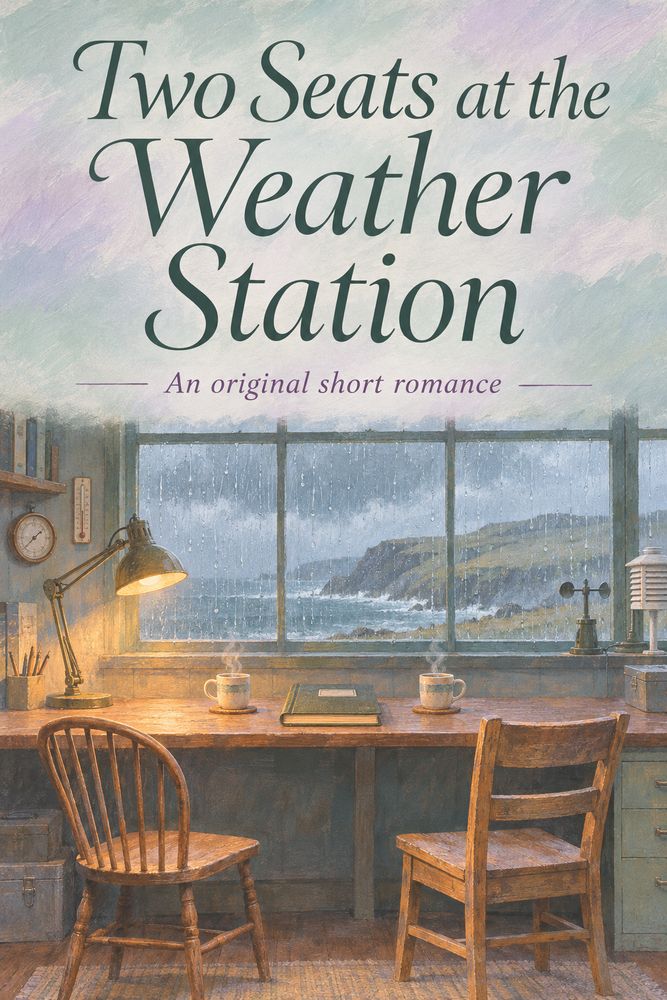
Front cover of Two Seats at the Weather Station

Romance & Relationships

Two Seats at the Weather Station

By TrendWindow Library

Nora Hale returns to catalogue a closing weather station with Eli Rook, the man she left three years ago. An eight-chapter short romance about two chairs, separate calendars and choosing to meet again.

Read this complete edition, including its ending and notes. No purchase is required.

About this book

An original short romance

This is a work of fiction about two adults. The people, station, archive project and weather events are invented. The station's records are part of a fictional local collection, not an operational forecast or emergency-warning service. The story offers no instructions for travel in severe weather or for professional meteorological observation.

Original short fiction prepared with AI assistance. All characters are adults; people, station and events are invented. No professional weather, travel, archive-preservation or relationship-treatment advice is asserted. Translation meaning reviewed with AI, not independently certified by native-language professionals.

1. The chair by the window

Nora Hale recognized the sound before she saw him: a teaspoon tapping twice against the rim of a mug, once to clear the milk and once for no useful reason.

Eli Rook stood at the weather station's little stove. He had grown his hair long enough to tie back. Otherwise he looked inconveniently familiar.

“I made tea,” he said. “But I didn't put anything in yours.”

“Thank you.”

The sentence was smaller than the distance she had travelled to say it.

Bracken Head station consisted of a recording room, a narrow kitchen and two bedrooms built for visiting observers. The local trust was closing the building at the end of the month. Nora had been hired to catalogue its paper records for the town archive. Eli, the caretaker, had six days left on his contract. He knew the cabinets and the repairs. She knew how to turn several decades of paper into something strangers could find.

Her original plan was to spend two nights here and finish the catalogue in town.

They had both known the other would be there. Nora had asked the project coordinator directly, then accepted the assignment. Eli had sent a practical list: two separate rooms, a working heater, the archive's delivery boxes, the hours he would be available. There had been no personal note.

Three years earlier, she would have recognized that list as an invitation to hear the things he could not say. Now she took it as a list.

Two wooden chairs faced the long worktable. One stood by the window. Nora used to sit there when she visited after work, drawing the shape of the headland while Eli finished his notes.

“You can have that one,” he said.

“Does it still wobble?”

“Yes.”

“Then I'll take the other until it's fixed.”

He almost smiled. “Fair.”

She put her bag in the room on the left. Her name was written on a removable card, not on the door itself. She noticed the smallness of that courtesy and refused to turn it into a prophecy.

Outside, low cloud hid the farther ridge. On the table lay the first bundle of records, tied with tape that had once been green.

Nora opened her notebook.

“Before we start: I can inventory the boxes, but I won't guess what an abbreviation means.”

“I'll explain the ones I know. We can leave the rest marked uncertain.”

They pulled their chairs to the same side of the table. For the first time since arriving, she could look at what was between them instead of at him.

2. A blank space in February

The oldest volume smelled of dust and cold cupboards. Each page held a date, columns of numbers and a narrow space for remarks. Some observers wrote only what the form asked. Others had left traces of themselves: a carefully corrected spelling, a small drawing of a bird, a complaint about a stubborn latch.

“Mrs Vale,” Eli said, pointing to an entry. “She always sharpened her pencil before making the final note.”

“Did you know her?”

“For two summers. She taught me where everything belonged. Then she changed the arrangement whenever she found something better.”

Nora liked her immediately.

They gave each volume an inventory number and recorded its condition. When Nora found a blank interval in February, she asked Eli whether a sheet was missing.

“No. The volunteer rota failed that week. Nobody came up.”

“Do we know that?”

He fetched a separate correspondence folder. A letter explained the cancelled visits. Nora noted the reference. She did not fill the blank with a plausible figure.

“People will think the record is untidy,” he said.

“It is untidy.”

“They may think no one cared.”

“Someone cared enough not to invent what they hadn't seen.”

Eli moved the empty mug away from the volume. She had not needed to ask.

At lunch he cut bread and set the knife down. “Would you like the last tomato?”

“I would.”

He gave it to her without mentioning that he used to know the answer. She had spent part of the drive preparing to resist memories dressed as rights. Ordinary questions left her with less to defend.

In the afternoon she found a pressed sprig between two pages. It had no label connecting it to any observation.

“Not weather data,” she said.

“No.”

“Still part of what arrived with the book. Separate enclosure, location noted.”

Eli watched her make the little folder.

“You make room for things without deciding what they mean.”

“Not always.”

The words came too quickly. He looked up, but she returned to her pencil.

That evening she called her sister from her room. She said the work was interesting, the bed adequate and the situation manageable. All three things were true. She left out the way Eli had waited for her answer about a tomato.

3. The sentence she had not agreed to

On the second morning, Nora found the window chair lying on its side. Eli had tightened its loose joints and was checking it on the level kitchen floor.

“I'll let you know when it's ready,” he said. “The other one is yours for now.”

A repair offered without an account of his generosity. She was beginning to distrust how much she liked the distinction.

They worked until the light behind the cloud turned the colour of old pewter. At three, the project coordinator called. A damaged section of the access road meant the collection van could not come that evening. The coordinator had arranged an inspection; no one was to attempt the closed section. The building had supplies and communication, and a revised collection time would follow.

Nora wrote down the message and sent it to Eli, although he was in the next room. They had agreed that practical changes should be in writing so neither needed to remember for both.

He read it, then said, “Your train is tomorrow.”

“I'll change it when we have a confirmed route.”

“I could call—”

“I can make the call.”

He stopped. “All right.”

The interruption remained in the room after the words ended.

Three years earlier, Nora had been offered an illustrated-document project in a city several hours away. Eli had told their landlord they would renew their cottage lease before asking her. He had believed he was protecting a stable home. Nora had heard a future already signed in her absence.

She had answered badly too. Instead of telling him how furious she was, she had said the decision made everything clear. It had not. It had made one thing clear and left the rest to harden around it.

They separated two weeks later. She took the city work. He stayed at the station. Their last conversation concerned a parcel delivered to the wrong address.

Now he stood beside the repaired chair.

“I wasn't trying to decide your journey,” he said.

“I know. I wanted to say it before I began arguing with something you hadn't done.”

He rested his hands on the chair back.

“I should have asked before the lease. I keep finding more polished ways to explain it. None makes it a question I actually asked.”

Nora looked at the chair rather than at his face.

“No,” she said. “It doesn't.”

He did not ask whether admitting it changed anything. They went back to work. The honesty was uncomfortable, but it did not demand immediate reward.

4. A forecast for nobody

By evening the road was still closed. Rain touched the windows in brief hard bursts. The coordinator confirmed that the station remained the arranged place to stay; tomorrow's travel depended on the inspection. They were not stranded without help. They were delayed, with a telephone that worked and other people making the access decisions.

Nora warmed soup while Eli laid out bowls. Their old kitchen had taught their bodies an ease that their words no longer possessed. He moved aside before she reached the drawer. She caught the cupboard door before it struck his elbow.

Neither called this proof.

After dinner, he asked whether she wanted company in the recording room or time alone.

“Company for half an hour.”

He brought two mugs. They sat where the window reflected them more clearly than it showed the headland.

“Are you seeing anyone?” he asked.

“No. Are you?”

“No.”

She waited. He did not treat those answers as a path already cleared.

“What happens when the station closes?”

“I've accepted repair work with the harbour workshop. Three days a week to begin. I want to keep one day free for my own drawings.”

“You draw?”

“Badly.”

“That wasn't the question.”

He laughed, then fetched a sketchbook. Boats, gates, the stove, a portrait of the chair that made it look more dignified than any chair deserved.

Nora turned the pages only after he offered them. She felt affection without the old accompanying obligation to reorganize her life around it.

“I have a fellowship interview next month,” she said. “For a collection overseas. Six months if I get it.”

Eli looked down at his mug. She saw the first, involuntary movement of disappointment.

“I hope they see your work properly,” he said.

“You can also wish it were nearer.”

“I do. Both things.”

That answer made her want to sit closer. She stayed where she was long enough to know the wish belonged to her.

At the end of half an hour he stood.

“You don't have to go precisely on the minute,” she said.

“I know. I wanted you to be able to believe the half hour.”

She watched him carry his mug to the kitchen. The space he left did not feel like abandonment. It felt, surprisingly, like somewhere she could choose to remain.

5. What the wind could not answer

The road reopened after the inspection the following afternoon. The coordinator offered Nora transport to town. She could leave, return for the remaining workdays, or finish the catalogue notes from the archive.

Eli was changing a label at the table when she took the call. He did not turn round. She knew he could hear enough to understand.

“I'll stay and finish here,” she told the coordinator. “The materials are still here. I'll take the Friday collection van.”

After the call, she said to Eli, “That's a work decision.”

“I heard.”

“It isn't a promise about us.”

“I heard that too.”

She had not said the second sentence aloud before now. He smiled at her correction.

That afternoon, they reached the year in which they had first met. Nora remembered taking shelter at the station during a local walking event. She had left her wet scarf on the window chair and returned the next day to retrieve it. The scarf had been dry. There had been tea.

She did not look for a note about herself. A record of weather was not required to preserve the beginning of her love.

Eli found an envelope of photographs for the archive's display. One showed the station with the door painted red, before their time. Another showed the volunteers at a meal, all looking towards a person outside the frame.

“That's my favourite,” he said.

“Because of what we can't see?”

“Because they all expected someone else to arrive.”

They worked later than planned, then stopped rather than turning exhaustion into a virtue. Nora put the last folder away. Eli checked the list with her and turned off the desk lamp.

In the kitchen she said, “I missed you.”

He stood still.

“I missed you too.”

“I don't miss waiting for you to tell me what our life was going to be.”

“I don't want to do that again.”

“Wanting isn't the whole work.”

“No.”

She crossed the space between the table and the stove, then stopped close enough that he could have reached her.

“May I kiss you?” she asked.

“Yes.”

The kiss was brief. It did not repair three years or approve a shared future. It let a desire become something they had both chosen in the same present moment.

Afterward, they made tea. She returned to her own room. In the morning, neither acted injured by that.

6. The room beyond romance

On the fifth day, Nora's laptop received the fellowship interview invitation. The date was a week earlier than expected. She read the message twice, then told Eli.

“Good,” he said, expressing his pleasure so awkwardly that she laughed.

“You don't have to perform joy.”

“I'm pleased for you. I'm also being selfish in a small, unhelpful corner.”

“Keep the corner. Don't build the whole house there.”

He grinned. “I'll try.”

They made no decision about what she would do if offered the fellowship. That decision would require an actual offer, her own priorities and information she did not yet have. She booked the interview and put it in her calendar.

At midday the archive coordinator arrived with two local volunteers to check the collection list. The station ceased to be a room containing only Nora and Eli's history. There were questions about shelving, a missing box number and whether the public display could include a copy of Mrs Vale's bird drawing.

Nora explained what was ready and what remained uncertain. Eli brought out the correspondence file without interrupting her account. When he disagreed about a cabinet label, he showed the evidence and waited. She changed it.

During the tea break one volunteer asked if they were back together.

Nora felt the old temptation to give a neat answer for everyone else's comfort.

“We're spending time together,” she said. “We haven't decided more than that.”

Eli nodded. No joke, no claim, no wounded silence.

The coordinator asked Nora whether she wanted her role credited on the catalogue title page. She did. Eli's knowledge of the station would be acknowledged separately. Their names belonged to different contributions, not to a couple's brand.

After the visitors left, they found that someone had sat in the repaired window chair.

“Did it wobble?” Nora asked.

“Not a complaint.”

“That isn't the same as a test.”

She sat, shifted her weight gently and found the chair steady.

He looked absurdly proud. She let him. Not every happiness needed to be restrained merely because larger ones required care.

They shared the last tomato at dinner because this time both wanted it.

7. Friday, in two calendars

The collection van was due at ten on Friday. By nine, the numbered boxes stood ready in the recording room. Loose enclosures had their own folders. Uncertain abbreviations remained marked as uncertain. The February gap remained a gap with a reference to the letter that explained it.

Nora signed the handover list for the archive. Eli signed the building inventory for the trust. There were two jobs to finish and two signatures to give.

Then came the part neither form contained.

“What would you like after today?” he asked.

She had several answers. A guarantee that they would never repeat themselves. A way to love him without the possibility of losing him. A train that stopped in both of their futures.

None was something he could offer honestly.

“I'd like to see you in six weeks,” she said. “After the interview and the first archive handover. In town, somewhere that isn't this room.”

“The café by the ferry?”

“Yes. Saturday afternoon?”

He checked his work calendar instead of promising before he knew.

“I can do three. Is that good for you?”

She checked hers. “Three.”

They entered the same appointment in two separate calendars. It looked almost comically ordinary after everything the week had asked of them.

“What about calling?” he asked.

“Ask first if it's a long conversation. A message is fine. If I'm working, silence doesn't mean I've left.”

“And if something changes, we say it.”

“We try to say it before making the decision for the other person.”

He nodded. There was no agreement about moving, no deadline for certainty, no demand that the fellowship become less desirable.

The van arrived. Its driver carried in a spare empty box, and the ordinary practical problem of fitting the last folders interrupted their careful sentences.

When everything was loaded, Nora returned for her coat. Eli stood by the table.

“I'd like to kiss you goodbye,” he said.

“I'd like that.”

This kiss lasted longer. She could feel the station's cold window at her shoulder and the warmth of his hand, resting where she had placed it. Outside, the driver shut the van's rear doors.

She left because she had somewhere to go. He let her go because he wanted her return to belong to her.
8. The second cup

Six weeks later, Nora reached the ferry café eight minutes early. She had not received the fellowship decision yet. Her interview had gone well in some places and awkwardly in others, which was less useful as a prediction than she wished.

Eli arrived at three carrying a sketchbook and no flowers large enough to occupy the second chair.

“Am I late?” he asked.

“Exactly on time.”

“Suspicious.”

She laughed. He asked before taking the seat opposite her, a gesture so simple that she could have missed it if she had not spent three years learning its absence.

They had exchanged messages. Once he had asked for a long call when she was cataloguing a difficult box. She had offered the next evening. He had accepted without asking her to prove she was busy. Once she had misread a brief reply as anger, then asked instead of building a week around the guess. He had been on a noisy workshop floor.

Nothing spectacular. A different way of doing the ordinary work.

The station's records were now in the town archive. Its small display included the volunteers' photograph and a caption naming what remained unknown about it. Nora's catalogue credit and Eli's acknowledgement appeared where they belonged.

“What about the chairs?” she asked.

“The trust kept them in the reading room. Mrs Vale's granddaughter sat by the window at the opening.”

“Did it wobble?”

“I waited for you to ask.”

They ordered two cups and a plate to share. Nora told him about the interview before he asked. Eli showed her a drawing of the harbour workshop, with a gate slightly too tall and a person at the edge whose face he had not managed.

“I like that you left the attempt visible,” she said.

“I nearly erased it.”

“I'm glad you didn't.”

The ferry sounded beyond the glass. People stood, gathered bags and made their own departures. Nora felt the old wish to turn a good afternoon into a guarantee. She let it pass without making either of them answer it.

“I'd like another afternoon,” she said.

“So would I.”

They chose a date. Then they stopped planning.

Eli lifted his cup. Nora settled into her chair, which was not the old chair, beside a window that belonged to neither of them. There was room on the table for both their hands. Neither had to move a calendar to make it.

### Fiction and scope

A complete original short romance, with an open future but a resolved choice to meet again. All characters are adults. The invented station and archive practices serve the narrative; no professional weather, preservation, travel or relationship-treatment guidance is claimed. Mutual consent, separate commitments and the ability to leave remain part of the reconciliation.

Explore more books →