After the summer break, the school asked me back for the agreed maintenance visits. New marks had appeared on surfaces I recognised. I felt a flash of annoyance before remembering that the desks had returned for use, not exhibition. Where attention was needed, Sana recorded it; where it was not, a mark could remain a mark.
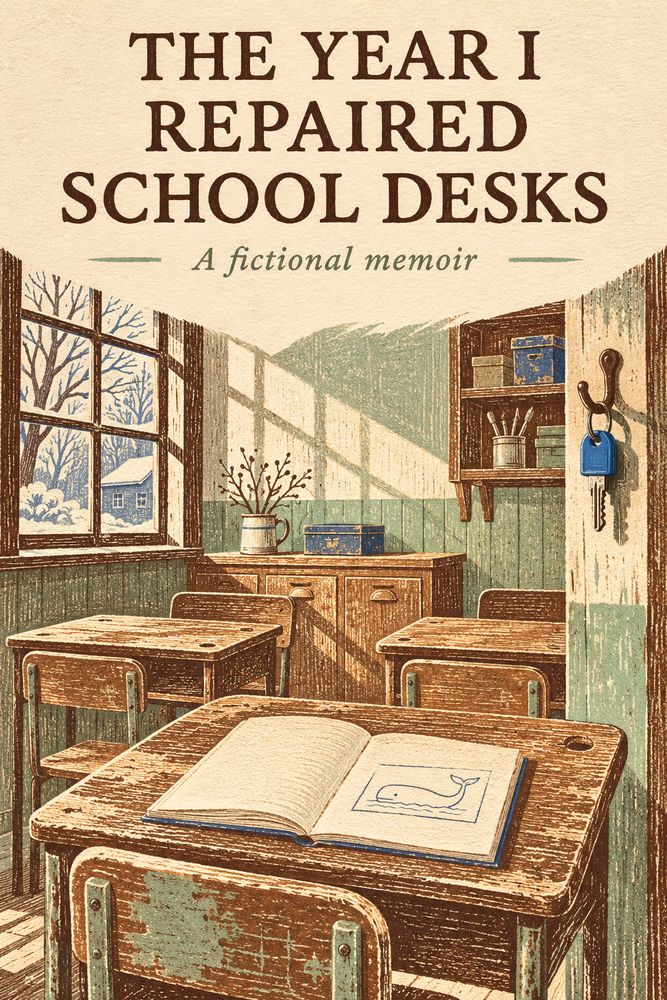
The autumn display included the whale sketch, the retained wood fragment and several photographs taken with the school's permission. The draft poster called me “the craftsman who restored our school.” I asked for the sentence to change. I had worked on a group of desks. Other people had dealt with the leak, cleaned the rooms, taught the lessons and made the decisions I once wanted to make alone.
The revised line said that I had repaired desks during the year. It named Sana and the people who had organised the project. It did not turn a small account into a complete list of everyone who kept the school going. There was not space for that story, and pretending otherwise would not honour them.
Ellis came to the display and recognised the whale without claiming it. Ida came late, carrying a portfolio she did not open. I wanted to introduce her as an artist and asked whether she minded. “Ida is fine,” she said. So I introduced Ida, and we stood by the wood fragment while somebody else discussed the photographs.
When we left, she asked whether I missed the workshop. I said yes. It was the first time I had given that answer without adding how useful the school work had been. The useful thing and the missing thing could exist in the same sentence, even if I did not always know how to write it.