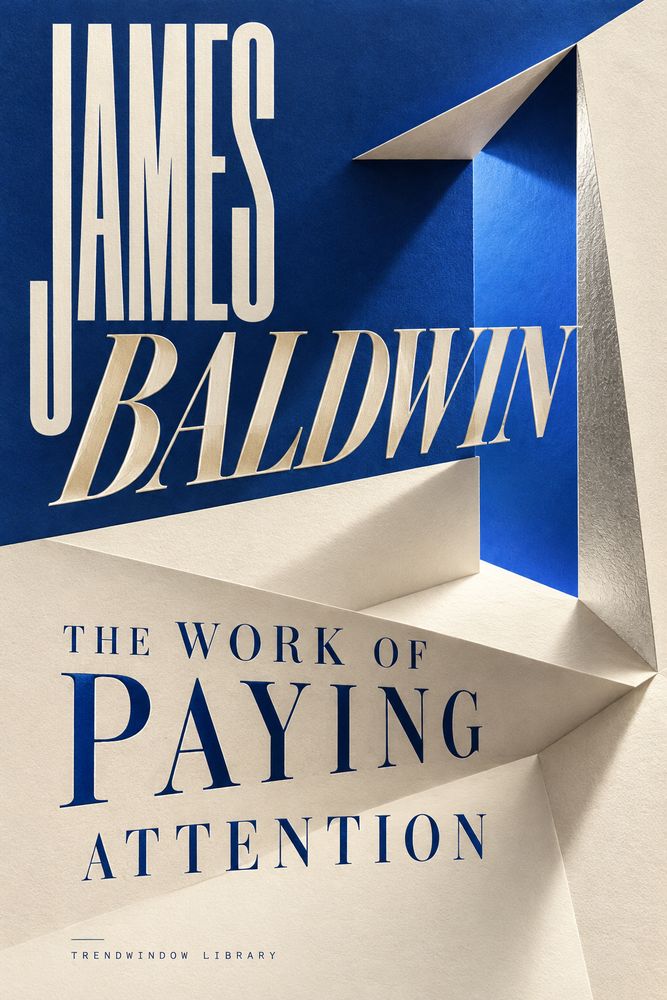
1. Before the Famous Voice
A public voice is often remembered after the work that formed it has disappeared from view. A sentence circulates, a photograph becomes familiar, and the writer seems to have arrived fully equipped to address the world. James Baldwin's career asks for a slower introduction. Before the celebrated essayist stood a young reader, a student, a preacher, a working writer and a man searching for conditions in which he could continue.
Baldwin was born in Harlem, New York, in 1924. He grew up amid the pressures of poverty and racial discrimination, with a religious upbringing that became part of the material of his literary life. The Smithsonian's National Museum of African American History and Culture places his education, family and developing writing within that setting. [1]
The setting matters without becoming an explanation for every sentence he would write. A neighbourhood is not a machine that produces identical lives. A biographical account needs to notice both the circumstances a person encounters and the particular work he makes from them.
This short interpretive biography follows the relationship between Baldwin's writing and his public life, from his early education to his death in France in 1987. Its argument is that paying attention involves more than seeing a problem. It includes choosing a form, revising a statement, noticing the people a generalisation leaves out and returning to a question that a public answer has not settled.
That is this book's interpretation, not a slogan placed in Baldwin's mouth. The account does not invent his private thoughts or reconstruct undocumented conversations. It also does not offer shortened substitutes for his novels and essays. Those works deserve to be read as works, rather than treated as containers from which a biographer removes a convenient lesson.
Begin, then, before the finished voice. A writer has to learn how to address someone, and also how to discover what an address has failed to say.