BOOK LIBRARY · Complete books · Purchases disabled
TrendWindow

← Book Library · Complete book

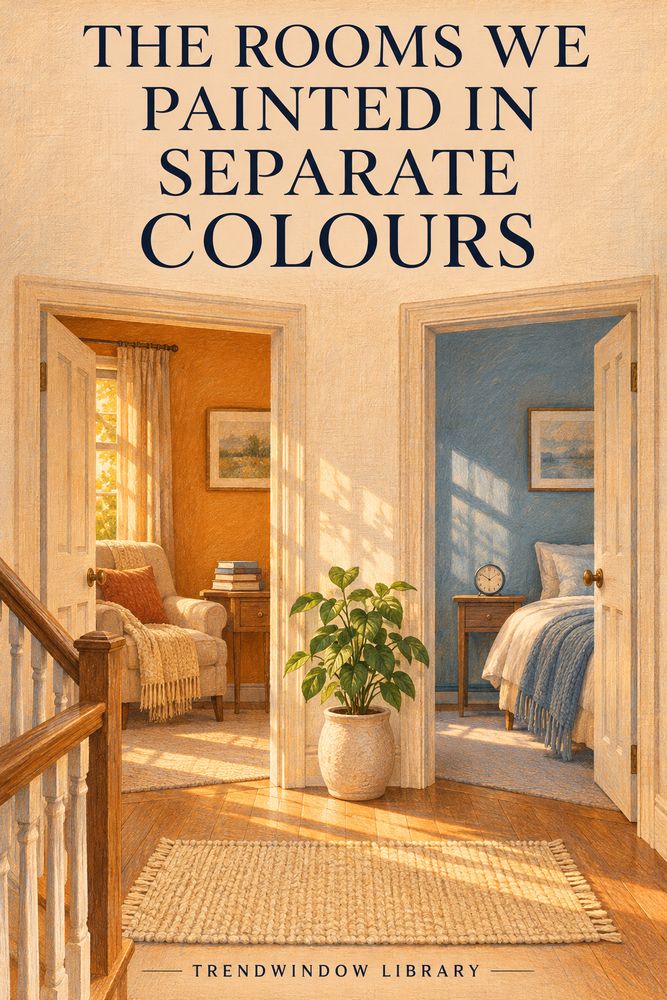
Front cover of The Rooms We Painted in Separate Colours

Romance & Relationships

The Rooms We Painted in Separate Colours

By TrendWindow Library

A complete original short romance. After thirty-five years of marriage, Helen wants her own bedroom in the house she still shares with Duncan. Two tins of paint and a new goodnight help them choose space without giving up closeness.

Read this complete edition, including its ending and notes. No purchase is required.

1. A Colour That Was Not for Guests

Helen Ward put the tin of warm ochre paint on the kitchen table beside Duncan’s newspaper. He moved his coffee just in time.

“For Lotte’s room?” he asked.

“For the room that used to be Lotte’s.”

“We could have the guests in there by the holidays.”

Helen took off her coat. “I was thinking of having me in there.”

Duncan looked at the tin again. He was sixty-six and had been married to Helen for thirty-five years. He knew the difference between her ordinary announcements and the sentences she had carried around before saying them. This was one of the second kind.

“To sleep?”

“And to read. And to have a light on without wondering if you want it off.”

He folded the newspaper carefully. Helen had expected him to make a joke. She had prepared for that. The quiet was harder.

“Have I done something?” he asked.

“No. I want a room. I’m not announcing that I don’t want you.”

At sixty-four, Helen had become tired of presenting every new wish as a small household improvement. She liked their house, their dinners and Duncan’s habit of singing the part of a song he could remember. She also liked reading late. He liked the radio early. For years they had each tried not to disturb the other, and sometimes both had ended up doing neither thing they wanted.

Their daughter Lotte had moved out three years earlier. Her room held a single bed, an empty wardrobe and boxes nobody had quite decided to move.

“I should have talked about it before buying paint,” Helen said.

“Probably.”

“The paint was easier to choose.”

Duncan ran a finger around the tin’s lid. “It’s very yellow.”

“I know.”

For the first time that morning, she smiled.

2. What Duncan Heard

Duncan went upstairs after lunch. The old bedroom was cream, a colour they had chosen together because neither disliked it. His bedside clock stood beside Helen’s stack of books. There was a bookmark under the bed where she could never find it when she wanted it.

Across the landing, Lotte’s room still had a faint rectangle where a poster had hung. Duncan had spent years calling it her room after she stopped calling this house home.

He tried to imagine Helen closing its door at night. What frightened him was not the bed. It was the possibility that he would no longer know when she had had a bad day, or whether she wanted him near. He had mistaken sleeping in the same room for never needing to ask.

Helen came up carrying two cups of tea. She put his on the windowsill and stayed standing.

“I heard you asking for a way away from me,” he said.

“I’m asking for a place in the house. I want to keep living here with you.”

“You could have said.”

“I’m saying now.”

He nodded. She was not offering him a version of the change that would leave everything unchanged.

“I like the clock,” he said suddenly.

“Your clock?”

“The ticking. You’ve always put a folded cloth under it.”

“I like it better at a distance.”

He looked towards their old bedroom. “I might like blue in there.”

“You might.”

“Not because I’ve been sentenced to a blue room.”

Helen laughed. “There will be no sentence. You can appeal to the paint shop.”

He took her free hand. “Can we try this without deciding that it has to mean everything?”

“Yes,” she said. “That’s what I’m hoping.”

3. The Boxes Their Daughter Left

Lotte came on Sunday to collect the boxes. At thirty she had a flat of her own, but still expected her parents’ upstairs rooms to remain like a picture she could step back into.

“Separate bedrooms?” she said.

“Different colours too,” Duncan answered.

“Are you all right?”

Helen sat on the single bed. “We’re changing something. That isn’t the same as asking you to choose a side.”

“I didn’t mean—”

“I know. You’re allowed to ask.”

Duncan lifted a box of school notebooks onto the landing. “We’re not moving to separate houses. Your mother wants her lamp. I want my ridiculous clock.”

“It isn’t just the lamp,” Helen said.

He put the box down. “No. It isn’t.”

Lotte looked from one to the other. “Do you want help painting?”

Helen was grateful that the next question was about something they could actually do. They opened the boxes first. Lotte kept a folder of drawings and laughed at a photograph of herself with a paper moustache. Helen did not ask her to keep everything, or use the room’s history as a reason it could never change.

By late afternoon the wardrobe was empty and the floor clear. Helen tried her reading chair beside the window. Duncan sat in it, stood up and moved it a little to catch the view she wanted.

“There?” he asked.

“There.”

Lotte went home with her boxes. At the door she kissed them both and said she would call during the week. She did not need a report on where they slept.

Upstairs, Duncan took down the old wedding photograph from beside their bed. Helen watched him carry it out.

“Not away,” he said. “I thought the landing.”

Between the two doors, they found a place where both could see it.

4. Two Tins Open

The blue Duncan chose was softer than Helen expected. He put its tin beside the ochre and said the colours looked as if they had agreed to live in the same street.

They covered the furniture and worked at different ends of the landing. From Helen’s room came a radio programme Duncan did not like. From his came a tune he hummed without the middle. Neither needed to make it a competition.

At one point he appeared in her doorway with a streak of blue on his cheek.

“Have I missed something?”

“Mostly your face.”

She wiped the mark with a clean damp cloth. He stood still while she held his chin, and she remembered how they had looked at each other in the first flat, surrounded by boxes that had belonged to no shared history yet.

“You used to stare at me,” she said.

“I still do. You’re usually reading.”

She put the cloth down. “You can ask me to look up.”

“I know that now.”

He kissed her, gently enough that she could still tell him his cheek was not quite clean. She did, and he laughed.

When the painting was finished and dry, they moved her books and clothes across the landing. His clock stayed where it was. The double bed stayed in the blue room; the single bed remained in the ochre one. Neither was a punishment or an announcement for visitors.

That evening they ate downstairs with the paint tins closed beside the back door. For once there was no need to tell a guest that the upstairs was not quite ready.

“Would you come and see my room after dinner?” Helen asked.

Duncan looked at her over his glass. “I would.”

5. The First Goodnight

Helen had put a cushion on the reading chair and her book beside the lamp. Duncan knocked even though the door was open. She felt foolishly pleased.

“It’s not a hotel,” she said.

“Good. I haven’t packed.”

He sat on the edge of the bed while she showed him the view of the little garden. It was the same garden he had seen from the landing for years, but she had never had this corner of it beside her own chair.

She told him about the novel she was reading without requiring him to read it. He told her he planned to walk to the market in the morning. They arranged breakfast afterwards, which made Helen laugh.

“After thirty-five years, you’re asking me to breakfast.”

“I could pretend to be a mysterious new man.”

“You would have to stop leaving your slippers on the stairs.”

He stood to move them at once. “That mysterious.”

At her door he asked, “Do you want company for a little while?”

She did. They sat together in the reading chair, badly fitted and very comfortable with the inconvenience. Helen rested her head against his shoulder. The lamp lit the yellow wall and the side of his face she knew so well.

Later he went to his room. Helen heard the small sound of his door. She had expected either a great relief or a great sadness. Instead there was a new quiet that did not yet know what it would become.

She read a chapter. Across the landing the clock ticked at a distance she liked. Before turning out her light she said goodnight through the open doorway.

“Goodnight,” Duncan answered.

It was not the end of the conversation. It was the end of an ordinary day.

6. The Landing Between

A month later Lotte came for dinner and found her parents arguing about a soup that needed more pepper. The wedding photograph was still on the landing. The rooms were still different colours.

Not everything had become simple. Once Duncan walked in while Helen was dressing, following an old habit through an open door. She asked him to knock. He apologised and went out, without making her comfort into a joke. Another evening she called questions across the landing while he was listening to the radio, then went over and asked whether he wanted to talk.

They were learning the new shape by living in it. There were nights when one invited the other to stay, and nights when each wanted a closed door. Neither arrangement had to carry the whole meaning of their marriage.

“Does it suit you?” Lotte asked after dinner.

Helen looked at Duncan. She did not answer for him.

“It suits me,” he said. “I chose the blue.”

“And I chose the yellow,” Helen said.

Lotte smiled. “I noticed.”

After their daughter left, they washed the dishes together. Duncan dried the glasses while Helen looked through a leaflet for an afternoon concert. She asked if he wanted to go. He did, but not on the day she first suggested. They found another date without treating the change as a test of affection.

At the top of the stairs, Helen stopped beneath the photograph. The people in it were younger, dressed for a day when they had known very little about what staying together would ask of them.

Duncan put his hand on her back.

“Tea in the morning?” he asked.

“Come and knock.”

She kissed him before going into her room. He stood a moment longer, then went into his. Their doors could close without the invitation ending.

Between the two colours, the landing was still theirs.

Edition Note

This is a complete original contemporary romance about fictional adults. All people, places and events are invented. The characters’ choice of bedrooms is their own fictional arrangement, not a medical recommendation or a claim about what works for every relationship. This AI-assisted digital short book includes original conceptual English front/back artwork and complete aligned translations. It does not claim independent human authorship, native-human certification, an ISBN or a print proof.

Explore more books →