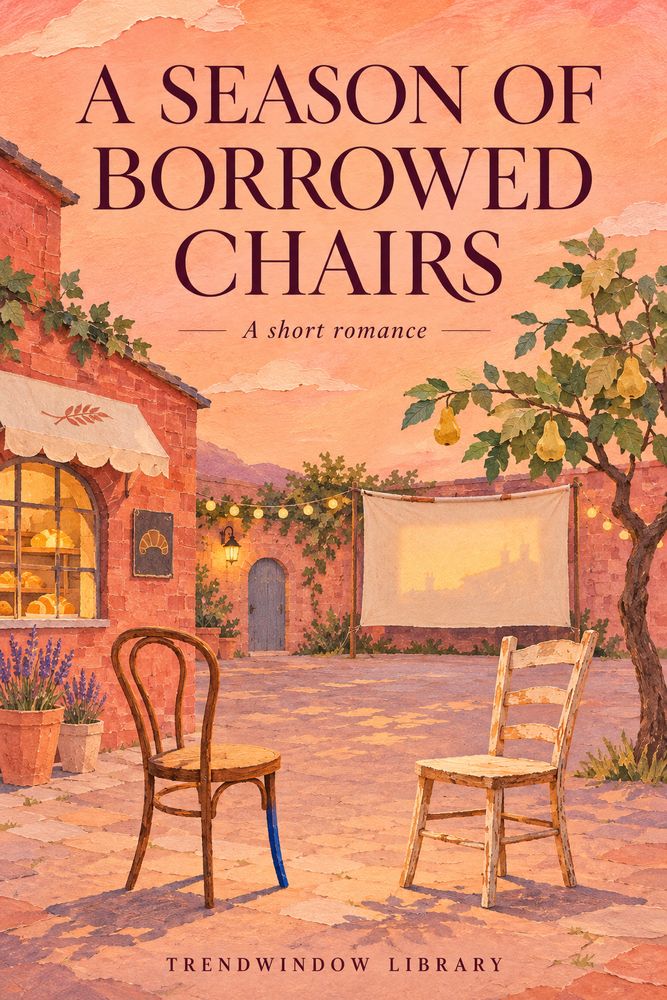
On the last day, Mara returned the chairs. The sister's birthday, it emerged, was in November. The chair's owner had simply disliked uncertain arrangements.
Elias came for the blue-footed one. He found it beside the gate with his pencil on its seat. Mara had sharpened it, badly.
"I was going to offer you the chair," he said. "Then I thought it might look like a request to take a piece of my life with you."
"It would," she said. "And I have nowhere sensible to put it."
He picked it up. They laughed, a little sadly, and neither tried to turn that sadness into a change of plan.
She left the following morning. For several weeks Ashport was noisy, expensive and unexpectedly lonely. The work interested her. Sometimes that was enough for an entire day, and sometimes it was not. Elias called when he said he would; once she asked to postpone, and once he did. They learned that a disappointing Tuesday did not have to explain the whole relationship.
In October he arrived carrying a paper bag of Nell's crooked rolls. They walked to the museum, where Mara showed him an unfinished room and asked what he would leave out. He took the question seriously.
That evening they ate at her small kitchen table. There were two chairs, both hers. One rocked slightly.
"Don't," she said when he glanced at its leg. "You're visiting."
He left it alone.
After supper they stood on the balcony with the plant between them. Below, the button-shop owner pulled down her shutters. Mara leaned against Elias, not because she had reached a final answer, but because he was there and she wanted to.
The old ledger was closed in Nell's kitchen. Every chair had gone home. This evening belonged to them without being borrowed from anyone.