BOOK LIBRARY · Complete books · Purchases disabled
TrendWindow

← Book Library · Complete book

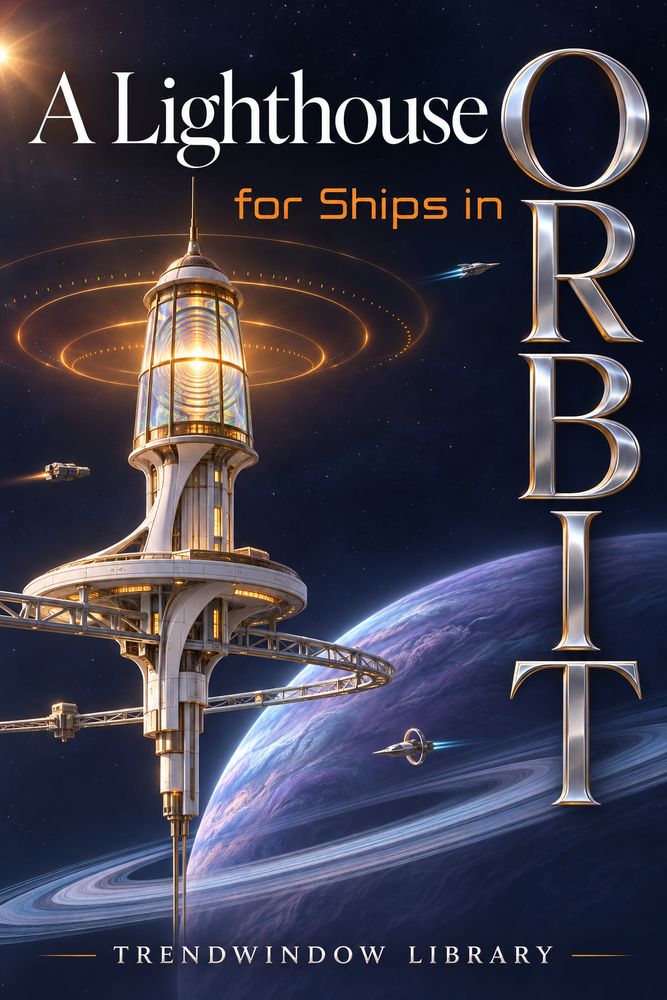
Front cover of A Lighthouse for Ships in Orbit

Fantasy & Science Fiction

A Lighthouse for Ships in Orbit

By TrendWindow Library

On Beacon Nine's last shift, a cargo ship reports a clock it cannot trust. A complete original short science-fiction story of navigation, uncertainty and three crew.

Read this complete edition, including its ending and notes. No purchase is required.

Chapter 1 — The Last Scheduled Shift

The station did not shine a beam that pulled ships home. Osa had explained this often enough to consider painting it on the wall.

Beacon Nine sent measurements, reference signals and a patient declaration of where it was. Pilots called it the lighthouse because a name was easier to love than a catalogue number. The light in its observation tower was mostly for the people who worked there.

Tonight there were two of them. Osa would close the navigation desk; Tern would finish the equipment checks. By morning the new orbital network would have the route entirely to itself. Nine had been useful. Being useful did not make a machine immortal.

Beyond the window, Neri filled half the dark. Its pale rings were a broken circle from this angle. Osa had lived above it for four years and still stopped to look.

Tern carried a box into the desk room.

'Personal things. Before you classify them as equipment.'

Inside were her cup, a scarf and the little wooden bird a previous crew had left. She took out the cup.

'I'm still using this.'

'You're still using most of the station. That's why I'm starting small.'

Her next posting was in network training. A room with more people, fewer windows and enough distance from a live approach that she would have to learn a different sort of patience.

The first alert came as she was writing the final handover. The cargo ship Nacre reported a navigation disagreement. Its crew could see two plausible positions on their display. Neither seemed to fit the others.

Osa opened a channel. She logged the arrival time of the message separately from the time the ship said it had sent it.

'Beacon Nine receiving. Captain, tell me what you're certain of.'

After the brief wait came a woman's voice.

'Three crew. Working propulsion. A clock I no longer trust.'

Chapter 2 — Two Versions of the Same Ship

Captain Meren sounded calm in the way people did when spending effort on it.

Nacre had changed a timing unit earlier in the voyage. Its old navigation interface was supposed to translate the new unit's time labels. Since the latest restart, the displayed route and the crew's separate observations had drifted apart.

The new network had not invented the disagreement. It had received two kinds of report from one ship and could not safely treat them as one continuous track.

Osa called the route coordinator, Aven. A passenger ferry, Hearth, was waiting at its berth for clearance to start a transfer. An uncrewed survey craft, Kite, was also scheduled through the wider area.

Aven paused the departures she could pause and asked Nacre's crew to stop using the disputed automatic approach solution. Meren confirmed that her navigation officer was preparing a wider, separately checked path. Nobody at the lighthouse would improvise a steering instruction from a doubtful dot.

'Can you tell us where they are?' Aven asked.

'Not yet. I can tell you which reports I don't believe.'

'Use that. Don't give me a precise answer because we're short of time.'

Tern stood beside the desk. He had heard enough to put the empty box down.

'How long are we staying?'

'Until there's a proper handover or they're clear.'

He told the shutdown team they were holding the scheduled closure under the emergency arrangement Aven had authorised. Then he checked the station's independent timing reference and reported it stable. He did not touch Nacre's clock. That was on another ship, and pretending otherwise would not help.

Osa marked the two tracks as disputed. They were not two ships. They were two stories being told by the same damaged conversation.

Chapter 3 — What the Labels Meant

Nacre's replies came through a route that sometimes included an old relay. Each packet carried several times: when an observation had been made, when it had been forwarded and when Nine received it. The interface had presented some of them as though they meant the same thing.

Osa could not repair that by changing a heading on her screen. She asked Meren to have the crew preserve their logs and describe the readings from the instruments they still trusted. They would send those apart from the disputed automatic stream.

Tern found that the relay was also replaying a small stored group after an interrupted handover. The repeated group arrived freshly, but the observations inside it were old.

'No new ship,' he said. 'An old sentence arriving again.'

'Keep the originals. Mark the repeat. Don't erase it.'

They isolated that replay from the live assessment while retaining the record. Some disagreement remained. Good: the wrong certainty had gone away before the actual uncertainty.

Meren reported that the crew had checked the wider path and had enough margin to continue it for the time being. A service tug would be needed later. That was a request to the coordinator, not a miracle the beacon could perform.

Osa looked through the window. Somewhere beyond the planet's curved edge were people she could not see, waiting for a sentence they could use.

She wanted to send reassurance. Instead she sent the limits of the current estimate and the next observation they needed.

Meren answered, 'Understood. Better than pretending you can see through the planet.'

Osa let herself smile once. Then she returned to the measurements.

Chapter 4 — The Dark Interval

There would be an interval when Neri blocked the direct radio path between Nine and Nacre. They knew it was coming. That made it a problem to plan for rather than an omen.

Aven had other stations working on the route. Nine was a useful local reference, not the only intelligence left in the sky. Before the interval, they agreed which station would carry the conversation and which reports would remain suspect.

Osa read the handover back. Meren corrected one item: a number labelled as a new observation had come from the earlier set. The correction was small. It mattered.

Then the direct signal fell away at the predicted part of the pass.

Tern handed Osa her cup. It held water, not the coffee she had forgotten to make.

'You can blink.'

'I have been.'

'Not convincingly.'

The tower had never felt so still. The ships continued moving, although the display no longer gave Osa a reassuring new dot every moment. A missing update did not mean a ship had stopped.

She recorded the last trusted observation and its limits. She did not extend a neat line and call it knowledge.

From the network came a relayed status: crew safe, alternative reference acquired, next report pending. Aven said Hearth was still at its berth. Kite's route had been adjusted through its own control team. Neither was being asked to squeeze past a position nobody could yet defend.

Osa breathed properly for the first time in several minutes.

'You'll be good at training,' Tern said.

'I'm not sure I'm enjoying the lesson.'

'Neither will they, if you do it well.'

Chapter 5 — A Voice Without a Dot

When Nacre came into the next usable geometry, the voice returned before the desk could present a settled track.

'Beacon Nine, Nacre. Still three crew. Still not trusting that clock.'

Osa almost laughed from relief.

They gathered another set of measurements and compared them with the independent reports. Time labels stayed attached to their proper sources. Old packets did not become new because a relay delivered them late.

The estimate narrowed. It was useful now, but it still had limits. Osa sent those limits to Aven with the result, not in a quiet note beneath it.

The planned approach had to be abandoned. Meren said so herself after her navigator checked the options. They could reach a service rendezvous on a different schedule, with assistance. They could not safely preserve the original arrival simply because people were waiting at a dock.

Aven arranged the tug and moved the traffic plan around what the ship could actually do.

'I'll have unhappy people on Hearth,' she said.

'Alive and unhappy,' Meren replied.

'Our preferred combination.'

There was a short silence, then three different people on the cargo ship laughed. Osa had only heard Meren until then. The other voices made the report of three crew suddenly particular.

One asked whether the lighthouse really had a window.

'It does,' Osa said.

'What can you see?'

'The rings. Part of the planet. A wooden bird somebody left on my desk.'

'Keep the bird. We may ask for a picture.'

It was not a measurement. She logged the exchange anyway, beside the names of the people speaking.

Chapter 6 — The Part Nine Could Do

The tug crew brought their own navigation and a new set of eyes. Nine shared its observations, source labels and outstanding doubts. Nobody called the beacon's work a final approach instruction. Meren's crew and the tug team remained responsible for the manoeuvres they agreed to perform.

Osa watched the information become less lonely. It moved from her desk into a conversation with people able to compare it, challenge it and act on it.

Tern confirmed the replay had not re-entered the live stream. The faulty interface on Nacre remained restricted. There would be repairs and a proper investigation after arrival. Switching one field off did not make the underlying fault disappear.

The rendezvous took longer than Osa wanted. She stood, sat, checked and stood again. Tern made food. They ate at the desk in turns.

Finally Aven confirmed that the tug had joined the cargo ship's operation. Meren's voice was less tightly held when she reported the next stage.

'We have assistance. We have a plan we can support. Thank you, Nine.'

Osa looked at the clock. The scheduled shutdown had passed. It would have been easy to turn that into a story about an old lighthouse proving all the new systems wrong.

But the new network had found the disagreement, held traffic and brought the other teams together. Nine had supplied something it was well placed to supply. That was enough.

She wrote the handover as carefully as she had written the first message. What was known. What was inferred. What still needed checking. Where responsibility passed next.

At the bottom she added: Three crew in contact throughout the coordinated response.

Not a victory slogan. A fact she did not want lost among the equipment names.

Chapter 7 — Closing the Desk

They did not turn Nine off when the tug arrived. They waited until the next team had accepted the observations, confirmed the remaining needs and told Aven the beacon was no longer required for that operation.

Aven then authorised the delayed closure. The emergency had not given Osa an unlimited right to keep the station running.

Tern began the normal sequence. Osa sent the final navigation message and watched its acknowledgement arrive. Then the desk changed from live service to the quiet status she had rehearsed all week.

She expected a sense of betrayal. Instead she heard the ventilation and Tern checking another item aloud.

'Bird,' he said.

She put the wooden bird in the box.

'Cup.'

She put that in too.

'Operator.'

'Not in the box.'

'I'll amend the list.'

The tower lamp remained on for their departure. It was a working light for the service crew, not a promise that the beacon still offered navigation. Osa checked that the service notice said so clearly.

At the window she looked once more at Neri. The rings had changed their angle during the shift. The view had never belonged to her, however familiar it had become.

She would miss it. Missing it did not mean she had to make the closure a mistake.

Their transport arrived. She secured the box for the journey and followed Tern through the hatch, leaving the desk ready for the people whose work came after hers.

Chapter 8 — Three Aboard, Three Off

Two days later, in her new training room, Osa received a message from Meren.

Arrival confirmed. Three aboard. Three off. The clock is now somebody else's carefully labelled problem.

Attached was a picture of three people standing beside a service berth, tired and unmistakably pleased. They had sent their names with permission to use the picture in the internal training account. Osa did not make them anonymous dots again.

She sent a photograph of the wooden bird on her new desk. Behind it were three chairs and a window overlooking a corridor. No planet, no rings. People passed often enough to distract her.

Her first class arrived that afternoon. She began with two times on the board: observation time and receipt time.

'Are they interchangeable?' she asked.

A trainee said no. Another asked what had happened on Nine.

Osa told them. Not as a lone operator saving a ship with instinct, and not as a warning never to trust new equipment. A faulty interface, a replay, a crew that named its doubts, a network that paused what it could pause, and teams that handed over what they actually knew.

When she finished, the quietest trainee asked whether she wished they had kept the lighthouse open.

'I wish every shift had enough people to do it properly,' she said. 'Sometimes that means keeping a place. Sometimes it means carrying what we learned somewhere else.'

After class she read Meren's message again. Three aboard. Three off.

She set the wooden bird where the afternoon light reached it. Then she opened the next exercise and went to work in a room where other people could ask her questions.

About this edition and research

This complete original short science-fiction story has eight chapters and a resolved ship-assistance operation. Osa, Tern, Meren, Aven, Neri, Beacon Nine, the ships, interfaces and operational arrangements are invented. The story is not a spacecraft procedure or a technically validated mission design.

For background, NASA/JPL explains that radio-signal travel-time measurements help locate spacecraft. NASA describes the Deep Space Network as a communications system supporting interplanetary missions. These general ideas informed the setting; the characters, clock fault, replay, response and outcome are fictional, not NASA events or instructions. Sources consulted 3 November 2026: NASA/JPL, How Do We Know Where Faraway Spacecraft Are? https://www.jpl.nasa.gov/edu/resources/video/how-do-we-know-where-faraway-spacecraft-are/ ; NASA, Deep Space Network, https://www.nasa.gov/communicating-with-missions/dsn/ . No source dialogue is quoted.

The English original and five complete reader translations are AI-assisted; no independent native-human certification is claimed. Fixed digital reading units are not printed page counts.

Explore more books →