BOOK LIBRARY · Complete books · Purchases disabled
TrendWindow

← Book Library · Complete book

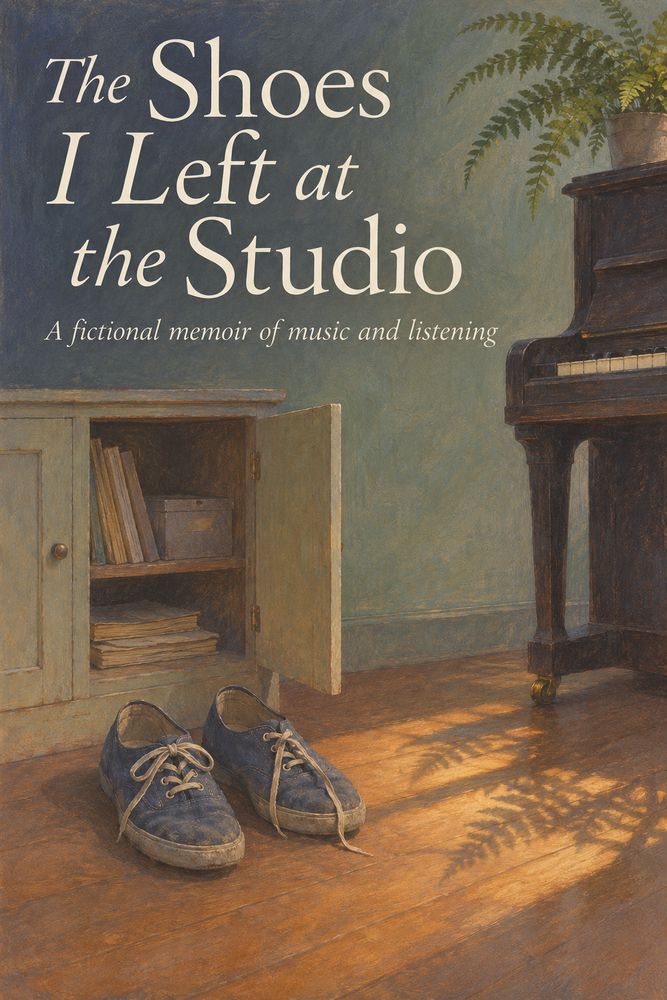
Front cover of The Shoes I Left at the Studio

Biography & Memoir

The Shoes I Left at the Studio

By TrendWindow Library

Eighteen months after leaving a dance studio, Nico returns for a forgotten pair of shoes. Twelve years of accompanying Friday classes taught him to listen without giving up credit, fair pay or the freedom to leave. A complete short fictional memoir in eight chapters.

Read this complete edition, including its ending and notes. No purchase is required.

About this book

A complete short fictional memoir. Nico, Mara, Jo, Eli, Leda and the dance studio are invented. This is an imagined first-person recollection, not a real musician's testimony or a history of dance teaching. The conversations are fictional, and the working arrangements belong only to this story.

Original complete short fictional memoir prepared with AI assistance. Nico, Mara, Jo, Eli, Leda and the studio are invented. Not real personal testimony, documented dance history, employment advice or a teaching manual. The working arrangements belong only to this story. Original conceptual covers. Translation meaning reviewed with AI, without independent native-language certification.

1. The lower cupboard

Eighteen months after I stopped playing for the Friday classes, Leda wrote to ask whether the navy shoes in the lower cupboard were mine. The studio was moving to another building. She was sorting the things that belonged to the school from the things people had merely left there.

I replied that I would collect them on Wednesday. Then I spent an unreasonable amount of time wondering what she thought of them. The canvas had whitened at the toes. One lace was shorter than the other. I had replaced the shoes years before leaving the job, yet kept this first pair in the cupboard as though they were part of the instrument.

When my daughter asked what I was going to collect, I said, “My old work shoes.” She remembered the studio's winter show, where I had once been almost invisible behind a tall fern. She asked whether people had known I was playing.

“My name was in the programme,” I said.

That was true. It was also an answer to a different question. She had not asked whether I received credit. She wanted to know if anyone had looked at me.

I remember caring about that very much when I began. I remember later telling people that I had stopped caring altogether. Neither version is enough. I still like to be heard. What changed was my idea of what hearing somebody meant, and whether it always required a room to turn towards one chair.

I put a cloth bag by the door for Wednesday. It looked too large for one pair of shoes.

2. Four paid Fridays

Mara offered me four paid trial Fridays. I was not an unsuccessful concert pianist, though I sometimes liked that description for its suggestion that success had been close. I taught a few private pupils and played wherever the work and my ability reasonably met. The community studio needed an accompanist for an adult class.

At our first meeting, I played a piece whose ending I particularly admired. Mara waited until I finished. Then she asked whether I could play something shorter twice, keeping the second attempt recognisably the same as the first.

I thought this a strangely modest test. I played the short passage and decorated its return. She asked for it again without the decoration.

“They need to recognise what they are coming back to,” she said.

Her remark concerned that exercise and those students. I turned it into a judgment on my entire musical personality, which was a habit I brought to several jobs.

We agreed the class length, my pay and a brief paid preparation period. She did not ask me to prove devotion by working indefinitely for nothing. I mention this because stories about learning humility can make a poor wage sound like an education. That was not the lesson she offered.

On the first Friday, the heel of my street shoe made a small hard sound when I shifted under the piano. Nobody objected. I noticed it myself, and the next week brought the soft navy pair I already owned. With Mara's permission, I left them in the lower cupboard. They were a convenience, not a uniform or a promise to stay forever.

3. What Jo was asking for

There were nine students that first term. Jo was the person whose questions I initially mistook for hesitation. She would listen to Mara, try a sequence, then ask where a change began. I privately wanted everyone to move sooner, so I could get through the music I had prepared.

One Friday I gave them an introduction more elaborate than the exercise needed. Jo started, stopped and looked towards the piano. I played on because I assumed continuing would help.

“Could we hear the beginning again?” she asked.

I returned to my own opening flourish.

“The beginning we start on,” she said.

Mara came over and identified the part she meant. We tried it once with a short, agreed introduction. Jo began with the others. Nothing spectacular happened. No one thanked me for a transformation. The class simply continued with one uncertainty removed.

Later I asked Mara whether I had been making things difficult. She said that sometimes she needed less music around the music they were using. It was a precise criticism, not a request that I become an entirely different person.

I wrote “beginning they start on” in my notebook. At home I read it beside the title of a solo piece I wanted to learn. Both belonged on the page. I did not need to discard the solo piece. I needed to stop treating the Friday class as an audience waiting to discover it.

For the next class, I prepared fewer alternatives and asked which one matched the exercise. Preparing less material did not mean arriving less prepared.
4. The mirror and the pencil

Over the following months I learned where Mara stood when she was about to stop an exercise. I also learned that I could misread her. Once she raised a hand to move a strand of hair, and I stopped in the middle of a phrase. Everyone looked at me. We laughed, then agreed that I would wait for her spoken cue.

I would like to claim that I developed an almost magical understanding of the room. The pencil marks in my old notebook describe something less flattering and more useful: names, a few agreed cues, and questions I needed to ask before playing.

Eli preferred one of the slower passages. That did not tell me how every older student wished to move, or even what he would want the following week. When Mara chose a different exercise, I asked about the music for that exercise. I gradually stopped making each person's apparent ease into a complete account of them.

The mirror behind the dancers was not a screen showing me my own performance. Sometimes I looked into it and saw myself watching to be watched. At other times I was listening closely enough that I forgot the reflection.

There were ordinary bad Fridays: a poorly chosen passage, a misunderstanding, my attention elsewhere. Useful work did not become effortless once I found a satisfying explanation for it.

At the end of each class I put the pencil away and changed my shoes. The small routine marked a boundary. I could care about the people in the room and still go home when the agreed work was finished.

5. The piece I wanted to play

For the winter show, Mara asked me to play for the class's short sequence. I suggested a piece of my own. It had a rising middle section that I wanted somebody, finally, to hear.

She did not reject it on principle. We tried it during an agreed rehearsal. The opening fitted. In the middle, I enjoyed the growing sound so much that I hurried beyond the pace we had settled. The dancers fell behind the music I was leading away from them.

After we stopped, I said the passage could work if everyone became more confident. Jo asked whether we were still using the pace from the previous attempt. Her question was gentler than my excuse deserved.

“I changed it,” I said.

Mara suggested a simpler middle. I felt, for a few seconds, that she had proposed removing the only interesting thing I had brought. Then we tried the change. The sequence held together. I could still hear my piece, although it was no longer displaying everything I wanted it to display.

I kept the longer version at home. It was not a defeated object. It belonged to another kind of occasion. The shorter version became the one we agreed to use at the show.

This did not happen in one clean moment of generosity. On the bus I rehearsed a complaint about being misunderstood. By the time I reached my stop, I could also remember Jo's exact question. She had asked me to keep an agreement, not to become uninteresting. That distinction took longer to settle than the revised passage took to play.

6. Behind the fern

The fern was placed beside the piano on the afternoon of the show. From my seat I could see the dancers, but I suspected that much of the audience could see only my hands. I considered moving it, then asked Mara whether it obstructed anything she needed. It did not. I left it where it was, with a private and rather theatrical sigh.

We had a programme, and my name appeared alongside the music credit. Mara had checked the wording with me. Being useful did not require being unnamed.

During the sequence I played the version we had rehearsed. Near the end, Jo arrived at a turn with the concentrated expression I knew from Fridays. I wanted, briefly, to push the sound into a grand conclusion. I kept the ending we had agreed instead.

The audience applauded the group. Mara brought me forward for the bow. I was pleased. I will not improve this recollection by claiming otherwise. Recognition felt good; it simply was not the only evidence that the evening had gone well.

Afterwards Eli asked which passage we would use next term. Jo said she had known exactly where the opening began. Neither remark was an artistic review. Both told me something about the work we had done together.

I went home carrying the programme folded inside my coat. At home I put it in a drawer, not in the bin to demonstrate modesty. My name was there. So were the names of the people whose movement had given the music its purpose that evening.

7. Leaving was also allowed

I played at the studio for twelve years, not twelve years of uninterrupted revelation. People came and left. Mara changed exercises. I found other work, lost some of it, and occasionally arrived wishing it were already time to go home. The navy shoes wore out, and a newer pair took over the Fridays.

When my teaching schedule eventually changed, I could no longer keep that class. I gave the agreed notice and discussed the remaining sessions with Mara. I did not promise to be permanently available whenever a replacement was difficult to find.

Leda came to one of the final classes as part of the handover we arranged. She asked sensible questions. I showed her the current music and the cues Mara wanted shared. Then I began telling a story about an old exercise nobody used any more.

“Will we need that one?” Leda asked.

“Probably not,” I said, and closed the folder.

Her way of listening was not mine. It did not have to be. When I visited the first show after leaving, the class sounded different and looked entirely itself. I was glad, with a small uncomfortable corner of surprise that things could continue so well without me.

I took my newer shoes home on my last working Friday. The first pair remained behind a box in the lower cupboard. For eighteen months I forgot them. I could give that forgetting a poetic meaning, but it was mostly a cupboard I had failed to empty. Leda's message gave me a practical reason to return, and a limit to what I had come for.

8. A bag with room left in it

On Wednesday, Leda handed me the shoes before the afternoon class. The new studio would have a different cupboard, she said. She was still working out where things belonged.

I asked whether she wanted the old notebook too. She said she had the current material she needed. I kept it. This was not an insult to twelve years. A record can matter to the person who made it without becoming somebody else's required inheritance.

Mara was speaking to a student near the mirror. We greeted each other, and she asked about my teaching. I answered without turning the conversation into a report on how much the studio ought to miss me. When the class was ready, I said goodbye and went out with the bag.

Through the closed door I heard Leda play a short beginning, stop, and begin again after somebody spoke. I did not stay to identify the correction. It belonged to the people now inside.

At home my daughter asked whether I had found the shoes. I showed her the faded toes. She asked why I had kept them for so long.

“I liked working there,” I said. It was a smaller answer than the one I had been preparing, and a better fit.

I placed them on a shelf in my own cupboard. The programme was still in the drawer. Later, when a pupil arrived, I listened to the short passage she wanted to repeat. I asked where she would like to begin. Then I waited for her answer before touching the keys.

Explore more books →