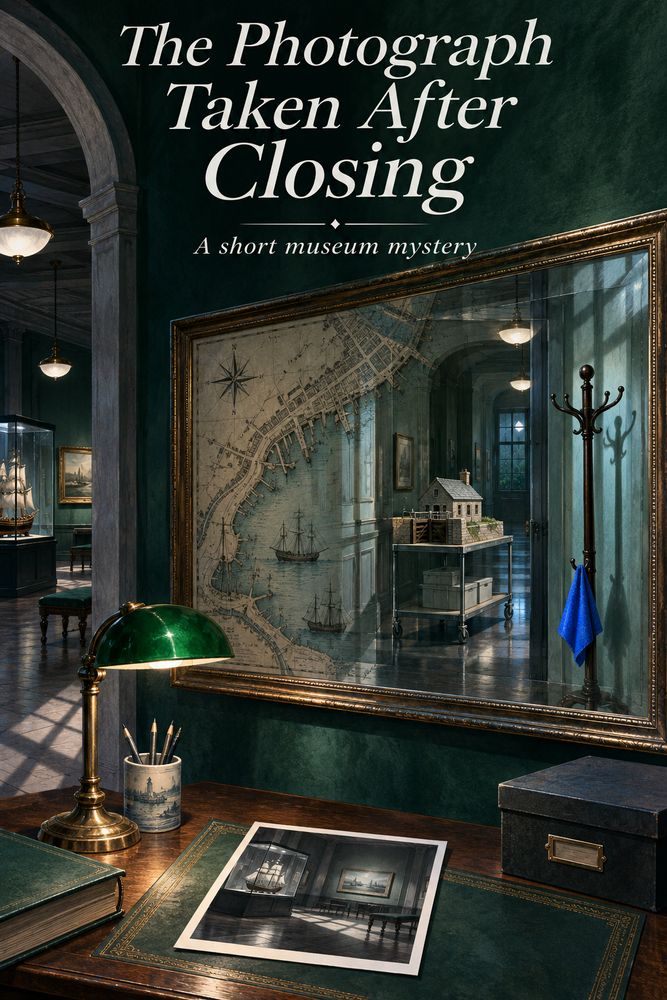
Three weeks later, the case still carried its temporary label. The assessment was complete, but the museum had not yet agreed on the treatment and a new loan date. The empty space was inconvenient. It was also true.
Beside the staff forms, Ilya had placed a revised collection sheet. Condition check, packing check and handover each had their own labelled space. Ruth read the new form before signing anything. Noor did not expect a form to make deception impossible. It could at least make different actions harder to confuse.
Owen passed her in the corridor one morning and stopped.
“You could have asked me first,” he said.
“I did. I left the question beside the photograph.”
He looked at the coat stand. “I said it was the copy.”
“Yes.”
There was no useful softer answer. After a moment he continued towards Ilya's office.
At closing, Noor emptied her bucket and checked the radiator. The floor was dry. She returned the blue cloth to its proper place rather than recreating its accidental importance on the hook.
In the office, the leaflet proof now showed a clean view of the painted boat. The other photograph remained in the file, with the roof, the blue triangle and the cloth all visible. It did not accuse anybody by itself. Alongside the other records, it showed why the museum's first story could not stand.
Noor switched off the corridor light. She had not found a secret talent for seeing through people. She had noticed an object she knew in a place where the written account said something else should already have happened. Then she had kept asking what, exactly, each person could show.
The door closed behind her. This time, nobody needed to pretend an empty case meant a completed journey.