← Book Library · Complete book
Contemporary & Literary Fiction
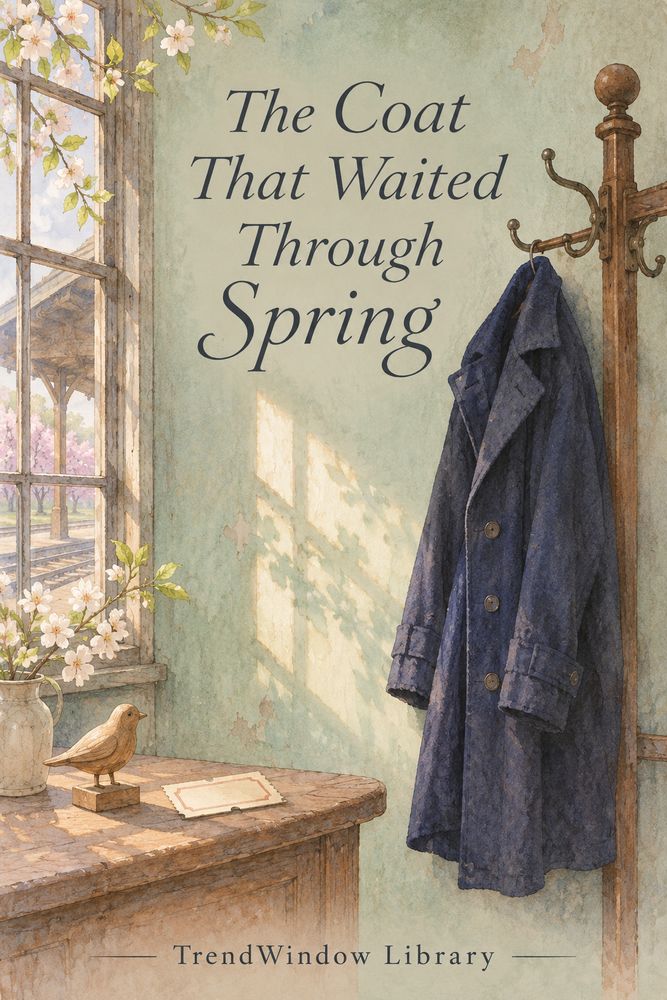
The Coat That Waited Through Spring
By TrendWindow Library
At a lost-property counter, a coat, a wooden bird and a button change how two people think about the things they keep.
Read this complete edition, including its ending and notes. No purchase is required.
A ticket for the coat
The coat came in on a Tuesday when the last bus still carried grit on its steps. Ruth shook it over the mat behind the lost-property counter and heard something strike a button. She checked the pockets before she put it away. There was a wooden bird no longer than her thumb, wrapped in a paper ticket for the municipal swimming pool. One wing had been drawn on in blue ink. The other had been carved.
She put the bird in a small envelope, gave it the same number as the coat and wrote both objects on the card. The evening driver had found the coat on the back seat. It was a navy overcoat with an old repair where a pocket had pulled away. Ruth could see two rows of stitches. One followed the seam. The other went straight across it, as if the person doing the work had been called away and needed to finish before leaving.
At home that night Ruth put her own wet jacket over the back of a chair. For three winters she had kept a second hook clear in the hall. She had stopped using it for guests without quite noticing. When she came in alone it seemed easier to put things down elsewhere.
The man who came for the pocket
A man came in on Friday. He had left a navy coat on the evening bus, he said. There was a wooden bird in the inside pocket. Ruth asked him to describe it. He said it had one blue wing because his daughter had drawn the wing before he learned how to carve it. She went to the shelf and brought back the coat and envelope.
He took the envelope first. He held the bird in his palm and turned it so the light fell on the drawn wing. Then he folded the paper ticket back over it. He asked if he might leave the coat another few days. He had come on foot and already had a bag of groceries and a rain jacket to carry.
Ruth said she could hold it until the last Friday in May. She would mark the bird as collected and give him a receipt with the coat number on it. The man said his name was Noel. He put the receipt carefully in his wallet. He did not touch the coat. When Ruth put it back on the shelf, it folded along the line it had made there.
The button in his hand
In April Noel came in with a button in his hand. He had found it in a bowl on the dresser. He wanted to know whether it was from the coat. Ruth brought the coat to the counter and spread one sleeve out. The buttons on the sleeve were darker. The loose one fitted the larger buttons down the front, where there was a gap near the hem.
Noel laid it down beside the coat. He said his wife had kept spare buttons in bowls all over the house. Since her death he had spent part of every Sunday putting things back where he thought she had meant them to go. He had once found a button in the pocket of his own shirt and put it in the bowl without knowing what it belonged to.
Ruth asked whether he wanted her to put this one in the pocket. He looked at the repair and said yes. She put it in a paper envelope, so it would not slip through the lining. He still did not take the coat. He had brought an empty bag this time. He folded it and put it back under his arm.
When he left, Ruth sat down without reopening the book she had been reading. She could remember the sound her brother's keys used to make when he hung his jacket on the second hook. For weeks after the funeral she had picked up her own keys at the door and thought about the sound before she knew she was doing it. She had never thought of the hook as a decision.
A Friday with no rain
The last Friday in May was dry and bright. Noel arrived after lunch. The sun lit the coat's shoulder as Ruth laid it on the counter. He said he had come to decide. Then he said the coat had been his wife's. She used to wear it over her house clothes to put out the bins. When she grew ill, he wore it over his own jacket on his evening walks. On the bus he had taken it off because the heater was running. By the time he saw the bus pull away, it was too late.
He asked whether he could give it away. Ruth said he could take it and do that himself, or he could sign the line releasing it to the depot's reuse rack. A woman called Ada came on Mondays to check the rack and mend what could be worn again. Ruth showed Noel the line before she gave him the pen. He read it. Then he asked for a minute.
He put his hand into the inside pocket and found the button in its envelope. He asked whether the button could go with the coat. Ruth told him it would help Ada. He tucked it back in. Then he signed. He did not make a speech about it. He checked that his wallet was in his jacket and went out into the bright afternoon.
The other hook
On Monday Ada took the coat off the rack. She set it on a table with the sleeve turned inside out and examined the two rows of stitches. She said whoever had fixed the pocket had known exactly where the cloth would pull. She would leave both rows. She found the button and sewed it on while Ruth counted the umbrellas that had come in over the weekend.
Before Ada left, a man who worked early mornings at the flower market tried the coat on. He looked in the mirror over the rack, raised both arms and asked if the pockets were sound. Ada said the inside one had already been repaired. He put his gloves in it and walked out wearing the coat. Ruth closed the card and put it away.
That evening, at home, she stood in the hall with her jacket over one arm. She put it on the second hook. It did not fit the way her brother's jacket had. The sleeves were shorter and the bottom tilted because her keys were in one pocket. She took the keys out. The jacket hung straight. From the kitchen she could still see it, and she left the hall light on while the kettle boiled.
Edition note
An original short story. Ruth, Noel, Ada, the depot and its procedures are fictional.
Explore more books →