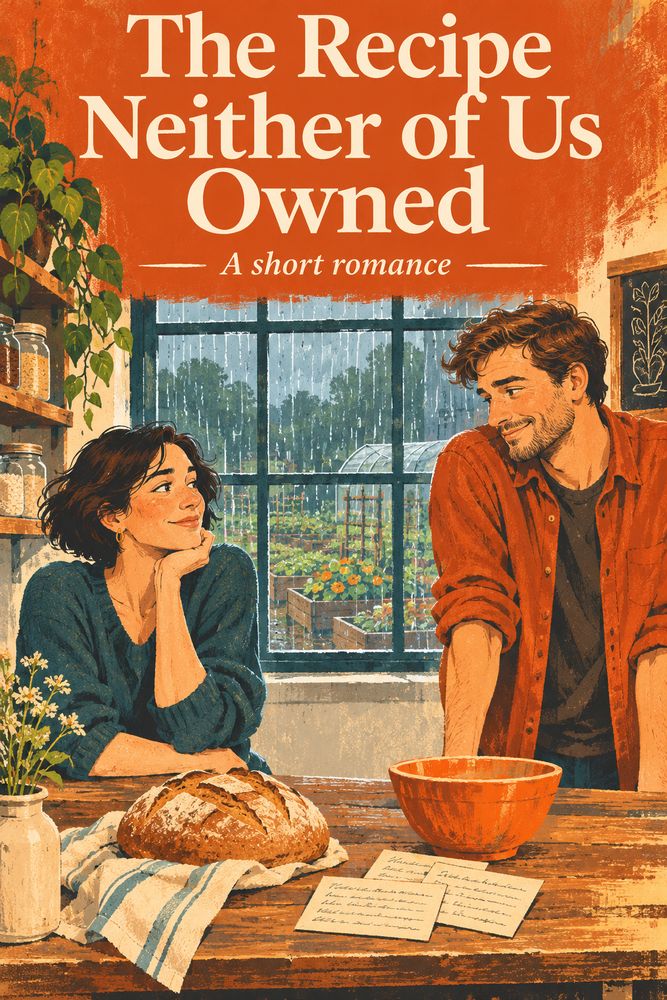
Beatriz came the following Tuesday with her own bread wrapped in a cloth. Luis had warned Nessa that his aunt disliked being called a treasure. She had been called one at a family party and spent the rest of the evening asking people where they expected to bury her.
“Let me see the story,” she said, settling at the kitchen table.
They showed her both the draft and Luis's original note. She read the paragraph, broke off a piece of her bread and considered it.
“My mother made a different loaf,” she said. “I started this one after a neighbour gave me a sheet from a cookery class. I changed it because your uncle didn't like the seeds. Then the orange arrived because the lemons were gone. You can say I made it for you. You cannot say I invented it for you.”
Luis looked delighted rather than disappointed. “What was the neighbour's name?”
“Cora. I don't remember who taught the class. Write that you don't know if you need to write anything.”
Nessa crossed out “passed down unchanged.” She had liked the rhythm of those words. They had never been true, even in her father's kitchen.
Beatriz pointed at another sentence. “And I did not sing every time I baked. Sometimes I complained about the price of electricity.”
“That was mine,” Luis admitted.
“Then give yourself the singing.”
After she left, they sat with the two loaves and the less beautiful, more interesting account. Nessa expected Luis to tease her about the crossed-out sentence. Instead he showed her his own deletion.
“Apparently I remember a musical,” he said.
She laughed properly this time. The room had space in it again.