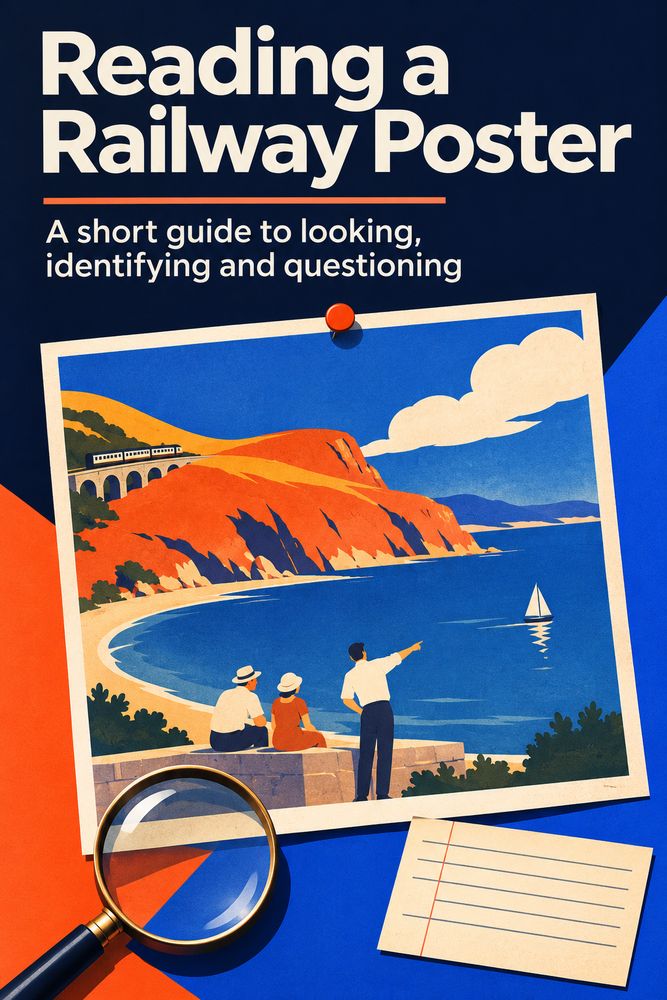
A search for a destination can return several different advertisements. Matching the town name does not establish that a caption, date or artist belongs to the image in front of you. Make identification a separate task before explaining a poster's historical meaning.
The Science Museum Group associates *Scarborough*, object 1978-9126, with Tom Purvis, LNER and about 1931. [Collection record](https://collection.sciencemuseumgroup.org.uk/objects/co231003/scarborough-poster). Royal Museums Greenwich identifies a different *Scarborough, LNER* poster, ZBA1768, with William Henry Barribal and a date of 1930. [Collection record](https://www.rmg.co.uk/collections/objects/rmgc-object-243602). These are brief catalogue identifications, not claims that we have inspected the original sheets.
The practical lesson is not to memorise two names. It is to keep a title attached to an identifier and source. If you copy only “Scarborough railway poster”, the distinction you need has already gone missing. A downloaded filename or a shop's shortened title may be convenient, but convenience is not a chain of identification.
On a reading card, put the institution, object number, displayed title, attributed maker and the date exactly as qualified. If a record says approximately, preserve that uncertainty. Record your consultation date separately from the object's date. Today's lookup does not make an old poster a new publication, and a webpage's automatically displayed access date is not a substitute for your own.
Where the record and the pictured sheet seem inconsistent, keep the inconsistency visible. You may have the wrong reproduction, an incomplete caption or a question for the holding institution. You do not have to solve it by selecting whichever date makes your paragraph smoother. In this book, the named records provide limited anchors; the Greyhaven exercise remains fictional.