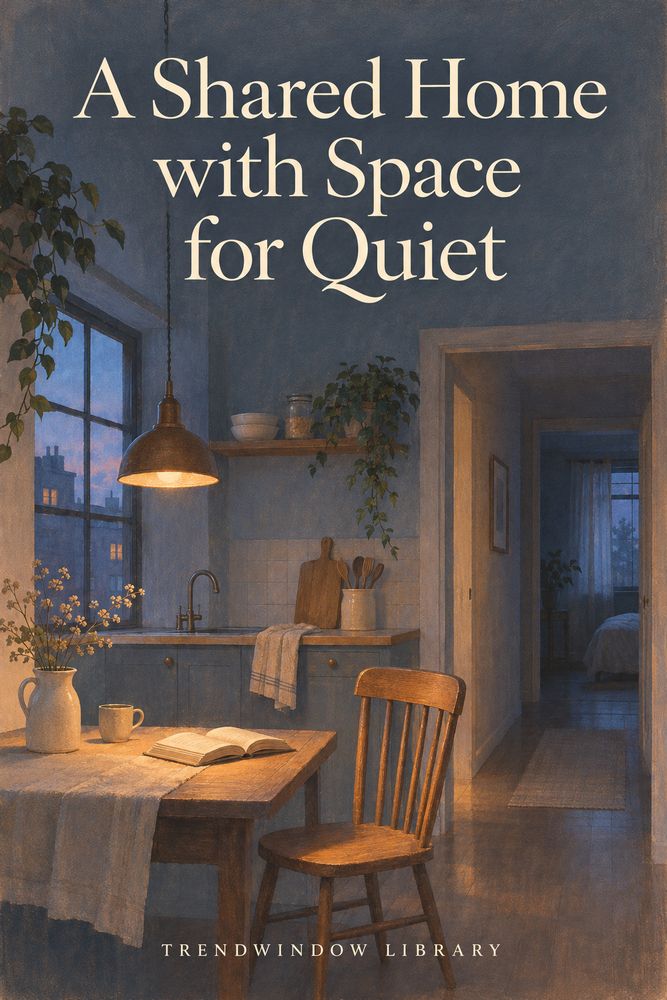
The Kitchen at Ten
At ten on a Tuesday, one person in a shared flat is clearing the kitchen after dinner. Another has set an alarm for five. They both need the kitchen. They both need to be able to live in the flat without asking permission each time they move a chair. What they lack is a small agreement about this particular hour.
Quiet in a shared home is easier to discuss when it has an address and a time. “The kitchen chairs after ten” gives everyone something they can notice and try changing. “This house is always too loud” may describe a real feeling, but it leaves the others guessing which part of the day needs attention. Start with one recurring sound, the place it is heard, and the reason it matters at that hour.
In this book, the flat belongs to no one you know. Mina opens a bakery early. Her housemate Joel eats dinner late after work. Their third housemate, Tess, calls her father on Sundays. The examples are invented. The decisions are deliberately ordinary. A useful arrangement has to survive tired people coming home with shopping, weather that changes a room's use and the occasional evening when nobody remembers the plan.
Mina speaks to Joel the next afternoon, after she has come home and before he has left for work. She tells him that the scrape of the kitchen chairs reaches her bed, and that the previous night she had just put her book down when she heard it. Joel says he was putting the chairs back after eating. He also says that if the request is to stop using the kitchen at ten, he cannot agree. Mina asks whether they could leave one chair in place instead. Now they have something to try.