BOOK LIBRARY · Complete books · Purchases disabled
TrendWindow

← Book Library · Complete book

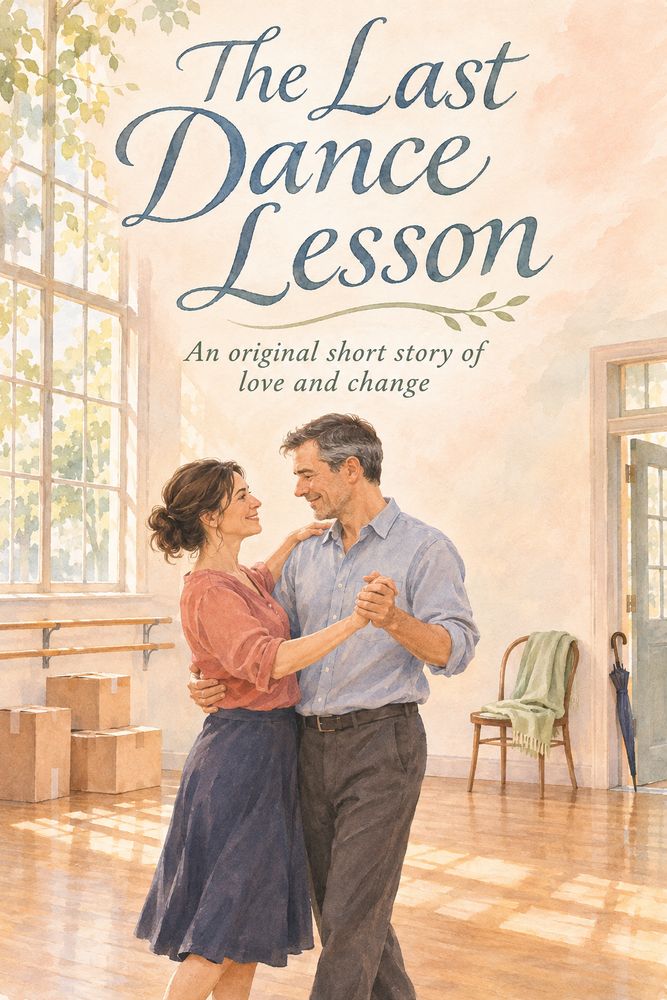
Front cover of The Last Dance Lesson

Romance & Relationships

The Last Dance Lesson

By TrendWindow Library

Ben Hale books six dance lessons before his sister’s wedding. Clara Wren is leaving the studio she has run for eleven years. As the course ends, they learn to ask before helping and to choose a new beginning without abandoning their own lives. A complete fictional romance in eight chapters.

Read this complete edition, including its ending and notes. No purchase is required.

About this book

### An original short story of love and change

This is fiction. All characters are adults; the people, studio, businesses and events are invented. It is a story, not a dance-instruction or health guide.

Original complete short adult relationship story prepared with AI assistance. All characters are adults; people, studio, businesses and events are invented. Not a full-length novel, dance-instruction manual or health guide. Translation meaning reviewed with AI, without independent native-language certification.

1. The wrong reason

Ben Hale arrived at the Aster Studio twelve minutes early and spent eleven of them reading a notice about leaving wet umbrellas by the door.

At forty-five, he could chair a difficult meeting, assemble a flat-pack wardrobe and tell a waiter that the bill was wrong. He could not make himself open a door behind which somebody might ask him to move to music.

Clara Wren opened it for him.

“You're either Ben or very interested in umbrellas.”

“Both, apparently.”

She was forty-two, with a pencil through her hair and a loose thread hanging from her sleeve. The thread reassured him more than a certificate would have.

His sister Jo was getting married in six weeks. Ben had booked six weekly lessons. He told Clara that Jo wanted him to dance at the reception.

“What do you want?”

“To do what she wants.”

Clara waited. He looked at the mirror.

The studio was smaller than it had appeared in the photograph. One wall held mirrors; another held windows overlooking a bicycle shop. There was room for a piano, though the piano now supported a speaker and a bowl of keys.

Clara explained the lesson, asked about anything he needed her to know, and offered to demonstrate without contact first. He agreed too quickly, as if politeness were a test he could pass in place of dancing.

Within ten minutes he had apologized nine times.

“Are you counting?” he asked when she mentioned it.

“Only because you stop every time.”

He tried again. His feet did something different from his intention. He laughed before she could.

Clara turned off the music.

“You don't have to insult yourself to make this easier for me.”

The silence after the speaker stopped seemed enormous.

“I wasn't—”

“I know. Let's just begin again.”

At the end, he had not become good. He had moved through a short phrase without saying sorry.

Outside, he walked past the bicycle shop twice before realizing he had left his umbrella upstairs. When he returned, Clara was pulling the loose thread from her sleeve.

“Next week?” she asked.

He said yes before finding a joke to hide behind.

2. Room for a mistake

At the second lesson, Clara asked Ben to describe what had gone wrong rather than announce that he was hopeless.

“I started before you did.”

“Good. We can work with that.”

“Hopeless was shorter.”

“And much less useful.”

He liked the slight crease at the corner of her mouth when she was trying not to smile. This was inconvenient. He had come to learn where to put his feet, not to notice a woman noticing him.

His marriage had ended two years earlier. Since then he had become skilled at having an acceptable evening: arrive, speak to the people he knew, help carry something, leave before anyone noticed the empty chair beside his.

Dancing would remove his usual job of being useful at the edge.

Clara did not ask about his marriage. When he mentioned it, she listened without offering a lesson about second chances.

“Would you like to stop for a minute?”

“No. I'd like to stop making that answer for every question.”

They worked until he confused their direction and halted.

This time he did not apologize.

The pride he felt was so small and unfamiliar that he nearly missed it.

Afterwards, Clara's colleague Sumi came in carrying fabric samples. She asked where Clara wanted the pale green curtains.

“Not here,” Clara said too sharply.

Sumi folded the samples.

“Later, then.”

Ben bent over his shoelace, giving them a privacy the room could not provide. He had assumed that a teacher who could wait calmly through his mistakes must have solved her own.

At the door he asked whether he should practise the small sequence between lessons.

“If you want to, and in a space that suits you. But don't turn the week into an examination.”

He practised twice beside his kitchen table, stopping when the space felt too cramped. On the third evening he listened to the music while washing a cup.

For once, he did not count the evening as wasted.

3. The notice in the window

By the third lesson, a printed notice had appeared beside the umbrella rule. The Aster Studio would close at the end of the six-week course. The building was being converted into flats.

Ben read the notice twice.

“Were you going to tell me?”

“Yes. Today.”

“You knew when I booked?”

“I did. Your six lessons were always going to finish before we left.”

He heard himself getting angry, and underneath it something more embarrassing. He had already imagined coming upstairs after the wedding, inventing another reason to stay.

Clara let him finish.

“You bought lessons, Ben. I promised those. I should have told you about the room sooner.”

The distinction hurt because it was fair.

“What happens to you?”

“I teach some classes in a shared hall. Fewer hours. Sumi has her own plans. We aren't disappearing.”

He offered to speak to someone about another lease. His cousin knew a property agent.

Clara shook her head.

“I don't need a rescue.”

“I was trying to help.”

“I know. But you haven't asked whether I want to run another studio.”

She had held the lease, answered late messages and washed lost water bottles for eleven years. She liked teaching. She no longer liked every part of running the studio in which she taught.

Ben looked at the piano with its bowl of keys. For the first time it seemed less like scenery and more like something that had needed moving, tuning, dusting and paying for.

“Do you want the green curtains?” he asked.

Clara laughed, then looked surprised by the laugh.

“For the hall. Yes.”

They completed the lesson. Nothing remarkable happened. He made fewer mistakes, then more when he became pleased with himself.

Before leaving, he apologized for offering a future she had not requested.

“That apology I accept,” she said.

4. Something she did not ask

Jo visited Ben on Sunday to collect a cake tin. He had used it to store batteries.

“You've had seven months to wash this.”

“I was waiting for an occasion.”

“Fortunately, I have one.”

He told her about the lessons while transferring the batteries to a drawer. Jo put the lid down.

“You don't have to dance for me.”

“I know.”

“Do you?”

She had invited him to the wedding, not commissioned a new personality. If he wanted to sit, he could sit. If he wanted to leave early, she would miss him, but he could tell her.

“I don't want to leave early,” he said.

It came out with enough force to surprise them both.

Jo leaned against the counter.

“Then don't.”

For years he had blamed gatherings for making him feel outside them. It was harder to admit how often he had left before anyone could invite him in.

At the fourth lesson, he told Clara the truth. Jo had never asked him to dance.

“I thought it would sound less foolish if it was for somebody else.”

“Wanting something for yourself isn't foolish.”

“Even at my age?”

“Especially if you're about to use your age as another excuse.”

He smiled. She did too, and for a moment neither looked away.

Then Clara stepped back and returned to the lesson.

Ben was grateful and disappointed in equal measure. He had recognized a boundary without being punished by it.

That evening, he sent Jo a message: I want to stay for the dancing. I may not be impressive.

She replied: We invited you, not an impressive version.

He placed the phone facedown and played the piece Clara had used. He did not imagine the entire wedding watching. He imagined one space near the edge of the floor, large enough to stand in without pretending he had somewhere else to be.

5. No audience required

The fifth lesson began badly. Ben had tried to practise too much in his head. Every movement arrived carrying instructions.

Clara stopped the music.

“What are you trying to show?”

“That I've learned.”

“To whom?”

He did not answer.

She suggested they set aside the little sequence and work on a simpler exchange: start, pause, notice the other person, begin again. It was not a secret shortcut. He still lost track. But there was less to defend.

Afterwards he asked if the studio would have a farewell performance.

“Sumi suggested a gathering. I said no. Then I said perhaps. Now I've made it impossible for her to plan.”

“Do you want one?”

Clara looked towards the windows.

“I don't want everybody telling me how sad I must be.”

“Are you?”

“Sometimes. Sometimes I'm pleased. I'm tired of making one of those feelings apologize for the other.”

Ben sat on the chair beside the door. He did not offer an event, a building or a reason she ought to feel differently.

After a while Clara said she had found someone to take the piano. The recipient would arrange its collection. A difficulty had become an arrangement without becoming a miracle.

“I could help carry boxes,” Ben said. “If you need that. Not a piano.”

“That would be useful. We have a volunteer packing hour after your last lesson. You're welcome, but you don't owe it.”

“I know.”

This time he did.

As he left, she touched his sleeve briefly to catch his attention.

“Your lesson ends at six next week. Don't arrive prepared for a farewell speech.”

“I'm much better at leaving than speeches.”

“I've noticed.”

There was no cruelty in it. That was why he carried the remark home.

He laid out his wedding shirt that night and put it back in the wardrobe. There was still time before he needed to wear it.

6. The last lesson

During the sixth lesson, the mirror reflected patches where pictures had been removed. The piano was already gone. Without it, the room sounded like a room somebody had finished a sentence in.

Ben had expected the last lesson to gather all the others into a performance he could keep. Instead, Clara asked what he wanted to repeat.

“The part where I go wrong and don't stop the whole world.”

“That's a fairly large part.”

They laughed.

He made mistakes. She made one too, reaching for the wrong track, and neither treated it as a revelation. They worked, paused and worked again.

At the end she told him honestly what had improved and what still needed time. He was able to listen without turning either list into a verdict.

“Can I ask you something outside the lesson?” he said.

“Ask.”

“Would you have coffee with me? After the wedding. As something other than my teacher.”

Clara curved the small lesson card between her fingers without creasing it.

“I'd like that,” she said. “After the course is over. And with no promise about what it becomes.”

“The course ends now?”

“The course ends now.”

He gave her a smile that needed no joke.

Sumi arrived with packing labels and three volunteers. Ben stayed for the hour he had offered. He asked where each box belonged and did not decide that being useful entitled him to remain after everyone else.

Clara carried a rolled pair of pale green curtains.

“You chose them,” he said.

“I did.”

When the final box had been set down by the collection point, Sumi took a photograph of the empty studio. Clara stood out of the frame. Then she changed her mind and stepped into it.

Ben was not in the photograph. That did not feel like rejection.

At the door, Clara said she would message him about coffee. He went downstairs without looking for something he might have forgotten.

7. A dance at the edge

At Jo's wedding, Ben helped with nothing for the first ten minutes of the reception.

It required effort.

He stood with a drink and listened to his sister's friends. When a silence opened, he let somebody else close it. Nobody asked why he had failed to become the evening's assistant caretaker.

Jo looked happy and slightly exhausted. Her husband kept retrieving her glass from tables where she had abandoned it.

When the music began, Ben felt the old calculation start: how soon could he leave without seeming unhappy?

Then Jo held out a hand.

“Only if you want.”

“I do.”

They found space at the edge. Ben forgot part of the sequence. Jo did not know there was a sequence to forget. She laughed at something her husband called across the room, and Ben found he could laugh without losing his place in the evening.

He told her he was enjoying himself.

“I can see.”

He had thought the achievement would be that nobody noticed him dancing. Instead, he was glad that one person did.

Later he sat down because he wanted to rest, not because he had been defeated. He stayed for another conversation, another song and the cake.

On his way home, he sent Clara a message: I forgot things. I stayed. I had a good evening.

He did not send a video for grading.

Her reply arrived the next morning: That sounds like a wedding worth going to. Thursday, four o'clock, the café beside the station?

He wrote yes.

Then, after a moment, he added: I will be the man not pretending to read the umbrella notice.

She replied with a laughing face and the words: I'll recognize you.

8. A different beginning

Clara arrived at the café without her lesson bag. Ben had not realized how often he looked for it before looking at her.

She told him about the shared hall: the curtains fitted, the storage cupboard did not, and she had declined an extra class she would once have accepted automatically.

He told her about Jo's wedding, then about a walk he liked along the old canal. Neither story required the other to be grateful.

For the first few minutes he kept waiting for Clara to guide the conversation. Then he asked about a book beside her cup.

“I haven't finished it,” she said.

“Good?”

“I don't know yet.”

He liked that answer.

They talked until the café owner began stacking clean cups for the evening. Outside, rain had stopped. The pavement held small pieces of the bright sky.

Ben asked if she would like to take the canal walk on Sunday.

“Yes,” she said. “And if it rains, we'll choose something else.”

There was no test hidden in the invitation. He did not have to become a man who walked in all weather to deserve a second afternoon.

At the station corner they paused. Clara put her hand in his.

“May I kiss you?” he asked.

“Yes.”

It was a brief kiss, slightly awkward because he was holding an umbrella. They laughed, and he moved the umbrella to his other hand. The second kiss did not become a lesson.

They parted because Clara had a train to catch and Ben had things to do at home. A beginning did not require them to abandon the rest of their lives.

On Sunday he arrived at the canal with two coffees and no speech. Clara came wearing a pale green scarf that had nothing to do with the curtains, though he noticed the resemblance.

They walked at a pace they found together. When the path narrowed, one went ahead; when it widened, they drew level again.

Ben thought of the empty studio, the mirror no longer necessary. He had spent six weeks learning not to make every mistake an exit.

Now there was no music to follow, and no one charging by the hour.

He asked Clara which way she wanted to go.

She pointed towards the water. He said that suited him.

And they went.

The end.
Explore more books →