BOOK LIBRARY · Complete books · Purchases disabled
TrendWindow

← Book Library · Complete book

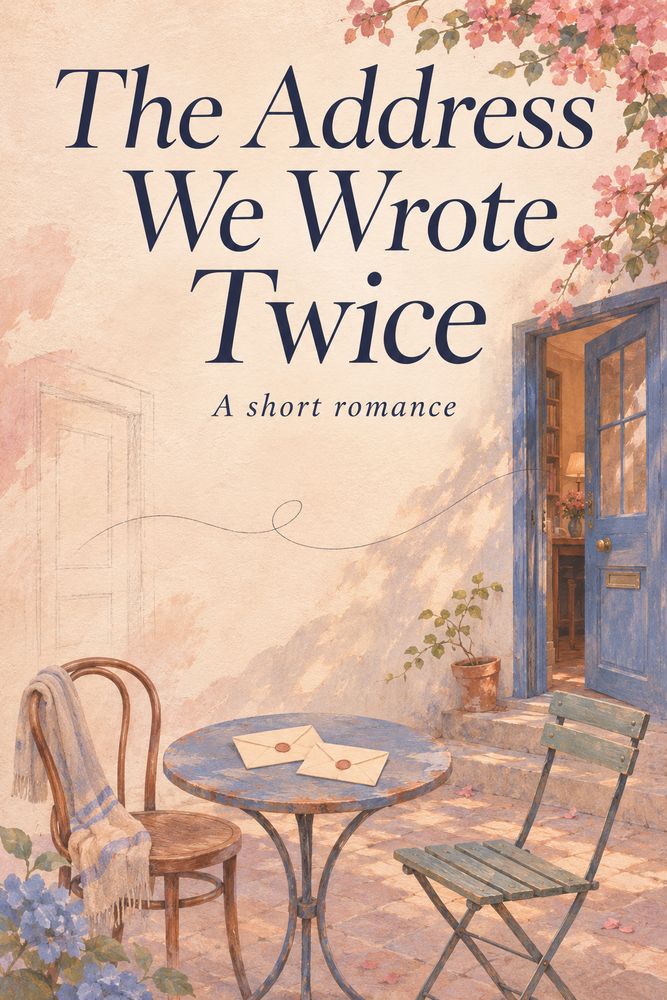
Front cover of The Address We Wrote Twice

Romance & Relationships

The Address We Wrote Twice

By TrendWindow Library

Anya and Ilias arrive to return five borrowed letters, but the house at their appointment address has gone. A new address and a flattened cake bring them together. As affection grows, a job elsewhere and an unfinished application require more honest conversations. A complete fictional short romance in eight chapters.

Read this complete edition, including its ending and notes. No purchase is required.

About this book

A complete contemporary romance short story

All characters are adults. The people, places, exhibition and letters in this story are fictional. The borrowed correspondence was read with its owner's permission and is being returned after she withdrew permission for public display.

Original complete short romance prepared with AI assistance. All characters are adults; people, places, exhibition and letters are invented. Not a full-length novel, record of private correspondence or prescription for relationships. Translation meaning reviewed with AI, without independent native-language certification.

1. Eighteen Mill Lane

Anya arrived at number eighteen with three letters in a grey envelope and a cake she had managed to sit on during the bus journey.

There was no house.

Behind a fence, a rectangle of pale earth held a strip of kitchen tiles and one stubborn plant. The blue front door she had drawn for the exhibition was gone. So were the windows, the shallow step and the place beside it where Mrs Vale used to leave muddy shoes.

Anya checked the return card. Saturday, three o'clock. Eighteen Mill Lane.

A man stopped beside her with another envelope.

“If you have the house,” he said, “I have the appointment.”

She laughed before she meant to.

His name was Ilias. He had translated two of Mrs Vale's old letters for the proposed neighbourhood exhibition. Anya had borrowed three to develop the illustrated panels. They had worked on different parts of the project and never met.

Mrs Vale had changed her mind about displaying the correspondence. The letters had belonged to her marriage before they belonged to anyone's idea of local history. The organisers had cancelled that section and arranged their return.

Apparently, they had returned the borrowers to the wrong place.

Anya called Rosa, the organiser. There was an embarrassed silence, then the sound of a drawer opening.

“The old address was on the collection template. I checked the time and missed the address. Please wait while I call her.”

Ilias put his envelope inside his coat to keep it dry. He did not ask what was in Anya's three letters. She appreciated that more than his joke.

Rosa called back with Mrs Vale's current address and permission to pass it on. A flat near the park. Mrs Vale was waiting with tea and had wondered why they were late.

Anya wrote the address on her card. Ilias asked to copy it.

“Twice,” she said. “Perhaps it'll stay put if we write it twice.”

He smiled. Beyond him, the kitchen tiles caught a little light.

“Shall we rescue the appointment?”

“The cake may be beyond rescue.”

He looked at the flattened paper bag.

“We can describe it as deliberately low.”

2. Five letters returned

Mrs Vale opened the flat door in a yellow cardigan. She took one look at the cake and fetched plates rather than asking what had happened.

The room had a narrow balcony and a table too large for it. Several chairs waited in the hallway because she had not decided where they belonged.

“The house had space for everything,” she said. “That was not always an advantage.”

Anya and Ilias gave her the envelopes. Mrs Vale checked the return list: three letters and two letters. Five originals back. She signed the acknowledgements, then put both packets into a drawer without reopening them.

Anya had expected a farewell to the exhibition. Perhaps a reading, perhaps a story that would make the cancelled work feel useful. Instead Mrs Vale asked whether anyone wanted more tea.

“I liked your drawing of the door,” she told Anya. “You can keep the drawing. I simply don't want strangers reading what we said when we were cross.”

“You don't owe us a reason.”

“I know. But I wanted to give you one.”

Ilias asked what should happen to his working translation. Mrs Vale wanted one copy for herself and the rest of the project's copies removed from its planned display materials. He wrote down the request and said he would coordinate it with Rosa.

Then they talked about the balcony. Wind kept turning a pot that was round on one side and flat on the other. Ilias suggested moving it behind the chair. Anya said the chair was currently in the hall.

This made Mrs Vale laugh so hard that she had to put down her cup.

When they left, the envelopes remained in the drawer. No one had earned another reading by being helpful.

At the pavement, Anya began to say goodbye. Ilias looked toward the park.

“I haven't had lunch. Would you like something that hasn't been compressed?”

She wanted to say yes without appearing to have waited for the invitation.

“I know a place with very tall sandwiches.”

They went together. The return cards, now signed, were in separate pockets. For the first time that day, neither needed an address.

3. The easy version

The sandwich shop had four tables and a window that reflected the traffic more clearly than it showed the street. They sat facing each other because there was no room to sit any other way.

Ilias translated catalogues, letters and the occasional menu whose owner believed every dish needed a small autobiography. Anya illustrated books and packaging. She had recently drawn twenty-seven versions of a pear for someone who ultimately preferred the first.

They were good at making each other laugh. It encouraged them to be good at making themselves simple.

Anya mentioned an artist residency she had turned down several years earlier.

“Wrong time?” Ilias asked.

“I never really wanted to go.”

It was an answer she had used so often that its smoothness no longer warned her. She had wanted to go. She had also been afraid of disappointing her family, failing away from home and discovering that the work she loved did not make her exceptional.

Ilias nodded as if he understood.

“I'm the one who stays,” he said. “People move away. I keep the familiar café in business.”

In his bag was an offer for a six-month translation project in another city. He had not accepted it. He had not refused it either.

Neither owed a stranger a complete account of the past or every possible future. Yet both heard the ease their sentences created. Here was a person who would not leave. Here was a person who had never wanted to.

Outside, a bus blocked the window and briefly made the shop feel like a room at night.

Anya asked if he would like to walk next Saturday.

“Same park?”

“A house is optional.”

He took out his phone, and they exchanged numbers. She typed her name herself because people often added a letter that did not belong.

When they stood, Ilias caught the sandwich paper before it slid from her tray. It was a small gesture, too ordinary to prove anything. She remembered it on the journey home.

That evening she opened the residency application she had been saving in a browser tab.

She did not close it this time.

4. A place for Saturday

Their second meeting had no borrowed objects in it. Anya arrived with nothing to return, and Ilias with nothing to translate. This made them both slightly nervous.

They walked around the park until they had passed the same sleeping dog three times. The dog did not reward their persistence by moving.

Anya bought two cups of coffee. Ilias paid for the next ones a week later. Their meetings acquired small continuities: the bench that tilted, the bakery that closed before either remembered, the question of whether a bad film was improved by good company.

At the end of the third Saturday, rain caught them beneath a shop awning. Ilias touched the wet edge of her sleeve.

“May I?”

She did not make him pretend the question concerned the sleeve.

“Yes.”

The kiss was brief because a delivery rider wanted to get past. They stepped aside laughing, and the interruption spared them the need to make a speech.

Afterward, the easy versions of themselves became harder to maintain.

Anya's sister sent a message asking whether she had submitted the residency application. Anya answered while Ilias was paying for a loaf of bread. When he returned, she turned the phone face down.

He noticed. He did not ask.

Two days later, his project coordinator requested a decision by Friday. The work would begin in five weeks. He read the message twice and took an unnecessarily long time choosing a reply to Anya's invitation for Sunday.

She saw the delay, imagined declining interest and decided to be less available. He saw her shorter answer and imagined that she had already sensed his departure.

By Thursday, both were protecting themselves from a conversation neither had started.

Anya took the application printout from beneath a pile of invoices. Across the top she wrote a deadline in blue pencil.

Then she looked at the sentence she had used in the sandwich shop: I never really wanted to go.

It was not a secret that needed punishment. It was a false shortcut that had begun choosing the route for her.

5. What the first draft hid

Mrs Vale sent Anya a note inviting her and Ilias to see the new arrangement of the flat. The oversized table was staying. Two chairs were going to her brother's daughter. The troublesome pot had finally acquired a sheltered place.

There would be no exhibition, the note added. Just tea.

The invitation was on fresh paper with the new address clearly written at the top. Anya liked the practical care of it. A person could revise where she lived without pretending the old rooms had never existed.

She began a message to Ilias.

You already know how I feel about leaving.

She stopped. He knew what she had told him. Those were not the same thing.

In the next version, she explained the old residency refusal, the family argument, the years of wondering and the new application. The message grew so long that it began to ask him to comfort every earlier version of her before he had answered the present one.

She saved it privately and wrote something shorter.

I wasn't honest when I said I never wanted to go away for work. I'm applying for a residency now. Could we talk before Sunday?

His reply came quickly.

Yes. I have something about work to tell you too.

For several minutes she hated that final sentence. It seemed to steal her role as the person about to be difficult.

Then she recognised how little she knew.

They agreed to meet on Friday evening at the same sandwich shop. Anya did not bring her long draft. She kept it because writing it had helped, not because Ilias needed to receive it.

On the way, she passed a shop window with a framed photograph of the old Mill Lane houses. Number eighteen stood in the middle, its blue door reduced to a grey rectangle in the print.

She did not take the photograph as a sign. She looked at it, then continued.

At the shop, Ilias had chosen the same cramped table. He stood when she entered.

There was no clever opening line from either of them.

Anya sat down.

6. The conversation without a promise

“I did want the residency,” Anya said. “The old one. I told you I didn't because it sounds easier than saying I was frightened.”

Ilias listened without offering to repair the decision.

“And the new one?”

“I've started the application. I don't know if they'll take me. I don't even know yet whether all the practical details would work. But I want to find out.”

He nodded, then told her about the six-month project, the other city and the five weeks before it began. The decision was due that night.

“You said you were the one who stayed.”

“I know.”

“Had you already been offered it?”

“Yes.”

That hurt more than the distance. She put her hands flat beside the paper cup.

“I wasn't entitled to your whole life on the first day. But you gave me a very tidy version.”

“So did you.”

She looked up. He winced.

“That sounded like a defence. It isn't. I wanted you to like the person at the table, and I left the offer outside the story.”

Anya let the silence remain until she could hear the difference.

“Do you want the job?”

“Yes.”

“Then don't ask me to become the reason you refuse it.”

“I wasn't going to.”

“Good. I don't want to make you the reason I stop applying either.”

They spoke more slowly after that. She could not promise that distance would suit her. He could not promise that a six-month project would settle every question about where he wanted to live. Neither knew the result of her application.

What they could offer was smaller: continue seeing each other before he left, be clear when plans changed and decide together whether to arrange a visit. No secret test in which the person who sacrificed more loved better.

“I still want Sunday,” Ilias said.

“With Mrs Vale?”

“And the walk afterward. If you do.”

Anya looked at him across the table. She liked him less effortlessly now. She also liked him with more information.

“Yes,” she said. “I want Sunday.”

When they left, he asked before taking her hand.

This time, the answer had room around it.

7. An address that could change

Mrs Vale served tea at the table that was apparently too large and now looked perfectly at home. The remaining chairs had space to be pulled out without moving three other objects first.

Anya and Ilias arrived together. They did not announce their relationship as an explanation for returning.

Mrs Vale asked about their work. Anya said she was applying for a residency. Ilias said he had accepted a six-month project away.

“Will you both be here for the pear cake next month?”

“I won't,” he said.

“I might,” Anya answered. “I don't have a decision yet.”

Mrs Vale wrote their answers in her calendar. No one translated them into a declaration about affection.

After tea, she showed them the drawer where the five letters were kept. She did not open the packets. Ilias confirmed that her private translation copy had been delivered and that Rosa had removed the material from the cancelled display. Anya's drawing of the blue door stood on a shelf, with Mrs Vale's permission.

The old project had found an ending smaller than a public opening.

On the walk afterward, Anya asked what a visit to the other city would actually mean. Not someday. Which weekend? Where would she stay? Could she afford the fare without pretending it did not matter?

They looked at dates. Ilias would be settled enough six weeks after the move. Anya would book her own room nearby for the first visit. She liked having a place that was hers, and he did not treat it as rejection.

They chose a weekend and left room to change it by talking, not disappearing.

During his last week, they cooked a meal that took far longer than expected. They ate late, with one burnt edge cut from the bread. Anya did not call it proof that they could build a household.

It was dinner. It was good to have made it together.

The morning he left, she went to the station. She did not hand him a dramatic letter. She gave him the pen he had left at her flat.

“You'll need an address to write from.”

“I'll send it.”

He did. That evening, a street name, a building number and a photograph of a very ordinary front door arrived on her phone.

8. The second time we wrote it

Six weeks later, Anya sat on a train with a return ticket in her bag and a small envelope on her lap. Her residency application was still awaiting a decision. She had checked once that morning, then put the phone away.

Inside the envelope was a drawing of Ilias's new door. She had worked from the photograph he sent, adding the crooked plant pot he complained about during their calls. Beneath it she had written: For the person who lives here now.

She wrote the address on the envelope. Then, because her phone battery was low, she copied it into her notebook. The second version was less elegant and more useful.

Their six weeks had not been a perfect sequence of long conversations. Once he had missed an agreed call and apologised without blaming the project. Once she had asked for a quiet evening instead of pretending she wanted to talk. They had changed the visit's Friday arrival to Saturday after discussing her work deadline.

The visit had survived because it was a plan they could revise, not a promise too impressive to touch.

Ilias waited beyond the barrier with two coffees and the expression of a man trying not to spill either while waving.

“You found the city.”

“I wrote the address twice.”

“Reliable system.”

“Only if someone updates it.”

He laughed and put the cups on a ledge before embracing her. She kissed him without the shelter of an awning or the excuse of rain.

There would be a weekend: a walk, a meal, a room of her own nearby and a departure on Monday. None of those limits made the meeting less wanted.

At his building, Anya gave him the envelope. He read the line beneath the drawing and stood quietly for a moment.

“Would you like to come in?”

“Yes.”

Inside, he had cleared space on the small table. There was no display of borrowed letters, no evidence that a relationship had already survived every test. There were two chairs, the rescued pen and a sheet of paper on which he had begun a list of things they might enjoy doing.

He turned the sheet toward her.

Anya crossed out one museum that would be closed that day and added the riverside path.

Then she set the envelope beside it, and they began with the afternoon they actually had.

End. This is an original fictional short romance, not a record of private correspondence or a prescription for how relationships must develop.
Explore more books →