1. A Monument That Descends
A monument need not rise above the ground to organise a powerful space. Rani-ki-Vav, the Queen's Stepwell at Patan in Gujarat, directs attention downward. Its history asks us to think about access to water, the arrangement of a descent and the memory carried by carved stone, rather than beginning with the outline of a building against the sky.
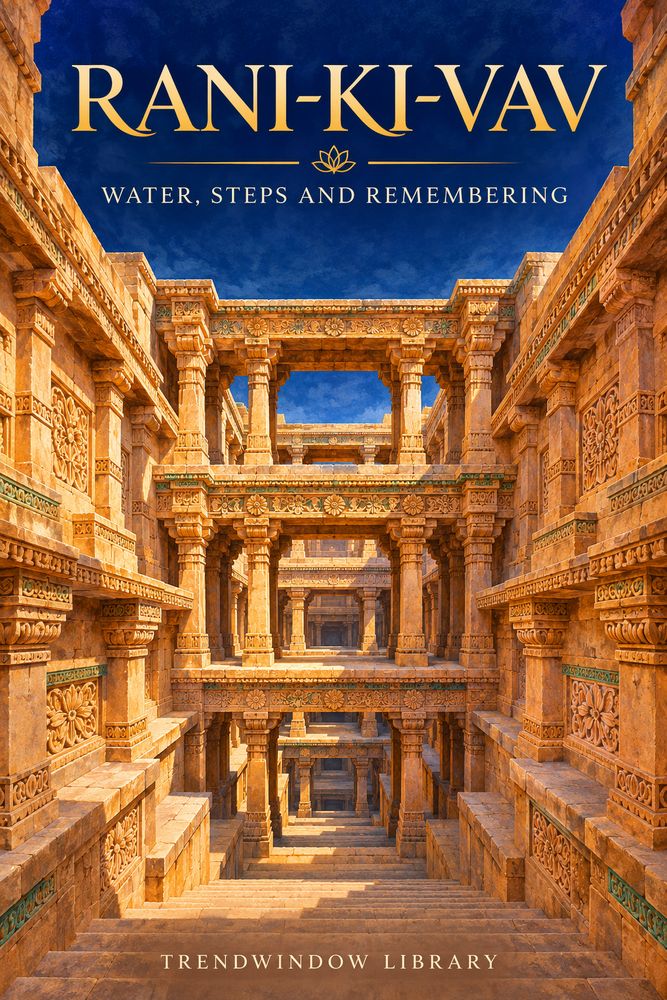
UNESCO's inscription decision describes an eleventh-century memorial on the Saraswati River, made as both a functional and religious structure. It identifies an east–west arrangement with a stepped corridor, four pavilions, a tank and a well shaft. Seven levels of stairs and sculptural panels belong to its design. These are features of a particular monument, not instructions for constructing or entering a well.
For an original reading exercise, write those elements in order from the approach toward the well. Do not add measurements or assume every part was meant to be seen from a single viewpoint. The point is to notice sequence. A route can organise an architectural experience differently from a facade; going toward something may reveal details gradually rather than display them all at once.
The official descriptions call the design an inverted temple, emphasising the sanctity of water. That expression joins purpose and form. It does not mean the monument was simply an ordinary temple turned physically upside down. Nor does it reduce the place to decoration attached to a useful container. Its functional and religious meanings need to be read together, while the limits of our sources remain clear.
This book is a short cultural history based on named institutional and project records. It is not an account of my visit, an archaeological excavation or a present-day access guide. The descent here is an organising idea for reading evidence, not a claim that a reader can currently walk every historic level.