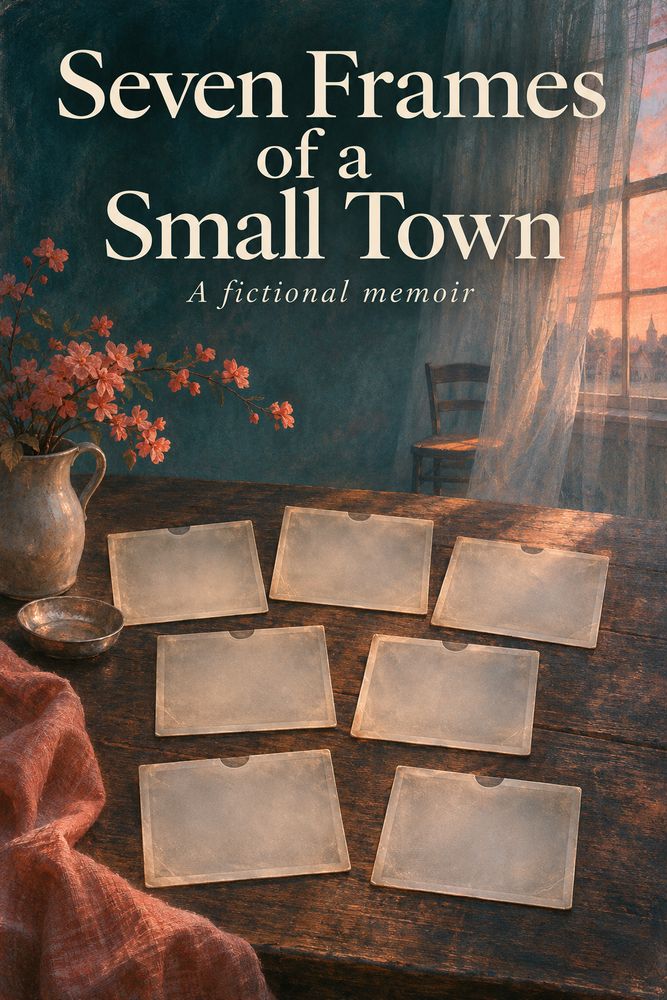
On our last morning, seven pale rectangles remained in the dust on the table where the seven individual protective sleeves had rested. I wiped them away. The negatives were already with their recipients; the boxes waiting by the door contained studio fittings, not unfinished deliveries.
Dad checked the taps while I read the meter. He had kept one small stool, too low for his knees but useful for reaching a shelf. I asked whether he wanted a photograph in the empty studio.
“Not today.”
I put the camera back in its bag. It was a very small action, invisible to anyone outside the room. I had performed larger gestures with less difficulty.
We returned the keys at noon. Asha's new shop was on the way to the station, and I stopped to buy flowers for my mother. Asha asked whether I wanted the paper left open around them. For once I answered the practical question without searching for a meaning in it.
At home, Esther had put her portrait beside a certificate I had walked past all week. The empty-chair print was in her drawer. She told me where, then reminded me that telling was not the same as asking me to fetch it.
During dinner Dad described the sewing shop's plans for his shelves. My mother corrected the name of one of the classes she had taken years ago. I wrote the name down afterward, with her permission, because I wanted to remember it accurately rather than beautifully.
I still take photographs. Sometimes I arrange a chair or ask someone to turn toward the light. The work has not become innocent because I have learned to describe its mistakes. I am simply less certain that the moment I prefer is the moment another person wants kept.
Of the seven frames, none hangs on my wall. I know where each went. That is the ending I can give them.
The next morning my mother opened the curtain herself. I was at the table, finishing breakfast. I saw the light move across the floor, and let it.
### Fiction and source note
This memoir voice, its town, characters, dialogue, seven frames and return agreements are invented. No real person's biography is represented. The original narrative is not a guide to legal ownership, copyright or photographic conservation.
For the limited handling background, the Library of Congress recommends avoiding contact with image surfaces, using appropriate housings and identifying materials before choosing care methods. Specialist assessment in the story is fictional, not a reported conservation case. Source read on 9 November 2026: Library of Congress, *Care, Handling, and Storage of Photographs*, https://www.loc.gov/preservation/care/photo .