BOOK LIBRARY · Complete books · Purchases disabled
TrendWindow

← Book Library · Complete book

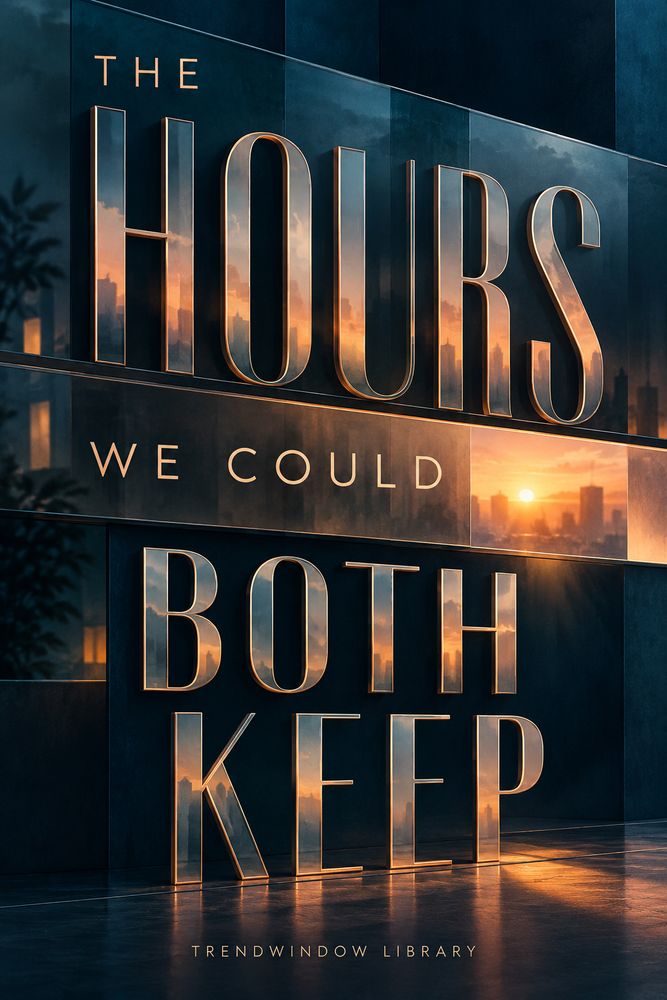
Front cover of The Hours We Could Both Keep

Romance & Relationships

The Hours We Could Both Keep

By TrendWindow Library

Nell and Arun find romance between a hotel night shift and early bakery hours. A complete love story about making time, honest plans and promises worth keeping.

Read this complete edition, including its ending and notes. No purchase is required.

1. Six Twenty

At six twenty on Wednesday morning, Nell found a man arguing with a paper bag.

The bag had split. A small roll sat on the counter between him and Edie, who ran the station kiosk. Neither of them looked prepared to blame the roll.

'It was holding together until I complimented it,' the man said.

Edie gave him another bag. Nell bought coffee and moved aside to let him reach the sugar.

'I don't need sugar,' he said. 'I need somewhere to put this while I find my money.'

She held the bag. It was warm against her wrist.

He thanked her, paid, and introduced himself as Arun. He worked at the bakery two streets away. This was his short break between the early work and the later work, which did not sound much like a break when he explained it.

Nell had just finished at the Harbour Rooms hotel. She received arrivals, answered questions and found things people could not believe they had left behind. Her regular nights were Tuesday through Saturday, ten until six. Arun usually worked Wednesday through Sunday, three in the morning until eleven.

'So this is the middle of your day,' she said.

'And the end of yours.'

She was thirty-two. He was thirty-five. She learned those facts later. That morning she learned that he took his coffee without sugar and looked directly at her when she spoke, even with a split bag and seven minutes left.

When he went back to work, Nell caught her bus. She forgot to drink her coffee until it had cooled. The warmth at her wrist lasted longer than it should have.

2. A Different Kind of Monday

They met at the kiosk again on Friday, then the following Wednesday. Neither described the meetings as an arrangement. Both began arriving with something to say.

Nell told him about a guest who had asked whether the sea was open at night. Arun told her about the handwritten note on the bakery fridge: PLEASE DO NOT ORGANISE THIS. IT IS ALREADY ORGANISED.

'Was it?' she asked.

'No. But somebody was attached to the arrangement.'

They laughed. Edie turned a page of her newspaper without commenting.

On the next Friday, Arun asked whether she would like to meet when neither of them was on the way to or from work.

They compared days. Monday was normally free for both. Nell did not work Sunday or Monday nights; Arun did not work Monday or Tuesday mornings. The overlap existed. Neither had been particularly good at leaving it unfilled.

'Monday at four?' he asked.

'Four in the afternoon,' she said, more solemnly than necessary.

'I was going to specify.'

They chose a small café by the park. Nell arrived in a blue jumper instead of her hotel jacket. Arun was already there, reading the menu as if it might contain a question he would be asked later.

Without the kiosk counter between them, there was enough room to be shy.

He stood up, then seemed to wonder whether standing up had made everything too formal. She touched his sleeve and said she was glad he had asked.

'So am I,' he said.

They ordered tea. It seemed a reasonable way to begin being different people together.

3. The Part That Was Easy

Their second Monday lasted until the café stacked chairs at the far end of the room. They left before anyone had to ask them.

Arun liked films with arguments afterwards. Nell liked a film she could leave alone for a while before deciding what she thought. They disagreed cheerfully about one they had both seen, then agreed on another neither could remember very well.

He walked her to the bus stop. There was no hurry until the bus appeared, and then there was suddenly too much.

'I would like to kiss you,' he said.

'I'd like that too.'

They missed the bus. Neither blamed the timetable.

Over the next few weeks they found smaller ways to see each other. A walk on a Tuesday afternoon. A phone call that ended because Nell had to get ready for work. A meal that Arun cooked without pretending the crooked omelette was an experiment.

She learned that he put a bookmark into a book and then left the book somewhere he could not find. He learned that she kept hotel pens in almost every pocket, although she never remembered putting them there.

Nell liked his face when he was about to make a joke and decided to let someone finish speaking instead. Arun liked that she noticed the person who had not received a menu.

They were not discussing forever. They were making another plan before the present one ended.

Nell had dated people who treated her working hours as something she would eventually apologise for. Arun did not. Arun had dated people who thought his mornings left the rest of his day conveniently empty. Nell did not.

They were pleased with how much they understood. It made the part they had not understood harder to notice.

4. The Monday That Went Missing

The first lost Monday began with an extra bakery order.

Rita, Arun's manager, asked on Sunday whether he could help the following morning. Someone needed the work done; nobody had ordered him to volunteer. He wanted the extra pay and wanted to be thought dependable. He said yes before thinking about four o'clock.

At two ten on Monday he messaged Nell: Running a little behind. Should still be fine.

She read the message while deciding whether to take a coat. She wanted to believe the second sentence, so she did not ask about the first.

At four, she sat at their café table. At four twenty, she ordered tea. At four forty, she put on the coat.

He called at four fifty. He had stayed to finish and had failed to turn a hopeful estimate into an honest update.

'I'm sorry,' he said. 'I should have called sooner.'

'It's fine.'

'It isn't.'

'You were working.'

That statement was true and did not answer the question either of them was avoiding.

He offered to come straight over. She said she was on her way home and did not want to turn around. He accepted that. The call ended politely enough to make Nell feel foolish for being hurt.

On the bus, she looked at the empty seat beside her. She did not want him to give up his job. She wanted him to know that she had put on a coat, caught a bus and kept an hour he had asked her to keep.

At home, Arun washed the bakery smell from his hands. He had earned more that day. He had not made the calculation he thought he had made.

5. Two Tickets

They met the next Monday and talked around the missed afternoon. Arun apologised again. Nell said she understood, and she did. Understanding did not make her less wary of another plan.

Two weeks later she bought cinema tickets for a Monday showing at half past four. They both put it in their phones.

Then Jon, her hotel manager, offered her a place in a paid training session that ran until five that same Monday. She had wanted the training. It was relevant to work she hoped to do. She accepted without asking about another session.

She told herself she would explain to Arun properly. Then she kept waiting for a moment when explaining would not disappoint him.

At ten past four on the day, she finally sent a message. She was still at the hotel. She would not make the film.

He was already walking toward the cinema.

This time, Nell knew exactly what an empty seat might mean.

They spoke that evening. She offered to pay for both tickets, though she already had. The offer sounded stranger aloud than it had in her head.

'I wasn't waiting for a refund,' Arun said.

'I know.'

'Did you know before today?'

'Yes.'

He was quiet. She did not fill the silence with the importance of the training. It was important. So was the fact that she had known.

'I'm sorry,' she said. 'I wanted the course. I also wanted you not to mind. So I left you to find out when you couldn't do anything with your afternoon.'

He breathed out. Neither suggested buying tickets to something else immediately.

6. What Flexible Had Meant

They met on Tuesday, without coffee between them, on a bench near the park gate.

Arun began by saying that his missed Monday and her missed film did not cancel each other out.

'I wasn't going to say they did,' Nell said. 'I was hoping they might make the conversation less embarrassing.'

He smiled briefly.

They had both used the word flexible. Each had meant that they would try to be kind when something changed. Each had also heard permission to leave the other person at the edge of the day until the rest of it was settled.

'I don't need every hour you aren't working,' Arun said. 'I need to be able to believe the one you say is ours.'

Nell picked a flake of paint from the bench, then stopped. There were things she could say about being useful, about not wanting a new relationship to make her less ambitious. They were true, but they did not explain why she had hidden the clash.

'I didn't want to hear that you were disappointed,' she said. 'So I made sure you would be.'

'I thought I could finish everything and still arrive,' he said. 'I wanted you to get the version of me who could manage all of it.'

'I like the version who tells me where he actually is.'

He looked at her then.

'I want to keep seeing you,' she said. 'I don't want that to mean fitting you into whatever nobody else has asked for.'

He said he wanted the same thing. They did not kiss to end the conversation. They stayed until they had each said what they would do next.

7. The Cost of an Afternoon

Nell spoke to Jon before the next rota was settled. She said she wanted to keep the first Monday of each month unavailable for voluntary extras. She would still work her agreed shifts. She also asked when the next training session would run.

He did not congratulate her on a personal breakthrough. He asked which dates she meant and reminded her that some optional hours would go to someone else.

'I understand,' she said.

She wrote the dates down. Later, she felt the loss of money she had not yet earned and the relief of not having offered the time automatically. Both feelings were real.

Arun spoke to Rita. He could not take the extra work on those Mondays. He was not asking her to organise the bakery around his relationship. He was giving a clear answer about days he would otherwise have offered.

Rita frowned at the order book. They discussed what he could do on a different day. They did not solve every staffing problem before the conversation ended.

At home, Arun checked his spending. He could manage one fewer optional Monday, though it meant postponing something else he wanted. He did not tell Nell that the choice was effortless.

They compared their calendars that evening. The first Monday was an anchor, not the only day they were allowed to meet. Other plans needed actual agreement too. If a real change came, they would say what had changed rather than send a vague promise and hope.

'It sounds very practical,' Nell said.

'You bought two cinema tickets. That was practical too.'

She reached across the table and took his hand. The planning did not feel less romantic from there.

8. Four O'Clock in the Rain

On their first deliberately protected Monday, the café was closed for a minor repair.

Nell arrived first and read the notice twice. For a moment she felt the ridiculous wish to send it a disappointed message. Then Arun came around the corner with his coat collar turned up.

'Well,' he said. 'Neither of us can claim this one.'

She laughed. They stood beneath the narrow awning and chose somewhere else.

It was raining too hard for the park. The covered market had a small place serving soup, and a table beside a display of mugs that neither wanted to buy. They sat down at four fifteen. Nobody had waited alone for an explanation.

Arun told her about a book he had finished and the bookmark he had found in another book. Nell told him a story about her sister that had nothing to do with the hotel.

They had spent so much of their early time reporting on work that they had mistaken those reports for the whole of knowing each other.

He wanted to learn to draw badly without turning it into a skill he could sell. She wanted to visit a town simply because its name made her laugh. She told him the name. He laughed before asking where it was.

When the rain eased, they walked under one umbrella badly enough to wet both shoulders.

At the bus stop, Nell did not say that he could leave if he had something else to do.

'Stay for the next one,' she said.

He stayed.

9. Not a Favour

Arun invited her to supper the following week. He told her it was supper, not a request to help him prepare anything for the bakery.

'I wasn't going to offer,' she said.

'I know. I wanted to hear myself say it.'

He cooked rice and vegetables. One pan was too small, so he used two. Nell sat at the kitchen table and described the training she was due to attend on another agreed date. She still wanted to progress at work. He still wanted more responsibility at the bakery. Neither desire had become evidence against their relationship.

Afterwards, she helped with the dishes because she was there and wanted to, not because staying had quietly given her a job.

Arun asked if she would come to his friend's birthday meal the next month. He gave the day and time before asking. Nell checked her calendar instead of saying yes to prove she cared.

'I can,' she said. 'I'd like to.'

He leaned against the counter and smiled at her in a way that made the room seem smaller.

'What?' she asked.

'Nothing clever.'

'Good.'

He crossed the kitchen slowly enough for her to meet him halfway. She did.

Later, they sat on the sofa with a film neither had seen. When it ended, Arun started to ask what she thought, remembered, and let the quiet remain for a little while.

Nell put her feet beside his. She liked him more for the unfinished question than she would have liked the right answer.

10. The Hours They Kept

By the third month, not every arrangement had worked perfectly. They had changed a Tuesday walk after speaking on the phone. Nell had arrived late once and told him before he left home. Arun had said no to a date because he needed the evening to himself. She had believed the answer without converting it into a test.

The first Monday stayed in both calendars. There were other days too, chosen in full sentences.

One Monday, they took a bus to the end of a route neither usually travelled. There was a path, a bench and a view partly hidden by a large untidy shrub. Nell said the shrub had excellent privacy arrangements.

Arun laughed, then sat beside her.

'I love you,' he said.

She turned toward him. He was not offering to change his working life into hers. He was not asking her to make herself available at any cost. He was there on an ordinary afternoon they had both chosen.

'I love you too,' she said.

They sat with their hands joined. Later they would need to eat, go home and get ready for the days that followed. Their jobs would still begin at inconvenient hours. Neither had been rescued from a life they had chosen to keep.

They talked about another visit, and about something Nell wanted to show him closer to home. It was not a promise to fit a whole future into one afternoon. It was a relationship with a present they could trust.

At six, they caught the bus back. Nell rested her head against his shoulder. This time her coffee could go cold somewhere else. She had spent the afternoon exactly where she wanted to be.

11. About This Edition

This is a complete original short digital romance. Nell, Arun, Edie, Jon, Rita, the hotel, bakery, station kiosk and conversations are invented adults and fictional settings. No real employee record, interview, hotel incident or workplace agreement was used. The fictional characters' working patterns and voluntary choices are specific to their story. They are not employment-law guidance, staffing instructions, health advice about shift work or a promise that every worker can control a rota or afford to decline extra pay.

The story has a complete happy-for-now ending. Nell and Arun begin a relationship, acknowledge their own missed commitments, make specific changes they can afford, keep plans and exchange declarations of love. They retain their work and independent interests. Future ordinary adjustments do not make the ending incomplete; no final resolution is reserved for a sequel.

English is the canonical original. Writing, complete reader translations and editorial review are AI-assisted. No human-authorship claim or independent native-language proofreading certificate is made. The original built-in generated English front and back covers use conceptual glass, dimensional lettering and dawn light; they are not photographs of a real hotel, bakery, town or couple. No copyrighted lyrics, film dialogue or identifiable book excerpt is reproduced. No ISBN or printed proof is claimed.

Ten narrative chapters and this edition note form eleven fixed digital content units, not printed pagination. The complete approved book and ending are intended for public reading in all six aligned editions. Purchases and all four payment providers remain disabled. Translation review preserves adult ages, the different working days, voluntary rather than employer-forced extras, consent, mutual responsibility, real trade-offs and the complete romantic ending. Original cover artwork remains English.

Explore more books →