BOOK LIBRARY · Complete books · Purchases disabled
TrendWindow

← Book Library · Complete book

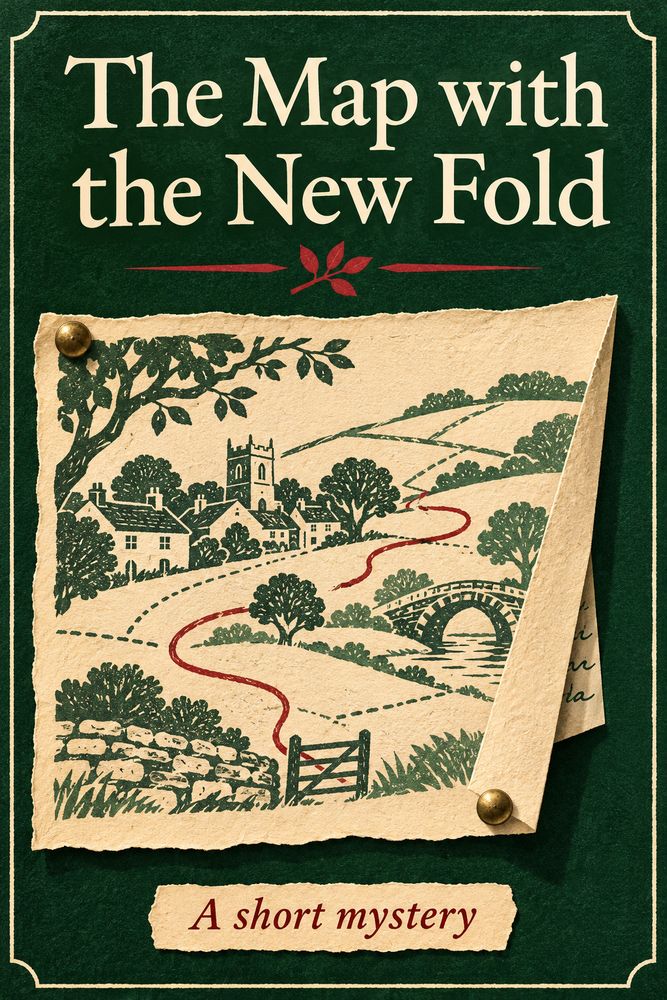
Front cover of The Map with the New Fold

Mystery, Crime & Thriller

The Map with the New Fold

By TrendWindow Library

In an eight-chapter fictional mystery, club secretary Lena notices a new fold hiding the edge of a changed walking map. With Beatrice she follows the movement of twenty-four donated sheets, separating clues from proof and a calendar proposal from permission. A complete ending; not a real walking route.

Read this complete edition, including its ending and notes. No purchase is required.

About this book

A complete short mystery

This is fiction. Alder Quay, its walking club, the donated collection and all characters and events are invented. The route is part of the story, not a real walking guide.

Original complete short mystery prepared with AI assistance. Alder Quay, the club, collection, characters and events are invented. Not a real walking guide, legal opinion or archival handling manual. Original conceptual covers. All six editions read and meaning compared with AI; no independent native-language certification. One Hindi sentence clarified for fluency; archived manuscripts retained unchanged.

1. A corner that would not lie flat

Lena arrived at the village hall with a tin of biscuits and found the walking map folded to the wrong width. It hung on the noticeboard beneath two drawing pins. The right-hand strip had been tucked behind the sheet, making the paper narrow enough to fit between a jumble-sale notice and a photograph of last year's club picnic.

There was nothing remarkable about folding paper to fit a board. What troubled her was the route. Sunday's walk had been planned to finish at the Mill Room, where Etta Vale's hand-drawn maps would be displayed for the first time since her niece June donated them. On the visible sheet, a thick black line sent walkers directly back to the hall.

Beside it someone had written, “Mill lane closed. No collection stop.” At the bottom, still visible, was Beatrice's neat note: “Route checked Friday.”

Lena was the club secretary. She had typed the invitation promising a look at the maps. She had also photographed the route on Friday so she could answer questions from members. In that picture the line still went to the Mill Room, and the sheet was folded along an older vertical crease near its centre.

She put down the biscuits. A fold did not tell her who had changed the route, or why. But this fold concealed part of a sheet that had been altered after the check named on it.

Felix, the chair, came out of the kitchen carrying cups.

“Small change,” he said. “Nothing worth disturbing everybody about.”

“It changes the invitation,” Lena said. “Where are Etta's maps?”

2. The room with the wet sill

“Safe,” Felix said. “Beatrice arranged it.”

That sounded reassuring until Lena asked Beatrice. The retired archivist was in the Mill Room with a towel under the window. Rain had entered beside the frame on Friday afternoon. Before leaving, she had moved the collection into the locked cupboard at the hall, with Tomas, the caretaker, carrying the box.

“Four folders,” she said. “Six sheets in each. I checked them before we moved them. The cupboard was the temporary place. We were going to decide about the display this morning.”

The donation note was in her own folder. June had permitted preservation and public display. Reproduction for sale required a further agreement. Etta had drawn the maps for friends over many years; June wanted the originals kept together, including the pencil corrections and small notes in the margins.

Lena showed Beatrice the Friday photograph and then the noticeboard version on her phone.

“I checked the route before the leak,” Beatrice said. “I didn't write that about the lane.”

Outside, Arun, who was leading the walk, was checking the morning arrangements. He had spoken to the Mill Room caretaker about access and knew of no lane closure. He agreed to verify the route again before anyone set out. Lena did not ask him to settle the mystery by walking an uncertain diversion.

The wet sill explained why the collection had moved once. It did not explain why a changed route still carried Friday's assurance, or why Felix had answered a question about its location with the word “safe”.

3. What the cupboard could tell them

Tomas opened the cupboard in Lena and Beatrice's presence. A roll of bunting occupied the space where the box had stood.

“Felix collected it yesterday,” Tomas said. “He said it was for the collection walk.”

“Did he say where he was taking it?” Beatrice asked.

“He asked me to carry it to Rook Print. I thought you knew.”

Tomas had not broken into a locked room or secretly lent someone a key. He had admitted the club chair in the ordinary course of his work. That did not establish that the proposed use of the collection had been authorised.

He brought his work diary. Saturday's entry recorded a delivery at ten twenty: one box, four folders, Rook Print. He had written the folder count from the label on the box, not opened the contents. Lena noted the distinction. Beatrice's count of twenty-four sheets and Tomas's record of four folders were related evidence, not two independent checks of every map.

“I wrote the delivery on a spare bit of paper as well,” Tomas said. “Felix handed me the route sheet to use. I returned it with the box details on the edge.”

Lena looked towards the noticeboard.

The new fold had hidden the right-hand margin. She now had a reason to inspect it beyond the untidy way it sat under the pin.

She did not yet have a reason to call Felix a thief. They knew that the collection had left its agreed temporary storage. They still needed to know where it was now and what had happened to it.

4. The writing on the edge

As secretary, Lena maintained the club's notices. She took down the route sheet and unfolded it on a clear table with Beatrice beside her. On the hidden strip, in Tomas's square handwriting, were the words “Rook Print — Sat 10.20 — 4 folders”.

The letters had not been erased. Someone had made them inconvenient to see.

Beatrice put the Friday photograph next to the sheet. The original route, still faintly visible under the black change, went to the Mill Room. The old central fold ran through the village square. The new fold enclosed the delivery note along the margin.

“It might have been folded only to fit the board,” Beatrice said.

“Yes,” Lena answered. “The fold alone can't tell us the intention.”

But the sheet now connected two separate changes: the collection had gone to a printer, and the advertised visit to see it had disappeared from the walk. The claimed lane closure supplied a reason that would discourage questions about the room.

Felix returned from stacking cups and saw the sheet open.

“I was going to bring them back,” he said.

“From Rook Print?”

He nodded, then looked at Beatrice rather than Lena.

“Nothing has been sold.”

That was an answer to a question neither woman had asked. Lena kept the sheet flat. They would visit the printer before arguing about what Felix had intended. The originals mattered more immediately than winning a conversation beside a noticeboard.

5. The order that had not been accepted

Rook Print occupied the former post office. Nora, the proprietor, recognised Beatrice from the donation meeting and invited the two women to the counter. The box stood on a shelf behind her, its lid closed.

“I asked Felix for written permission,” she said. “He brought ideas for a calendar. I didn't accept the job.”

She showed them the note Felix had left with the box: twelve reproductions for a calendar to raise money for the club. His proposed dates and quantities were there, but no agreement from June. Nora had kept the collection pending its return, without scanning or printing it. She had telephoned Felix on Saturday to say that the required permission was missing.

“He said he'd collect it this morning. I haven't heard from him since.”

With Beatrice's agreement as custodian, Nora brought the box to the counter. Beatrice opened the four folders and counted six sheets in each against her inventory. The maps were all present. She saw no obvious new damage during that check; she did not pretend a quick count was a complete condition assessment.

Lena asked whether any copies had been made elsewhere. Nora could answer only for her own shop: none there. She would not certify what another person might have done before delivery, and Lena did not ask her to.

They took the collection back together. The box was not a prize rescued by a clever accusation. It was twenty-four objects entrusted to the club, and the people responsible for them had finally caught up with the journey.

6. A shortcut to a better-looking story

Felix was waiting in the hall. When Beatrice set down the box, he reached for the lid, then stopped when she put her inventory on top.

“We needed a fundraiser,” he said. “The maps were donated to us. I thought displaying them and printing them were close enough.”

Beatrice opened June's note and pointed to the separate condition about reproductions for sale. Felix read it. He did not claim that the condition was missing or that June had agreed elsewhere.

“I should have asked.”

“That explains the calendar proposal,” Lena said. “It doesn't explain the lane.”

Felix sat down. After Nora's call, he had realised that a display on Sunday would expose the absence of the originals. He could not collect the box before the club began gathering because he had promised to open the hall. Instead of asking someone to help and explaining the mistake, he changed the route.

He had folded the margin behind the sheet because the delivery note would invite exactly the question Lena had asked. He had left Beatrice's Friday check visible because he did not want the route to look like an unconfirmed last-minute decision.

The confession settled the intention that the fold alone could not prove. Lena wrote down the practical facts and read them back: unauthorised calendar proposal, removal from agreed storage, misleading route change, originals now returned. Felix agreed that this described what he had done.

“I wanted to arrive with something useful,” he said.

“Then you needed to ask before arriving with it,” Beatrice replied.
7. The notice that stayed readable

They did not put the folded map back on the board. Lena kept it with the Friday photograph and the delivery record in the club's files. She recorded what each source actually showed, including Nora's limited statement about her own shop. She did not turn a missing permission into a claim about sales that had never occurred there.

Beatrice told June what had happened and that the twenty-four sheets had been returned. In this fictional conversation, June asked for an updated inventory and a clear decision about who could authorise future movements. She did not withdraw the donation, but neither did she treat the explanation as permission for a calendar.

The club deferred the display until the room and arrangements were ready. Arun completed his fresh route check and supplied the route the group would actually follow. Lena made a new notice that said plainly, “Collection display postponed.” It did not blame a closed lane.

Felix stepped back from organising any reproduction project. The committee would consider such proposals only with the required agreement and a named person responsible for the originals. Nobody promised that a new form would make every future mistake impossible. It would at least make the decision visible before a box left a cupboard.

When Tomas returned the bunting, Beatrice showed him the revised storage note. He no longer had to infer authority from a confident request by someone he knew.

Lena moved the jumble-sale notice a little to the left. There was room for the replacement map to lie open. The board had never required them to hide the right-hand edge.

8. Twenty-four sheets, not twelve pictures

The walkers set out later than planned, after Arun's check and the explanation of the changed finish. Some were disappointed about the display. Lena let the disappointment stand. A clear account did not have to make everybody pleased.

Before leaving, she helped Beatrice return the collection to its agreed temporary place. They checked the folder labels against the inventory. Beatrice lingered over one map on which Etta had crossed out a path and written, “Ask at the gate before using this way.”

“She didn't mind corrections,” Lena said.

“She left them where you could read them.”

Lena thought of Felix's calendar proposal: twelve handsome pictures selected from twenty-four working sheets. A calendar might one day be possible with permission. It could not be allowed to swallow the notes, choices and obligations that came with the originals.

She closed the folder and watched Beatrice put the box away. Then she joined the others outside, leaving the old route sheet in the club file rather than carrying it as a trophy.

At the first turning, Arun stopped to let the group gather. Lena unfolded her copy of the new map. Its crease ran through an ordinary stretch of blank paper. No destination disappeared behind it, and no borrowed assurance made the changed route look older than it was.

The mystery had begun with a corner that would not lie flat. It ended with a record that could. The collection was back, the concealed proposal had a name, and the next decision would have to be made in the open.

Explore more books →