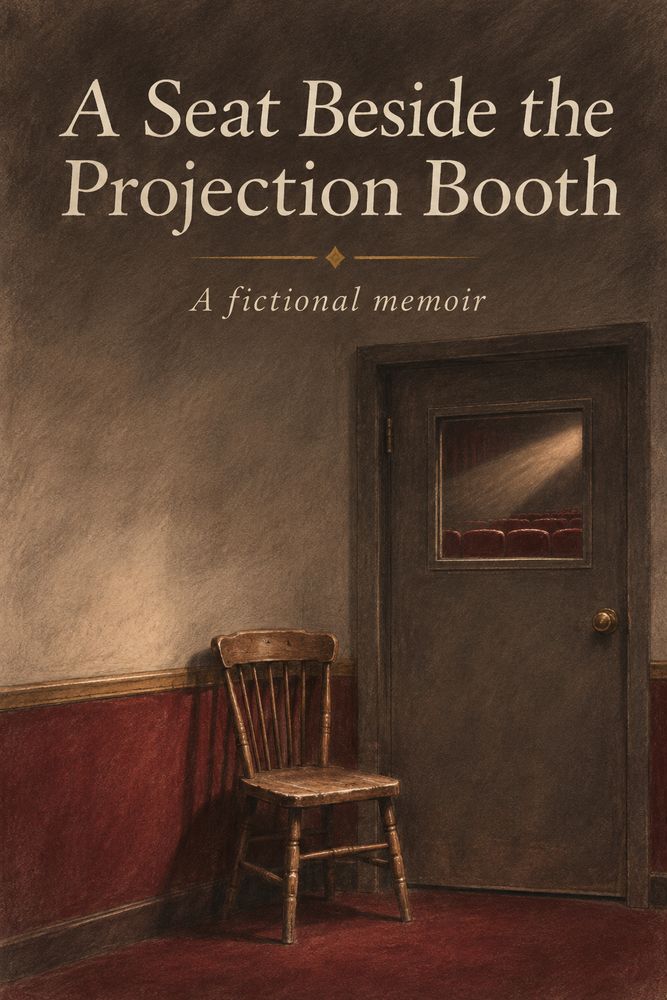
When Leah asks me for a memory of the Oriole, I know which one I will send. I was twenty-three, the cinema was full, and a screening went wrong. In the version I have told at dinners, I stand up at precisely the right moment and rescue the evening. There is usually laughter when I reach the last sentence. I have learned to pause before it.
Leah is preparing a booklet for the cinema's anniversary. She wants a short recollection from someone who worked there, not a history of the building. I open a new document and write, “The night I saved the Oriole…” Then I stop. It is a title that knows more than I do. I do not know whether anything I did kept the cinema open, kept a customer or changed the accounts by a single unit.
In my memory, a wooden chair stands beside the projection-booth door. Its seat has a pale mark where the varnish has worn away. I used to sit there after showing people to their places, waiting for the next part of my shift. I thought of it as a place from which I could learn the important work.
I did not think of the person who put the chair back when I left it in the way. That person was often Celia. She managed the house, carried a small notebook and seemed to me, at twenty-three, to spend too much time on details that did not become stories.
I delete the title. The page becomes less impressive and more difficult. I write a smaller beginning: “There was a chair beside the booth.” It is the first sentence I am reasonably sure belongs to the evening I mean to remember.