BOOK LIBRARY · Complete books · Purchases disabled
TrendWindow

← Book Library · Complete book

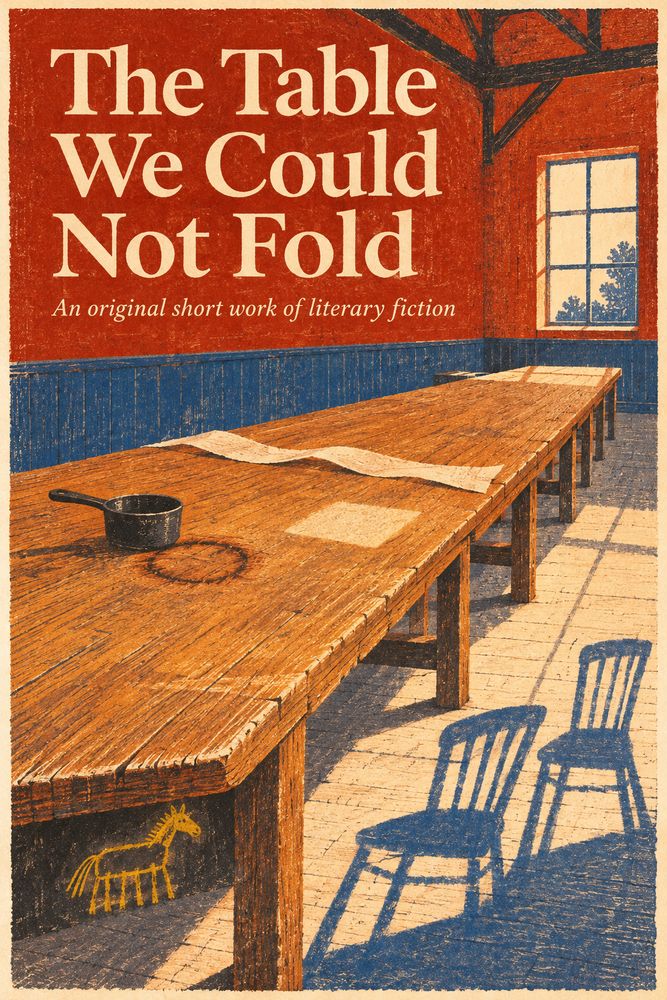
Front cover of The Table We Could Not Fold

Contemporary & Literary Fiction

The Table We Could Not Fold

By TrendWindow Library

A closing community hall leaves Tessa and Milo with their father’s enormous table and unequal histories of caring for the place. Eight chapters follow a shared decision, two new uses and a loss that usefulness cannot erase.

Read this complete edition, including its ending and notes. No purchase is required.

About this book

An original short work of literary fiction

The people, hall and neighbourhood in this book are invented. The association's decisions are part of the story, not advice about property law, public facilities or furniture construction.

Original short literary fiction prepared with AI assistance. People, association, hall and furniture maker are invented. Not construction, property-law or public-facility guidance. Translation meaning reviewed with AI, not independently certified by native-language professionals.

1. The remaining item

By Thursday, the hall contained a broom, eleven circles where chair legs had polished the floor, and the table.

Tessa had written TABLE on a label as if there might be some difficulty identifying it. Two metres sixty of oak occupied the centre of the room. Her father had built it inside the hall thirty-two years earlier, and nobody remembered seeing it outside.

Milo stood at one end with the removal inventory.

“Does it fold?”

“You grew up under it.”

“I hoped something might have changed.”

He knelt, more to avoid looking at her than to investigate. The legs were joined to a deep frame. There were no hinges. From beneath, the table smelled faintly of wax and the peppery dust of a room recently emptied.

Their father had been dead eighteen months. The hall was closing because its lease had ended and the association could no longer afford the larger building. On Saturday, the remaining equipment would move to two smaller rooms on Finch Street. The new rooms had heating that worked without anyone climbing onto a chair.

Tessa put down her tape measure.

“It belongs to the association,” she said.

“I know whose table it is.”

She had been in town for four days. Milo had been here for thirty-nine years, apart from a short attempt at living elsewhere that neither of them mentioned much. He worked mornings in a school kitchen. For the last six years he had also carried the hall keys, answered the messages and learned which cupboard door needed lifting before it would close.

Tessa had paid for the removal van. She was trying not to make that fact enter every sentence.

At the window, the rectangle of glass once covered by the noticeboard was paler than the rest.

“We'll get someone qualified to look at it,” she said. “Before we decide it can't move.”

Milo stood.

“I said it couldn't fold. I didn't say it couldn't move.”

On the inventory he put a question mark beside TABLE. His handwriting made the mark look less like a question than a hook.

2. What the top remembered

They cleaned it because cleaning was a task they understood.

There was a ring near the east end where their mother had set a hot pan during a winter supper. Tessa remembered the hiss and the sudden silence. Milo remembered their father saying, “It's a table, not a piano,” and moving the pan onto a folded cloth.

“He was furious later,” Tessa said.

“Was he?”

“With the scorch. Not with her.”

“I didn't hear that.”

They rubbed on either side of the ring without settling it.

Near the middle, somebody had pressed a handwritten address so hard that its final three digits remained in the grain. Beneath the edge, small blue marks recorded the heights of children whose parents had long forgotten the marks. A patch of pale wood showed where a large donation tin had stood for years.

Tessa took photographs. She included the underside and the brackets, not just the beautiful places.

“What are you doing with those?”

“Keeping a record.”

“Of the table or of having been here?”

She lowered the phone.

“That was unkind.”

“Yes,” Milo said.

He did not dress the admission as an apology, but he stopped polishing.

Their mother was alive and living in a flat across town. She had declined to join the clearance. “I spent enough afternoons stacking those cups,” she had said. Tessa had laughed, thinking it a joke. Milo had not.

Tessa found a drawing taped beneath the tabletop: a child's yellow horse with six legs. One corner had been painted over when the frame was last repaired.

“Yours?”

“Yours. You said ordinary horses weren't dependable.”

She had forgotten the drawing. Milo remembered how she had argued that two spare legs would help.

She eased away the loose tape and stopped where the paper clung to the paint. There was no need to tear it free for the sake of a photograph.

For a while they worked with the horse above their heads, neither of them claiming it as evidence of who had loved the hall more.

3. The offers

At the Friday meeting, six association members sat on borrowed chairs around the remaining table.

A removal specialist had inspected it that morning. It could be taken apart sufficiently to leave the old hall and be reassembled, with care. The problem was its next home. In either of the new rooms, a table of that size would restrict the space the groups needed to move around.

The committee had a drawing of the rooms, a written removal estimate and a smaller sum of money than anyone liked. They did not have a duty to keep one piece of furniture at the expense of using the building.

Mrs Bell proposed storing it.

“For a year. Until we find somewhere.”

Milo read the storage quote aloud. The amount was not outrageous; it was simply money they did not have. A year would also end. Someone would have to answer the question again.

Tessa suggested offering it to the large café near the station.

“They want it,” said Mrs Bell. “They want the story as well. Their manager asked whether we'd supply a photograph of your father and permission to call it the Founder's Table.”

“He didn't found the association,” Milo said.

“No.”

The manager had also asked for it to be delivered without charge. The offer was placed aside.

A young member named Dev unfolded a sketch. He helped at a neighbourhood lunch kitchen with a long, narrow dining space. The kitchen could use a smaller table, and so could the new hall. A local furniture maker, Iris, had said she would assess whether the old top and frame could become two useful pieces.

“Cut it?” Milo asked.

“If that's what the maker recommends. We haven't agreed anything.”

Tessa surprised herself by saying, “No.”

Everybody looked at her.

She had come prepared to be practical. She had not expected practicality to resemble a line through her father's work.

The chair of the meeting, Anwar, gathered the papers.

“None of these is decided. Let's see the assessment first. Saturday's van can take the other things. The landlord has agreed we can leave this here until Tuesday.”

Four days, then. Not eternity, but enough to make a decision without pretending it had already been made.
4. The person with the keys

After the meeting, Milo asked Tessa whether she intended to take the table home.

“There isn't room.”

“But there's room for you to say no.”

She pulled on her coat too hard and caught the lining in the zip.

“I heard how that sounded.”

“You get to come back, defend something, and leave me defending it every Tuesday.”

“It isn't every Tuesday.”

“It was the keys. Then the boiler. Then people needed someone to open for deliveries. Then Dad got ill.”

Tessa freed the lining. There was a small grey tear.

“I paid for the extra care visits.”

“I know.”

“And I called.”

“I know that too.”

He sat on the windowsill where they had once balanced paper cups during birthday parties. He did not look heroic or abandoned. He looked like a man whose morning shift began at six.

“I didn't ask you to live my life,” he said. “I wanted you to notice I was living it.”

Tessa sat at the table. She could remember asking him whether their father had eaten, whether the prescription had arrived, whether somebody had checked the back door. She could not remember asking what Milo had cancelled in order to answer her.

That was not the whole history. She had a history too, with a child, a broken marriage and work that would not wait. But using it now would turn the room into a court where each of them brought a calendar as a weapon.

“I made you the person who knew,” she said. “Then I stopped seeing the work in knowing.”

Milo pressed a finger into the worn paint of the sill.

“I also kept saying yes. Sometimes because it needed doing. Sometimes because being necessary was easier than finding out what else I wanted.”

Neither sentence released the other from everything.

Tessa offered to take over the remaining calls about the table, the maker and the room booking. Milo gave her the numbers.

He kept the hall keys until the handover on Tuesday. The end of a responsibility, he said, should have a date.

5. A maker's line

Iris came on Saturday after the van had left.

She spent more time beneath the table than admiring its surface. Tessa waited while the maker inspected old repairs and considered the association's room measurements. She did not ask her to promise that sentiment could substitute for sound wood.

“This can remain one table,” Iris said finally. “That is a choice. So is making two smaller ones. But neither is a free choice.”

She explained the work and cost in ordinary terms. Some old timber could be retained; some parts would need replacing. The association would receive two separate designs and a fixed written price before authorising work. Nothing would be cut that morning.

Milo asked whether the table would still be their father's.

“It isn't his now,” Tessa said, then wished she had waited.

Iris laid her pencil on the cloth.

“I can't decide what you should call it. I can tell you which parts would remain.”

She marked the proposed division with a loose strip of paper. The scorch ring lay on one side. The place where the donation tin had stood lay on the other. The horse was away from the line and could be protected during the work.

Tessa looked at the strip. She had expected a violent mark. It resembled the narrow runner their mother used for suppers.

Their mother arrived with bread rolls in a shopping bag. Nobody had summoned her to settle the argument. She had come because Milo's phone was off and she wanted her spare saucepan returned. Milo had brought it from his flat that morning, intending to return it after Iris's visit.

They described the proposal.

“Dad would have—” Milo began.

“No,” she said gently. “We don't know. He could be generous about a scratch and unreasonable about a screw. Depends which afternoon you caught him.”

Tessa laughed first. It was not a betrayal.

Their mother ran a finger near the burn without trying to rub it away.

“I don't want it in my flat,” she said. “I don't want you to keep it for me. If other people can sit and eat at it, that seems useful. If they can't, you'll have to decide something else.”

She collected the saucepan. The bread rolls stayed on the table.

They ate them without plates.

6. The vote

On Monday evening, the members met in the new hall.

There was no smell of old polish. The windows opened. In one room, a toddler could walk around the borrowed folding table without disappearing beneath a massive wooden border. In the other, a reading group had arranged chairs in a circle and left them there.

Iris's two designs lay on the windowsill. Each new table would use a portion of the old top, with suitable supports and space around it. The quotation included collection, construction and delivery. It fitted the small furniture fund without using money reserved for the groups.

The lunch kitchen had agreed to accept one piece on a documented loan from the association. A named person there would arrange its care and speak to the hall committee at the review date. Nobody would be left responsible merely because they happened to own the keys.

Milo read the arrangement twice.

“What if the kitchen closes?”

“The agreement says they contact us before disposing of or moving it elsewhere,” Anwar said. “We discuss its next use. We don't assume Dev will store it in his bedroom.”

Dev smiled, visibly relieved.

Mrs Bell still preferred keeping the table whole. She said so, and nobody told her that affection was a budgeting error.

Tessa described what she had wanted on Friday: to preserve a single object so that she could believe nothing important had been divided.

“But we already use the room differently,” she said. “We always did. Dad made something to be used by people who weren't him.”

She did not claim he would approve. She cast her own vote.

The proposal passed by five votes to one. Mrs Bell asked whether the record could include her preference without making her the person who had tried to stop everything.

Anwar wrote her words down and read them back.

Before they left, Milo placed the old keys beside the new room calendar. The actual handover would be tomorrow, after the collection. He was marking the end, not abandoning the job halfway through.

“Who opens for Iris?” Anwar asked.

“I do,” Tessa said.

She entered her name and the time.

7. What we kept

On Tuesday the table left the hall in the maker's care.

Tessa did not photograph the moment it passed through the doorway. She was helping Anwar check the collection record and noticing how much noise a room made when there was almost nothing left to absorb it.

After the van went, Milo handed over the keys. He did not toss them or hold them for a final dramatic second. He set them in Anwar's palm and said which one needed a little patience.

Then he and Tessa walked to their mother's flat.

At lunch, Milo said he had booked an afternoon pottery class at the adult learning centre. He expected to be bad at it. He sounded almost pleased.

Tessa's train was the following morning. Before she left, they put three dates into their separate calendars: the table deliveries, their mother's next birthday and a Saturday for a visit that would not involve moving furniture.

“Don't make every visit a repair,” Milo said.

“I won't promise never. I can promise this next one isn't.”

The tables arrived three weeks later. Tessa came back for the delivery and brought her daughter, Leila, who was thirteen and considered most ceremonial occasions suspicious.

One table stood in the new hall. The pale patch from the donation tin was still visible under the finish. The other went to the lunch kitchen, carrying the dark ring. The frames did not pretend to be entirely old. Iris had left the difference between reused and new timber visible.

The six-legged horse remained beneath the hall table, protected as agreed.

Leila crouched to see it.

“You were very bad at horses.”

“I was solving a transport problem.”

“By adding knees?”

Milo laughed. Tessa had forgotten how his laugh could turn into a cough when he was trying not to make too much noise.

The association kept the photographs, the original dimensions and a short account of the changes. No plaque called their father a founder. No piece was labelled a relic.

Mrs Bell ran a hand over the new edge.

“I still preferred the old one.”

“I know,” Tessa said.

She pulled out a chair for her.

8. Two places at lunchtime

At the kitchen, the first spill was soup.

A man reaching for bread knocked his bowl against a mug. A thin orange line travelled over the wood towards the old scorch ring. Dev caught it with a cloth before anyone could turn the accident into a story about disrespect.

“Sorry,” the man said.

“It wipes,” Dev replied.

Tessa stood in the doorway holding a bag of spare napkins. She had volunteered for that afternoon, not for every afternoon that followed. The kitchen coordinator had shown her the rota and accepted her one date without attempting to turn it into a lifetime.

Milo was not there. He had sent a photograph of a small clay pot leaning so far to one side that it seemed to be listening.

She sent back a picture of the table with bowls on it. Not the untouched surface. Not the photograph of their father that she had decided against bringing. Just lunch.

For a moment she missed the old table with an intensity that surprised her. Two useful objects had not made the original loss unreal. The great length of it, the hiding place beneath, the way six people had once leaned over a map without moving their elbows: those things were gone.

They had not saved everything.

At the new hall, a reading group was meeting around the other half. Later Mrs Bell would ring Tessa to ask for a copy of the yellow horse drawing. Her grandson, she said, was interested in animals with improvements.

Tessa would ask whether a photograph would do. It would.

For now, a woman at the kitchen table moved her chair to make room.

“Are you eating?”

Tessa looked towards the serving counter. There were enough hands there. Her bag of napkins was empty.

“Yes,” she said.

She sat near the dark ring. The man opposite passed the bread without asking who had made the table or what it used to be.

Across town, Milo was learning how to centre something that could not be forced into balance by gripping it harder. Tessa knew only that he was at his class. She did not turn his afternoon into a lesson for herself.

She tore a roll in two and asked the woman beside her how the soup tasted.

The table stayed where it was.

### Fiction and scope

A complete original short work of literary fiction about shared objects, unequal responsibilities and a decision made without speaking for the dead. Furniture assessment and alteration are performed by a fictional qualified maker; this is not a construction guide. The ending preserves both the useful change and the siblings' continuing loss.

Explore more books →