About this book
An original fictional short story. People, documents and events in this story are invented. AI-assisted writing and translations; no independent human-editor or native-speaker certification is claimed.
← Book Library · Complete book
Contemporary & Literary Fiction
By TrendWindow Library
As her bus depot moves to a smaller office, Connie must decide what to keep and what to let go. A brown coat, a bakery receipt and pale green thread bring a stranger back to the counter—and help Connie carry something different home.
Read this complete edition, including its ending and notes. No purchase is required.
An original fictional short story. People, documents and events in this story are invented. AI-assisted writing and translations; no independent human-editor or native-speaker certification is claimed.
At the bus depot, umbrellas went into a barrel and everything else got a red ticket. Connie wrote each ticket by hand. It was the only way she knew to keep somebody's keys from becoming a set of keys, which was how people on the other side of the counter usually described them.
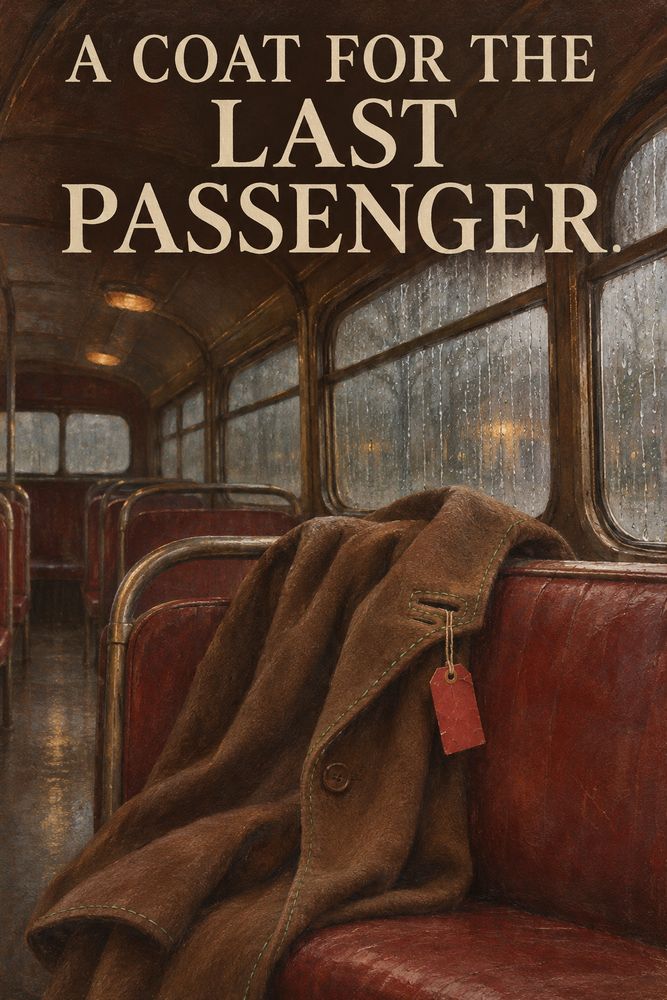
On her last Thursday before the depot moved, the driver of the late number eight brought in a brown coat.
“Back seat,” he said.
“Who was on the back seat?”
“Three people at different times.”
“Did you see anyone wearing it?”
“I see most of them in the mirror.”
Connie laid the coat flat. It was heavier on the left. In the pocket she found a small paper bag, empty except for a bakery receipt. Two rolls, bought at five forty-one. She wrote the time on the ticket even though there was no box for it.
The driver watched her tie the ticket to a buttonhole.
“New depot's got a scanner,” he said.
“I've heard.”
“You'll be able to do all this in half the time.”
Connie looked at the line of umbrellas. Some had been there long enough to bleach on one side.
“Then I'll have half the time to find out what they belong to.”
The driver left. She checked the coat's other pocket. There was a needle tucked into a fold of cloth, threaded with pale green cotton. She pressed the lining flat so the point wouldn't catch the next person who put a hand inside. Then she wrote *needle* beneath the time, on the back of the ticket.
The new depot had given the lost-property office one shelf, a cupboard and a desk with a scanner screwed to it. Connie knew the measurements because her supervisor, Arun, had written them on the back of a route map. The shelf was shorter than the desk at the old depot. She had laid the route map on that desk and tried to imagine what would fit.
At noon Arun came down with three empty crates. He put them in a row and wrote CURRENT, DONATION and DISPOSAL on strips of masking tape.
“Anything still in its claim period goes in the first one,” he said. “Clothes in good condition go in the second. The charity van comes at four.”
“What about things people still might come for?”
“That depends on how long they've had to come.”
“People don't always know where to look.”
“I know,” he said. “At the new place they'll be able to phone the same number.”
He left her with the crates and took the barrel of umbrellas up to the loading bay. She heard him stop twice on the ramp. It was too heavy. She nearly went after him, then heard another pair of footsteps and the barrel moving again.
Behind the umbrellas was a child's blue glove. Connie had written the date on its ticket nine months ago. A woman had rung the morning after it came in. She had said the glove was blue, but she couldn't remember which hand. Connie had asked her to bring the other one. The woman had said she would come on Saturday.
There had been a Saturday when the power went out and the depot closed early. Connie couldn't remember if it had been that one. For months the glove had sat on the shelf at the height of a child's shoulder. She picked it up now and tried it on the ends of two fingers. There was nothing she could do with it that a child could do with it.
She put it in the second crate. Then she pulled it out again and checked for a hole. There wasn't one. She put it back.
At half past two a woman came to the counter and asked if they had found a bag of bread on the late eight. She wore a cardigan with the top button fastened and held an umbrella that would not close all the way.
“What kind of bread?” Connie asked.
“Two rolls. I meant to give them to my sister.”
“Did you buy them at the bakery by the roundabout?”
“Yes. I ate them on the bus, now I think of it. My sister rang and said she'd already had supper.”
The woman laughed and looked at the umbrella in her hand. Connie waited.
“I came about a coat, really,” she said. “I was walking home and I thought, what would I say to prove it was mine? Anyone can say brown coat. Then I remembered the rolls.”
Connie turned the coat so the lining faced up. She did not bring it to the counter yet.
“Anything else in the pockets?”
“A needle, unless it fell out. Green thread. I was going to fix the button on my sister's cushion.”
“What shade of green?”
“About the shade of this.” The woman turned back her cardigan cuff. Three stitches closed a small tear. “I had enough left for the cushion if I didn't make a mess of it.”
Connie took the coat off the desk. The woman put it on without checking the size. At the last button she hesitated.
“Can you get this ticket off without cutting it?” she asked.
Connie undid the knot. The woman folded the red paper in half and put it in the pocket with the empty bakery bag.
“In case you need the number?” Connie asked.
“In case I want to remember where I got it back.”
After she left, Connie wrote the claim time in the ledger. There was room for a sentence underneath, so she wrote *identified by receipt and green thread*. It was the sort of thing the scanner would not know unless someone told it.
Connie's son came at three to help with the move. He stood in the doorway holding his bicycle helmet and looked at the three crates.
“Which ones are yours?”
“None of them,” she said.
He waited. Then he put the helmet on the desk and took his jacket off.
There were four pairs of reading glasses, a bundle of gloves, a metal lunch box and a pair of boots with soil still dried into the seams. They sorted the things with open claims first. Connie read the dates aloud. Her son set the objects down carefully. He had been a child when his father died. He used to bring things from school and ask Connie to put them somewhere safe. She had kept one whole drawer for them until he was seventeen. When he finally emptied it, he took two things. She had forgotten which two.
Near the bottom of the shelf they found an old black scarf. It was hers. She had started wearing it to work the winter after her husband died and put it away on a day when the office was too warm. The next day she had walked home cold rather than take it back out. Eventually she had stopped thinking of it as hers. It had become one of the things she kept in case somebody needed it.
“Is that Dad's?” her son asked.
“No. He gave it to me.”
“You could take it home.”
She lifted it to her face. It smelled of the shelves. There was no trace of him on it. She folded it twice, the way he used to fold a newspaper he was going to leave for the next person on the bus.
“Put it with the good clothes,” she said.
“Are you sure?”
“I'll tell you if I'm not.”
He put it in the second crate, near the glove. She didn't move it.
Before four she made a card for the new desk. It said *Tell me something I wouldn't guess*. She made the letters wide enough for someone standing on the far side of the counter to read. She did not write examples. She wanted people to have a minute to think.
On Monday the scanner took Connie three tries to learn. The first time, she held the tag too close. The second time, she moved it too quickly. The third time the machine gave a short beep and a space opened on the screen for her to type.
A driver brought in a cap with a broken strap. She scanned a new tag and typed *red thread in the buckle*. She left the cap on the short shelf and put the card beside the scanner, where it was easy to see.
That evening her son met her at the bus stop with a folded paper bag. He had bought two rolls. They took the late eight because it went past his building. He asked if she wanted to sit at the front.
“By the window,” she said.
The last row was empty. She took the window seat and put her bag on her lap, where she could feel the weight of it when the bus went around a corner. Her son tore one of the rolls in half. He ate the smaller piece without saying anything about it.
At his stop he got up and held the pole until the doors opened. Connie was going on two more streets. He had left the paper bag on the seat between them. She looked inside. One roll and half of the other. She called his name.
“You can have them,” he said.
She folded the top of the bag. By the time the doors closed she had made a crease straight enough to hold. Outside, her son turned toward home. She sat back with the bread on her knees and watched the streets go by.