BOOK LIBRARY · Complete books · Purchases disabled
TrendWindow

← Book Library · Complete book

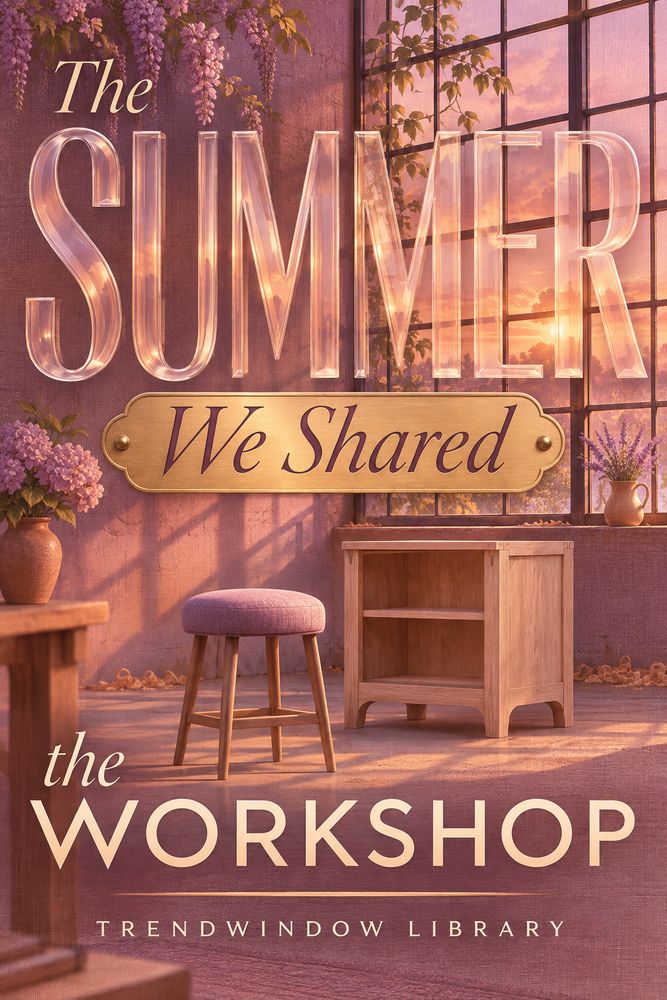
Front cover of The Summer We Shared the Workshop

Romance & Relationships

The Summer We Shared the Workshop

By TrendWindow Library

Elin and Tomas share a workshop seven years after their relationship ended. A complete original short second-chance romance about work, trust and a bright yellow chair.

Read this complete edition, including its ending and notes. No purchase is required.

Chapter 1 — The Stool by the Window

The stool by the window was mine. I established this before taking off my coat, which should tell you something about how calmly I was approaching the summer.

Tomas looked up from a small cabinet.

'I thought you preferred standing.'

'Seven years ago I also preferred shoes I couldn't walk in. People change.'

He moved his jacket from the stool. I put my bag there and tried not to feel victorious over such a small piece of territory.

We had both rented space in Nessa's workshop for twelve weeks. She was retiring at the end of August, and neither of us needed a permanent room yet. She had told us who else was coming before we agreed. There had been no trick, no hopeful matchmaking. I had said yes because the rent was manageable and the light was good. I was an upholsterer. Light mattered more than a former boyfriend.

That was my position on the first morning.

Tomas made cabinets. He had been making them when we dated, seven years earlier, for six months that I remembered with inconvenient clarity. He was thirty-five now. I was thirty-three. We had both lived enough since then to know that getting older did not automatically make anyone easier to understand.

Nessa showed us our separate storage areas and the shared noticeboard. We were experienced makers, responsible for our own work. Nothing about the arrangement required us to become friends.

When she left, Tomas asked whether we should talk about the obvious.

'We've got twelve weeks,' I said. 'We can be polite for twelve weeks.'

'All right.'

'I don't mean painfully polite.'

'I'll aim for moderately painful.'

I almost smiled. I picked up my bag instead.

My first job was an ordinary dining chair for a customer who wanted the seat comfortable again. Tomas went back to his cabinet. For an hour we worked without conversation, and I began to think I might manage this.

Then he hummed the tune he always hummed when concentrating. I still knew where he would get it wrong.

Chapter 2 — Yellow Fabric

I had brought another chair, though it was not a paid job. It had belonged to my grandmother. The frame was sound, but the old cover had faded to a colour I called apologetic beige.

I wanted it yellow. Not soft cream or a respectable mustard. The bright yellow of a coat you could find in a crowd.

For three days I carried the sample in my bag without taking it out. I worked on customers' chairs, answered messages and told myself I would start mine when I had time.

Tomas noticed the chair, not the sample.

'I remember that,' he said.

'You sat in it once and said it was designed to punish knees.'

'I was trying to impress your grandmother.'

'She liked you better before you spoke.'

He laughed. I had forgotten how much I liked being the cause of that sound.

At lunch he ate outside on the low wall. I joined him because the room was warm, not because I wanted company. At least I had stopped pretending I disliked it.

He asked what I wanted to do with the chair. I showed him the fabric.

'It's loud,' I said before he could answer.

'Yes. I like it.'

'You don't have to.'

'I know.'

He asked where it would go. My own flat, near the window. Then he told me about the cabinet he was making for himself: small, with a painted interior nobody would see unless they opened it.

'What colour?'

'Purple.'

'You?'

'I contain surprises.'

'Apparently in a cupboard.'

That afternoon I pinned the yellow sample to my noticeboard. He did not congratulate me as if I had crossed an ocean. He simply glanced at it, then went back to work. I appreciated that more than I knew how to say.

Chapter 3 — The Evening We Had Missed

In the third week he asked if I wanted dinner. I said I needed to know whether it was dinner between workshop neighbours or something less convenient.

'The less convenient one,' he said.

I looked at the clock rather than at him.

'We should talk first.'

We went to the little park after work. There were children playing on the far side and somebody arguing cheerfully with a dog. It was a good place for a conversation that might go badly: neither of us would mistake it for a scene from a film.

Seven years earlier, I had invited him to a small exhibition that included my first independent upholstery work. He had promised to come. A delivery had gone wrong at his workshop, and he had stayed to sort it out. That would have disappointed me. What had hurt was the silence: no message until the next afternoon, then an explanation that treated my evening as something that could simply be replaced.

We had argued. A week later we had ended the relationship. Other disappointments had been waiting behind that one.

'I remember,' he said when I finished. 'I was ashamed I'd let the day get away from me, so I avoided telling you. Then I acted as if you were unreasonable for being hurt.'

I had prepared for a defence. I did not know what to do with its absence.

'I didn't need you to make the delivery disappear.'

'I know. You needed me to tell you, and to understand it mattered.'

'Yes.'

He did not ask whether that meant I forgave him. He said he was sorry, without adding that we had been young.

I watched the dog drop a ball nobody had agreed to throw.

'I'd like dinner,' I said. 'But not a replay.'

'Neither would I.'

We chose Saturday. He asked where I wanted to go. For the first time that summer, I answered without trying to sound less interested than I was.

Chapter 4 — After Closing

Saturday was good. Not miraculous, not a restoration of six perfect months that had never existed. Good. He asked about the work I did now. I asked about the flat he had moved into last year. We disagreed about a dessert and ordered two.

Afterwards, outside my door, he asked if he could kiss me. I said yes. It was familiar enough to make me catch my breath and different enough to make me stay.

At work we agreed not to turn the room into a performance. We kept our own jobs, our own customers and our separate bills. We put away equipment and finished work before sitting together; the workshop remained a workplace, not a romantic excuse to stop paying attention.

The following weeks contained very little drama. He took a chair outside for me when I asked. I held a door while he carried something awkward. Neither pretended the other could read a mind.

One evening, after everything was put away, we stayed at the table with cold drinks. I told him about a customer who had thanked my invoice for being clear, which I considered a rare form of poetry. He told me he had spent an entire morning considering a handle and then chosen the first one.

'You always did that,' I said.

He winced, almost imperceptibly.

'What?'

'Nothing.'

'Tomas.'

He looked at his glass.

'I don't want every thing I do to be evidence that I'm still the same man.'

I wanted to say I had only been joking. Instead I thought about how often I had been measuring him against an old photograph, waiting for it to move.

'You're right. That wasn't fair.'

'I can still be ridiculous about handles.'

'I'll judge the new ridiculousness on its own merits.'

He laughed. I kissed him before we stood up to go. It was not proof that either of us had become flawless. I was beginning to prefer that.

Chapter 5 — An Open Door

Nessa planned a small open afternoon for the final Saturday of August. There would be work to see, tea and a chance for her old customers to say goodbye. The workshop would close afterwards as she had always said it would. Her retirement was not a problem for us to solve.

She asked if we wanted to show anything. We each said yes. Tomas would bring his finished cabinet; I would bring my yellow chair.

By then I had worked on it properly. It looked brighter than anything else I owned. I loved it at home in my imagination. In front of visitors, I began to picture it as a mistake.

I took down the sample and put a quieter one beside the chair. Then I put the yellow back. Tomas said nothing until I asked.

'Which would you choose?'

'For your flat? The one you want to sit in.'

'You could have said yellow.'

'Would you have believed me?'

I had to admit I might not.

He showed me his cabinet. Outside it was plain. Inside, the purple was rich and unexpected. He had made something cheerful and then given it a door to hide behind.

'Will you open it on Saturday?'

'If someone asks.'

'Will you want them to?'

He ran a hand over the top without answering.

We were very good at making things for other people. We were less good at letting a room contain something that was simply ours.

I told him I would finish the chair in yellow. He said he would think about leaving the cabinet open. Neither choice belonged to the other. That made the conversation easier to keep.

Chapter 6 — A Message Before Six

The Thursday before the open afternoon, we planned to eat at my flat at six. At four, he received a call about a customer delivery. I saw his face tighten before he answered.

I kept working. I did not want to spend an afternoon watching him fail a test he had not agreed to take.

At quarter past four, he came to my table.

'This may take longer than I thought. I don't know yet whether I can make six. Shall I call you at five and tell you properly?'

I said yes. He went to deal with it. At five, he called. He would be late. Could we eat at seven thirty, or would I prefer another evening?

'Seven thirty is fine. I've got something I want to finish here anyway.'

He arrived at seven twenty-five carrying dessert. I had not been waiting in the room where my younger self still stood beside an exhibition nobody had seen. I had finished the chair, gone home and made dinner.

When I opened the door, I kissed him because I wanted to, not because he had passed an examination.

Over food I said the message had mattered.

'I wasn't sure whether mentioning it would make it worse,' he said.

'Not mentioning things has had a fairly thorough trial.'

He smiled.

I told him that I, too, needed to say when I was hurt before turning it into a private case against him. I had old habits as well as old reasons.

We did not promise never to disappoint each other. We agreed to make it possible to find the other person when it happened.

Later, with my head against his shoulder on the sofa, I said I loved him. He turned towards me, startled and smiling.

'I love you,' he said. 'Now, I mean. Not because of then.'

'Good,' I said. 'Then had some very unfortunate shoes.'

Chapter 7 — The Yellow Chair

On Saturday the workshop filled slowly. Nessa's friends brought more cake than anyone could eat. A customer asked whether Tomas and I had made the cabinet and chair together. We said no, explained our separate work and found ourselves laughing at how well the colours happened to sit beside each other.

My chair was yellow. There was no quieter sample under the seat in case I lost courage. When someone said they would never choose that colour, I discovered I did not need to argue. Someone else loved it. Neither opinion changed where it would go on Monday.

Tomas left the cabinet open. A child accompanied by her father peered inside and declared it the colour of an expensive sweet. He thanked her gravely.

We each had our own card beside our work. We were not launching a joint business or selling our relationship to make the objects seem more interesting. They were a cabinet and a chair, made carefully, belonging to two people who were pleased with them.

Near the end, Nessa stood by the door and looked tired. I brought her tea. She asked if I had found somewhere to work in September.

I had: a bench in a larger shared studio across town. Tomas had arranged a separate room near his flat. We had known each other's plans for weeks. Our relationship was not waiting for a landlord to decide its future.

When the last visitors left, he came to stand beside my chair.

'I'm glad you kept it yellow.'

'I'm glad you opened the door.'

He took my hand. Nessa asked us to move so she could sweep. We moved. A summer could be important without requiring everyone else to stop having work to do.

Chapter 8 — Somewhere to Sit

On the final Monday we packed our separate shelves. I found a pencil I had accused Tomas of borrowing. It had been behind my own box all summer. I apologised. He accepted with a dignity that lasted until I threw a clean cloth at him.

We returned our keys to Nessa, thanked her and helped carry the last empty boxes out. We left no hidden request for an extension. Twelve weeks had been twelve weeks.

That evening my yellow chair stood by the window in my flat. Tomas helped me bring it upstairs, then went home to wash and change. He came back for dinner without a cabinet, a work invoice or a reason to borrow anything.

I sat in the chair while he took the sofa. For once I did not need to judge how it would look to a customer. It was comfortable, bright and mine.

'What happens to us without the workshop?' I asked.

He looked at me carefully.

'Wednesday dinner. Your place or mine. Saturday, the film you chose. And after that, whatever we tell each other we want.'

'I wanted to hear you say it.'

'I want this to continue, Elin.'

'So do I.'

There it was. Not a summer ending mistaken for a love story ending, not a promise to return to people we had been. A relationship we had chosen again, with changed behaviour to give the choice somewhere solid to stand.

I got up and sat beside him. Outside, the evening was cooler than it had been in June. I could see the yellow chair from there, empty and waiting for me, and I did not have to leave him to know it was still mine.

About this edition

A complete original short second-chance romance for adult readers, in eight chapters with a resolved relationship. Elin, Tomas, Nessa, their customers, workshop and events are invented. It is not memoir, upholstery or woodworking instruction, business advice or relationship counselling. The English original and five complete reader translations are AI-assisted; no independent native-human certification is claimed. Fixed digital reading units are not printed page counts.

Explore more books →