
 What Is the Immune System?
The immune system is a complex network of cells, tissues, and organs that work together to protect your body from infections and diseases. It identifies harmful invaders such as bacteria, viruses, fungi, and toxins and fights them before they can cause serious health problems.
Your immune system includes:
- White blood cells
- Bone marrow
- Lymph nodes
- Spleen
- Antibodies
- The digestive system's beneficial bacteria
When your immune system is functioning properly, your body is better equipped to fight illnesses and maintain good health.
10 Scientifically Proven Ways to Boost Your Immune System Naturally
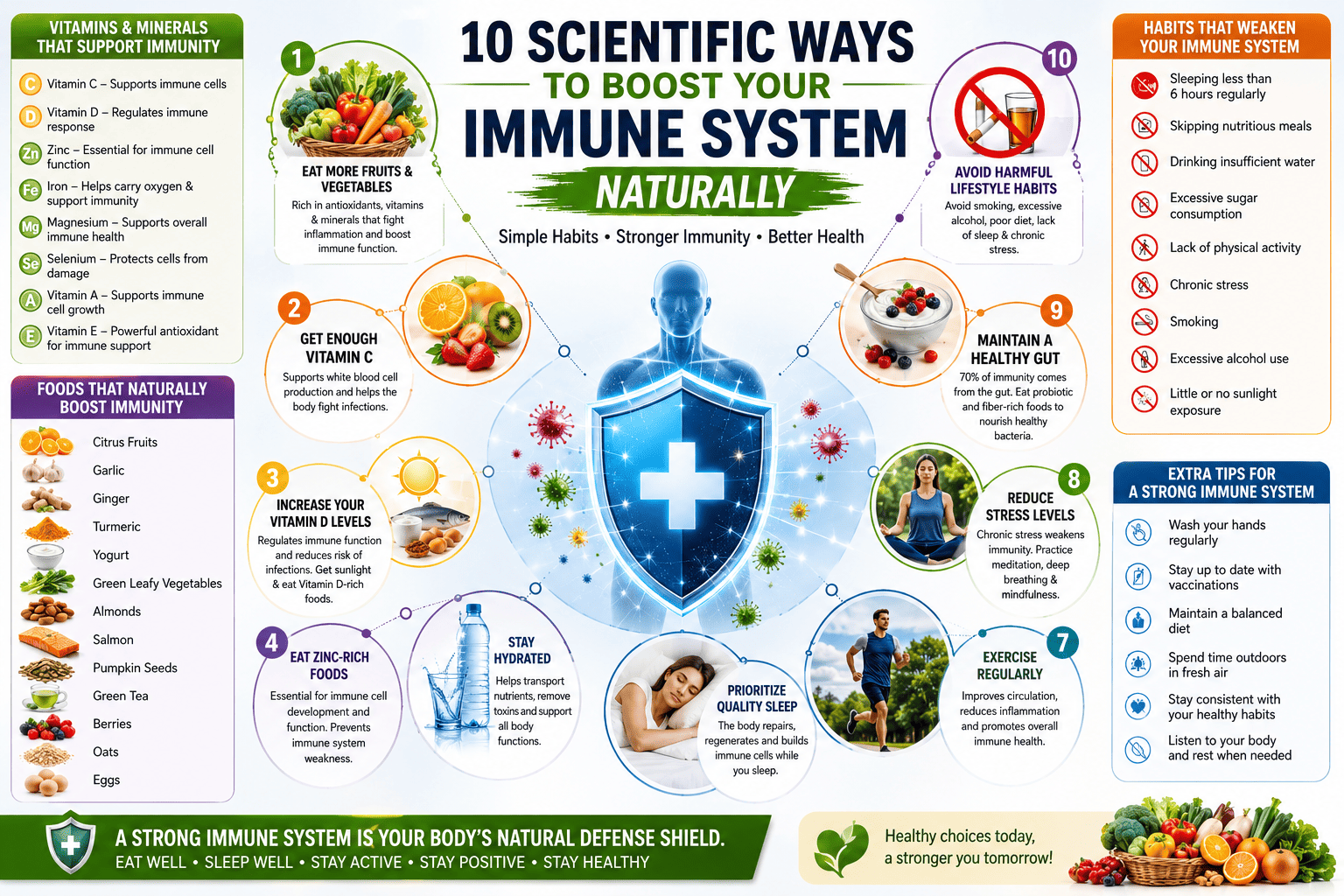
1. Eat More Fruits and Vegetables
Fruits and vegetables are rich in antioxidants, vitamins, and minerals that support immune function.
Some immunity-boosting foods include:
- Oranges
- Lemons
- Blueberries
- Spinach
- Broccoli
- Bell peppers
- Carrots
- Tomatoes
These foods help reduce inflammation and protect your body's cells from damage.
2. Get Enough Vitamin C
Vitamin C is one of the most well-known nutrients for immune health. It supports the production of white blood cells and helps your body fight infections.
Excellent sources of Vitamin C include:
- Citrus fruits
- Kiwi
- Strawberries
- Guava
- Papaya
- Bell peppers
Regular consumption of Vitamin C-rich foods can help strengthen your immune response.
3. Increase Your Vitamin D Levels
Vitamin D plays a vital role in regulating immune function. Low Vitamin D levels have been linked to an increased risk of infections.
Natural sources include:
- Sunlight exposure
- Fatty fish
- Egg yolks
- Fortified dairy products
Spending 15 to 30 minutes in sunlight several times a week may help maintain healthy Vitamin D levels.
4. Eat Zinc-Rich Foods
Zinc is essential for the development and function of immune cells.
Foods high in zinc include:
- Pumpkin seeds
- Nuts
- Beans
- Seafood
- Lean meat
- Whole grains
A zinc deficiency may weaken your immune system and increase susceptibility to illness.
5. Stay Hydrated
Water is essential for nearly every function in the body, including immune health.
Proper hydration helps:
- Transport nutrients throughout the body.
- Remove toxins efficiently.
- Maintain healthy digestion.
- Support cellular functions.
Aim to drink adequate amounts of water throughout the day based on your age, activity level, and climate.
6. Prioritize Quality Sleep
Sleep is one of the most powerful tools for maintaining a healthy immune system.
During sleep, your body:
- Repairs damaged tissues.
- Produces immune-supporting proteins.
- Regulates inflammation.
- Restores energy levels.
Most adults should aim for 7 to 9 hours of quality sleep each night.
Poor sleep habits can weaken your body's ability to fight infections and increase stress levels.
7. Exercise Regularly
Moderate physical activity has been shown to improve immune function.
Benefits of regular exercise include:
- Improved blood circulation.
- Reduced inflammation.
- Better sleep quality.
- Lower stress levels.
Simple activities such as:
- Walking
- Cycling
- Swimming
- Yoga
- Light strength training
can contribute significantly to overall health and immunity.
8. Reduce Stress Levels
Chronic stress negatively affects the immune system by increasing cortisol levels.
Long-term stress may lead to:
- Reduced immune response.
- Increased inflammation.
- Poor sleep quality.
- Higher susceptibility to illness.
Stress management techniques include:
- Meditation
- Deep breathing exercises
- Journaling
- Spending time outdoors
- Practicing mindfulness
Managing stress effectively is an important part of maintaining strong immunity.
9. Maintain a Healthy Gut
Approximately 70% of your immune system is associated with your gut health. A healthy digestive system supports beneficial bacteria that play a major role in immune function.
Foods that support gut health include:
- Yogurt
- Fermented foods
- Whole grains
- Fruits
- Vegetables
- Fiber-rich foods
A balanced diet promotes a healthy gut microbiome, which strengthens your body's natural defenses.
10. Avoid Harmful Lifestyle Habits
Certain daily habits can significantly weaken your immune system.
These include:
- Smoking
- Excessive alcohol consumption
- Chronic sleep deprivation
- Poor diet
- Physical inactivity
- Excessive sugar intake
- High levels of chronic stress
Avoiding these habits can greatly improve both your immune health and overall quality of life.
Vitamins and Minerals That Support Immunity
The following nutrients are especially important for immune function:
- Vitamin C
- Vitamin D
- Zinc
- Iron
- Magnesium
- Selenium
- Vitamin A
- Vitamin E
Eating a balanced diet is usually the best way to obtain these nutrients naturally.
Foods That Naturally Boost Immunity
Some of the best immunity-supporting foods include:
- Citrus fruits
- Garlic
- Ginger
- Turmeric
- Yogurt
- Almonds
- Green leafy vegetables
- Salmon
- Pumpkin seeds
- Green tea
- Berries
- Oats
- Eggs
Including a variety of these foods in your daily meals can help improve your body's ability to fight infections.
Habits That Weaken Your Immune System
You may unintentionally weaken your immune system through unhealthy lifestyle choices.
Common immune-weakening habits include:
- Sleeping less than six hours regularly.
- Skipping nutritious meals.
- Drinking insufficient water.
- Excessive sugar consumption.
- Lack of physical activity.
- Chronic stress.
- Smoking and excessive alcohol use.
- Spending excessive time indoors without sunlight exposure.
Making small improvements in these areas can produce significant health benefits over time.
Conclusion
A strong immune system is not built overnight. It is the result of consistent healthy habits practiced every day. Eating nutrient-rich foods, getting quality sleep, exercising regularly, staying hydrated, and managing stress are among the most scientifically supported ways to improve immune function naturally.
Rather than relying solely on supplements or temporary solutions, focus on building a healthy lifestyle that supports your body's natural defense system. Your immune system works tirelessly to protect you—taking care of it is one of the best investments you can make for your long-term health.

You must be logged in to post a comment.