
 Minimalist Living: How Owning Less Can Help You Live More
In today's consumer-driven world, it's easy to believe that happiness comes from owning more. Every day, advertisements encourage us to buy the latest gadgets, fashionable clothing, home décor, and luxury products. Social media often reinforces the idea that success is measured by material possessions.
However, many people discover that accumulating more things does not necessarily lead to greater happiness. Instead, it often creates clutter, financial stress, decision fatigue, and less time to enjoy life.
This is where minimalist living offers a refreshing alternative.
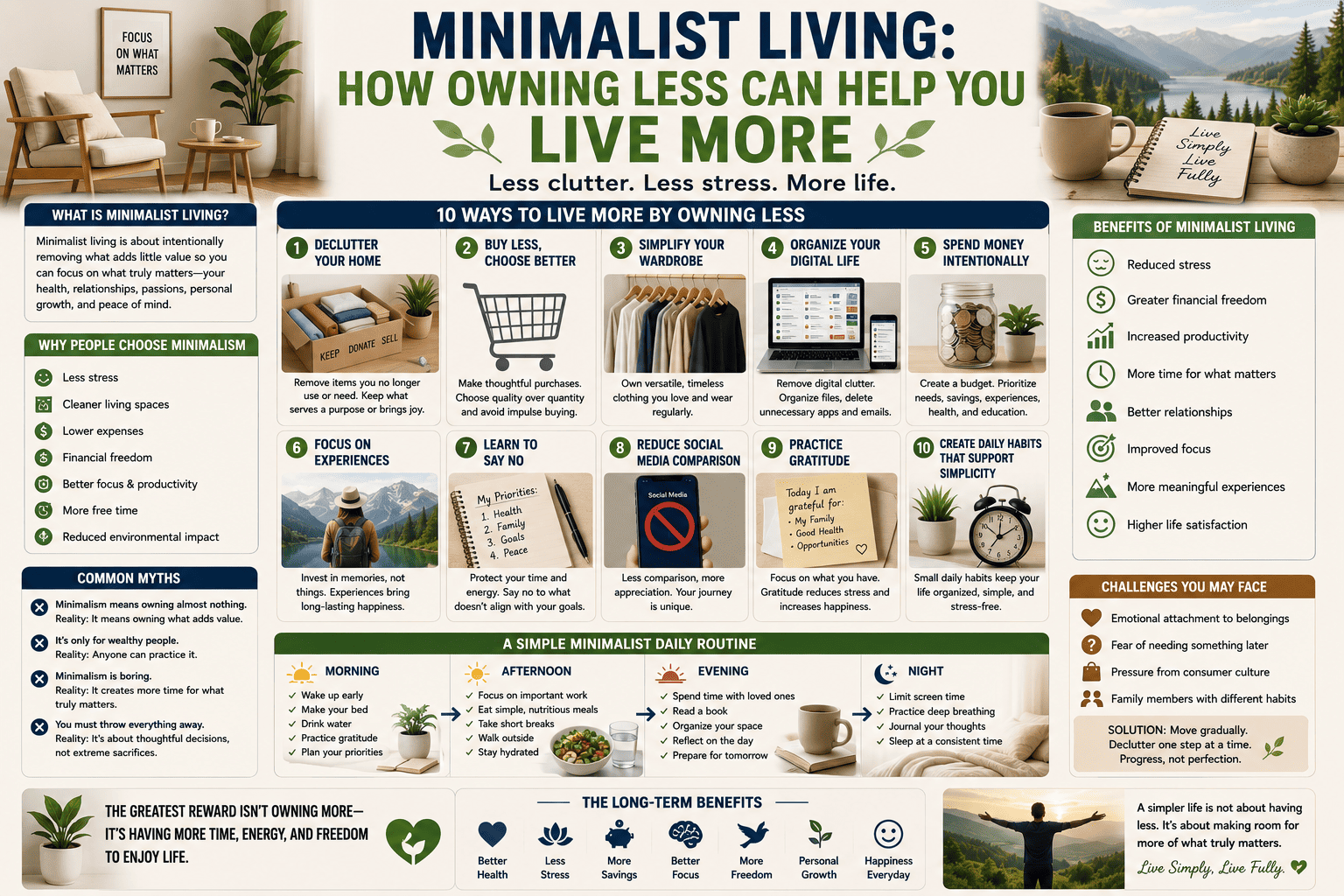
Minimalism is not about deprivation or living with almost nothing. It's about intentionally removing what adds little value so you can focus on what truly matters—your health, relationships, passions, personal growth, and peace of mind.
By owning less, you often gain something far more valuable: freedom.
What Is Minimalist Living?
Minimalist living is a lifestyle centered on intentionality. Instead of collecting possessions for the sake of having more, minimalists carefully choose what they own based on usefulness, necessity, and personal value.
Minimalism encourages you to ask simple questions before bringing something into your life:
- Do I truly need this?
- Will it improve my life?
- Will I still value it a year from now?
- Does it support my goals?
If the answer is no, it may not deserve space in your home or your life.
Minimalism looks different for everyone. Some people own very few possessions, while others simply reduce unnecessary clutter and spend more intentionally.
Why People Are Choosing Minimalism
More people are embracing minimalist living because they realize that owning more often creates more responsibilities.
Benefits include:
- Less stress
- Cleaner living spaces
- Lower monthly expenses
- More financial freedom
- Better focus
- Increased productivity
- More free time
- Reduced environmental impact
Instead of spending weekends organizing clutter, minimalists spend more time with family, learning new skills, traveling, or pursuing hobbies.
1. Declutter Your Home
One of the first steps toward minimalist living is removing items you no longer use or need.
Start with one room at a time.
Sort your belongings into categories:
- Keep
- Donate
- Sell
- Recycle
- Dispose
Ask yourself:
- Have I used this in the past year?
- Does it serve a purpose?
- Does it bring me joy?
- Would I buy it again today?
Decluttering creates a cleaner and more peaceful environment.
2. Buy Less, Choose Better
Minimalism doesn't mean never shopping again.
Instead, it encourages thoughtful purchasing.
Before buying something, consider:
- Do I already own something similar?
- Is this a need or a want?
- Is the quality worth the price?
- Will I use it regularly?
Choosing fewer high-quality items often saves money in the long run because they last longer.
3. Simplify Your Wardrobe
Many people wear only a small percentage of the clothes they own.
A minimalist wardrobe focuses on versatile, comfortable, and timeless clothing.
Benefits include:
- Faster morning decisions
- Less laundry
- Easier organization
- Lower clothing expenses
Choose neutral colors and pieces that can be mixed and matched easily.
4. Organize Your Digital Life
Minimalism isn't only about physical belongings.
Digital clutter can also create stress.
Take time to:
- Delete unused apps
- Organize computer files
- Unsubscribe from unnecessary emails
- Remove duplicate photos
- Clean your desktop
- Organize cloud storage
A tidy digital workspace improves productivity and reduces distractions.
5. Spend Money Intentionally
Minimalism encourages mindful spending rather than impulsive buying.
Create a budget that prioritizes:
- Essential expenses
- Savings
- Experiences
- Education
- Health
Reduce spending on unnecessary subscriptions and impulse purchases.
Over time, intentional spending builds financial security and reduces stress.
6. Focus on Experiences Instead of Possessions
Research consistently suggests that experiences often bring longer-lasting happiness than material items.
Instead of buying more products, invest in:
- Family vacations
- Nature trips
- Concerts
- Learning new skills
- Cooking classes
- Volunteering
- Weekend adventures
Memories often provide more lasting joy than physical possessions.
7. Learn to Say No
Minimalism applies to your schedule as well as your belongings.
An overloaded calendar creates stress.
Protect your time by:
- Declining unnecessary commitments
- Limiting meetings
- Prioritizing meaningful activities
- Scheduling rest
A simpler schedule allows you to focus on what matters most.
8. Reduce Social Media Comparison
Many purchasing decisions are influenced by comparison.
Social media often encourages unrealistic lifestyles that make people feel they need more.
Remember:
- Most online content shows highlights, not reality.
- Your worth is not measured by your possessions.
- Happiness comes from purpose, not popularity.
Limiting comparison helps you appreciate your own journey.
9. Practice Gratitude
Gratitude is one of the strongest foundations of minimalist living.
Instead of focusing on what you lack, appreciate what you already have.
Daily gratitude may include:
- Your family
- Good health
- Friends
- Opportunities
- Education
- Nature
Gratitude reduces the desire for unnecessary consumption.
10. Create Daily Habits That Support Simplicity
Minimalism becomes easier when supported by consistent habits.
Examples include:
- Making your bed every morning
- Cleaning for ten minutes each day
- Planning meals
- Organizing your workspace
- Reading instead of excessive scrolling
- Cooking at home
- Reviewing expenses weekly
Small habits prevent clutter from returning.
The Financial Benefits of Minimalism
Owning less often leads to spending less.
Common financial advantages include:
- Lower shopping expenses
- Reduced credit card debt
- Increased savings
- Better investment opportunities
- Less financial stress
Instead of buying unnecessary products, many minimalists choose to save or invest for future goals.
The Environmental Benefits
Minimalism also supports sustainability.
Buying fewer products reduces:
- Manufacturing waste
- Plastic pollution
- Carbon emissions
- Household waste
Simple actions like repairing, reusing, and donating items help protect the environment.
Living with intention benefits both people and the planet.
Common Myths About Minimalism
Myth 1: Minimalism Means Owning Almost Nothing
Reality: Minimalism means owning what adds value—not living without comfort.
Myth 2: It's Only for Wealthy People
Reality: Anyone can practice minimalism regardless of income.
Myth 3: Minimalism Is Boring
Reality: A simpler life often creates more time for meaningful experiences and personal growth.
Myth 4: You Must Throw Everything Away
Reality: Minimalism is about thoughtful decisions, not extreme sacrifices.
A Simple Minimalist Daily Routine
Morning
- Wake up early
- Make your bed
- Drink water
- Practice gratitude
- Plan your priorities
Afternoon
- Focus on important work
- Eat simple, nutritious meals
- Take short breaks
- Avoid unnecessary online shopping
Evening
- Spend time with loved ones
- Read a book
- Organize your space for ten minutes
- Reflect on the day
This routine helps maintain both physical and mental clarity.
Challenges You May Face
Transitioning to a minimalist lifestyle isn't always easy.
Common challenges include:
- Emotional attachment to belongings
- Fear of needing something later
- Pressure from consumer culture
- Family members with different habits
The solution is to move gradually.
Declutter one drawer, one shelf, or one room at a time.
Progress is more important than perfection.
Long-Term Benefits of Minimalist Living
As minimalist habits become part of your life, you'll likely notice:
- Reduced stress
- Better organization
- Greater financial freedom
- Increased productivity
- More confidence
- Improved focus
- Better relationships
- More meaningful experiences
- Higher life satisfaction
The greatest reward isn't simply owning fewer things—it's having more time, energy, and freedom to enjoy life.

You must be logged in to post a comment.