
 What Are Chatbots?
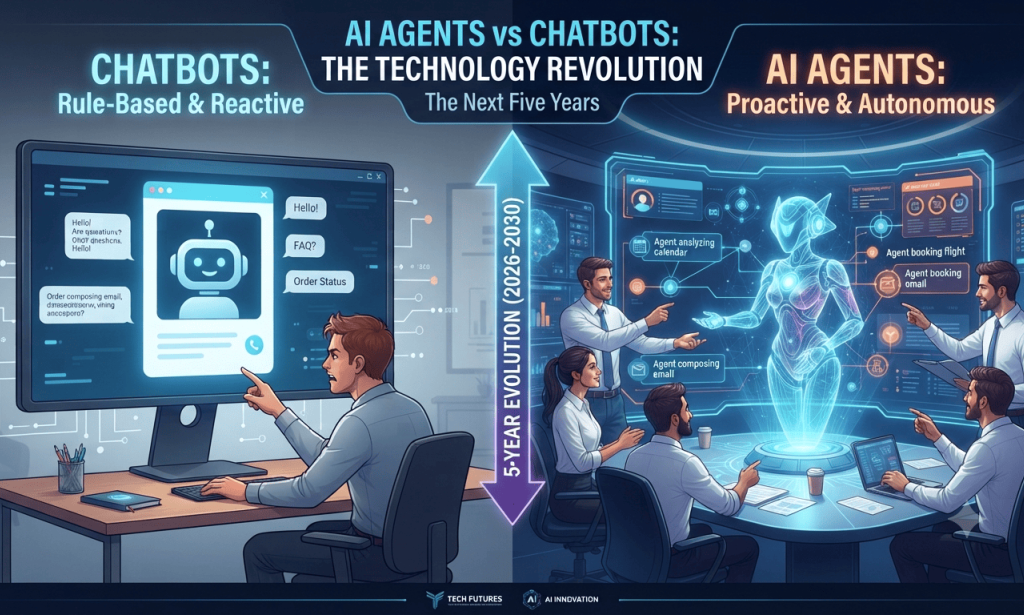
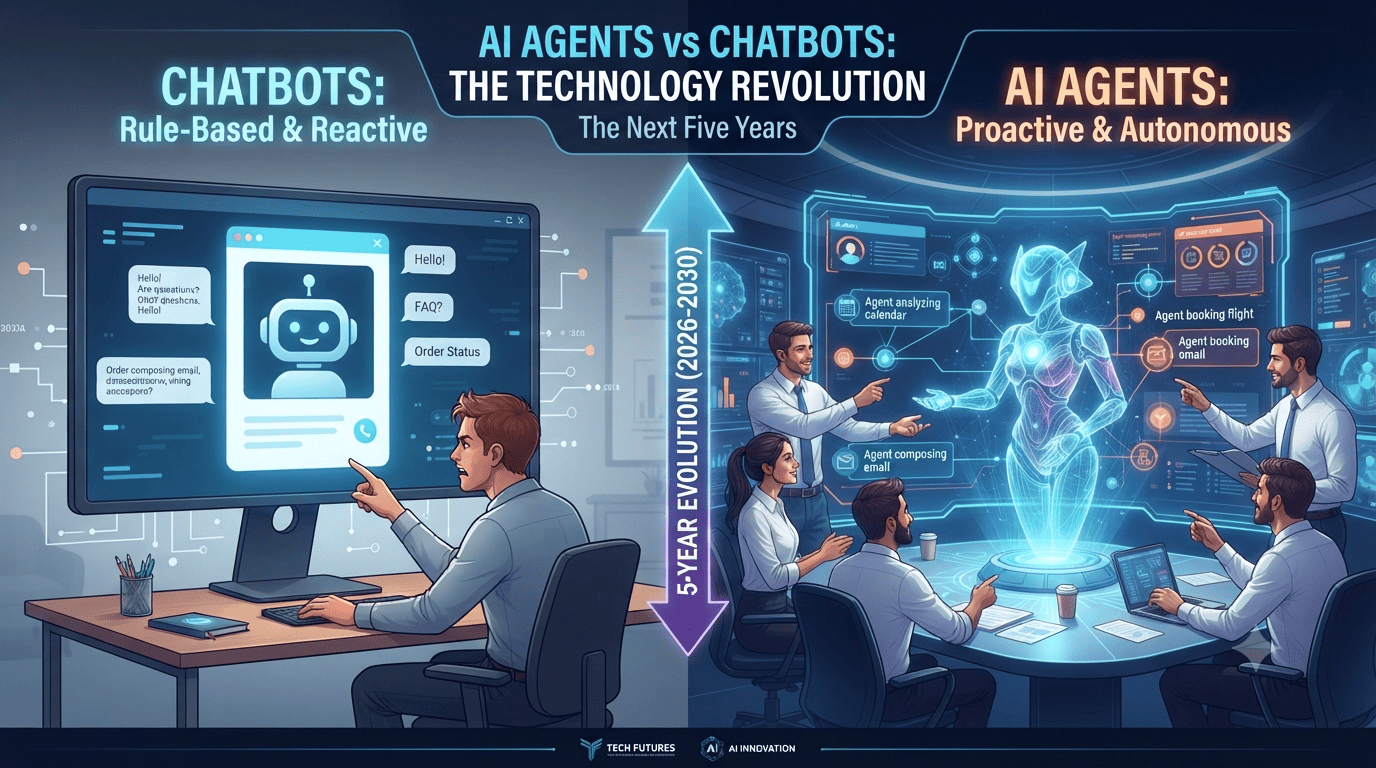
A chatbot is an AI-powered software system designed to communicate with users through text or voice.
Traditional chatbots mainly work by responding to specific inputs.
Examples:
- Customer support assistants.
- FAQ bots.
- Website chat assistants.
- Messaging app bots.
They are commonly used for:
- Answering common questions.
- Providing information.
- Guiding users through processes.
- Collecting basic data.
How Traditional Chatbots Work
Most chatbots operate through:
- Predefined rules.
- Question-answer databases.
- Natural language processing.
- Machine learning models.
For example:
Customer:
"What are your business hours?"
Chatbot:
"We are open from 9 AM to 6 PM."
The chatbot provides a quick response but does not independently understand larger goals.
Limitations of Traditional Chatbots
Although chatbots are useful, they have limitations.
1. Limited Understanding
Traditional chatbots often struggle with:
- Complex questions.
- Unclear requests.
- Multiple-step problems.
2. Lack of Decision-Making Ability
Chatbots usually cannot:
- Create strategies.
- Make independent decisions.
- Take actions beyond their programming.
3. Require Human Assistance
When conversations become complicated, users are often transferred to human employees.
What Are AI Agents?
AI agents are advanced artificial intelligence systems designed to achieve goals by reasoning, planning, and taking actions.
Instead of only answering questions, AI agents can:
- Analyze information.
- Create plans.
- Use external tools.
- Complete tasks.
- Learn from experiences.
- Make decisions.
An AI agent acts more like a digital employee than a simple assistant.
How AI Agents Work
AI agents typically combine several technologies:
Large Language Models (LLMs)
They provide advanced language understanding and reasoning abilities.
Memory Systems
AI agents can remember previous interactions and use information to improve future actions.
Tool Integration
AI agents can connect with:
- Databases.
- Software applications.
- APIs.
- Business systems.
Autonomous Decision-Making
Agents can break large goals into smaller tasks and complete them step by step.
Example:
Goal:
"Create a marketing campaign."
An AI agent could:
- Research competitors.
- Identify target audiences.
- Generate content ideas.
- Create advertisements.
- Analyze performance.
AI Agents vs Chatbots: Key Differences
| Feature | Chatbots | AI Agents |
|---|---|---|
| Main Purpose | Answer questions | Complete tasks |
| Intelligence Level | Limited | Advanced |
| Decision Making | Minimal | Autonomous |
| Memory | Usually limited | Long-term memory |
| Task Completion | Single responses | Multi-step actions |
| Tool Usage | Limited | Extensive |
| Human Support | Often required | Less required |
Why AI Agents Are Becoming the Future
The biggest advantage of AI agents is their ability to move from conversation to action.
Businesses no longer want AI systems that only provide information.
They want AI that can:
- Increase productivity.
- Reduce costs.
- Automate operations.
- Improve customer experiences.
AI agents represent the next step in automation.
How AI Agents Will Transform Businesses
1. AI Employees
In the future, companies may use AI agents as digital employees.
They could handle:
- Customer service.
- Sales assistance.
- Data analysis.
- Administrative tasks.
- Marketing operations.
A small business owner may have multiple AI agents working alongside them.
2. Automated Customer Support
Future customer service will become more intelligent.
AI agents will be able to:
- Understand customer problems.
- Check account information.
- Process requests.
- Recommend solutions.
Instead of answering questions, AI will solve problems.
3. AI-Powered Marketing
Marketing teams will use AI agents to automate:
- Market research.
- Content creation.
- Customer targeting.
- Campaign optimization.
- Performance analysis.
A single entrepreneur may operate a complete marketing system powered by AI.
4. Software Development Revolution
AI agents are already changing programming.
Future AI coding agents may:
- Write software.
- Find bugs.
- Test applications.
- Improve existing systems.
This could allow non-programmers to build complex digital products.
5. Personal AI Assistants
Personal AI agents may become everyday digital partners.
They could help with:
- Scheduling.
- Shopping.
- Travel planning.
- Financial management.
- Learning.
Instead of using dozens of apps, people may interact with one intelligent assistant.
Industries That Will Be Changed by AI Agents
Healthcare
AI agents could help with:
- Patient scheduling.
- Medical research.
- Health monitoring.
- Administrative tasks.
Education
AI tutors may provide:
- Personalized lessons.
- Student feedback.
- Learning plans.
Finance
AI agents may assist with:
- Budget management.
- Investment analysis.
- Financial planning.
E-Commerce
AI agents could improve:
- Product recommendations.
- Customer service.
- Inventory management.
The Next Five Years: What Will Happen?
Between 2026 and 2030, AI agents are expected to become more common.
Future developments may include:
More Autonomous Systems
AI will complete more tasks without human instructions.
Multi-Agent Collaboration
Multiple AI agents may work together.
Example:
One agent handles research, another manages marketing, and another manages customer support.
Personalized AI Systems
Everyone may have AI assistants customized for their personal and professional needs.
Challenges of AI Agents
Despite their potential, AI agents face important challenges.
1. Trust and Reliability
AI systems must become more accurate before handling critical decisions.
2. Privacy Concerns
AI agents may require access to personal and business data.
Protecting information will be essential.
3. Job Transformation
AI automation will change many roles.
Some tasks may disappear, while new opportunities will emerge.
The future will require humans to develop new skills.
4. Ethical Concerns
Important questions remain:
- Who controls AI decisions?
- How should mistakes be handled?
- What responsibilities should AI have?
How Humans Should Prepare for the AI Agent Era
The goal is not to compete against AI but to learn how to work with it.
Important skills include:
- AI literacy.
- Creativity.
- Problem-solving.
- Communication.
- Strategic thinking.
People who understand how to use AI effectively will have a major advantage.
The Future: Humans + AI Agents
The next technology revolution will not be about replacing humans completely.
Instead, it will be about collaboration.
Humans will provide:
- Creativity.
- Emotional intelligence.
- Leadership.
- Strategic vision.
AI agents will provide:
- Speed.
- Data analysis.
- Automation.
- Efficiency.
Together, they can create a more productive future.
Conclusion
The difference between chatbots and AI agents represents one of the biggest shifts in artificial intelligence history.
Chatbots changed how humans communicate with machines. AI agents will change how machines perform work.
Over the next five years, AI agents are expected to become powerful digital partners capable of managing complex tasks across industries.
The future belongs to individuals and businesses that understand how to combine human creativity with artificial intelligence.
AI will no longer be just a tool we use—it will become a partner that helps us build, create, and achieve more.

You must be logged in to post a comment.