
 AI Coaches in Sports: Can Artificial Intelligence Replace Human Trainers?
Introduction
For generations, sports coaching has depended on human expertise, experience, and personal relationships. A coach’s role has always been much more than teaching techniques—they motivate athletes, understand emotions, develop strategies, and help players overcome mental challenges.
However, the rise of artificial intelligence (AI) is changing the future of sports training. In 2026, AI-powered coaching systems are becoming increasingly common in professional sports, fitness applications, and athlete development programs.
Artificial intelligence can now analyze player performance, track physical movements, predict injuries, and provide personalized training recommendations within seconds. This raises an important question:
Can AI coaches replace human trainers in the future?
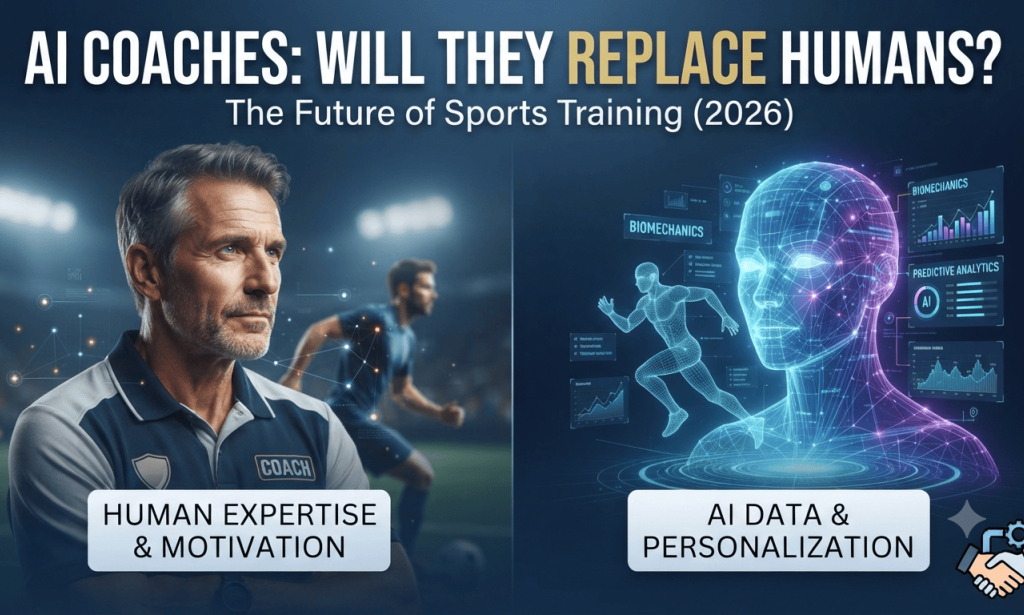
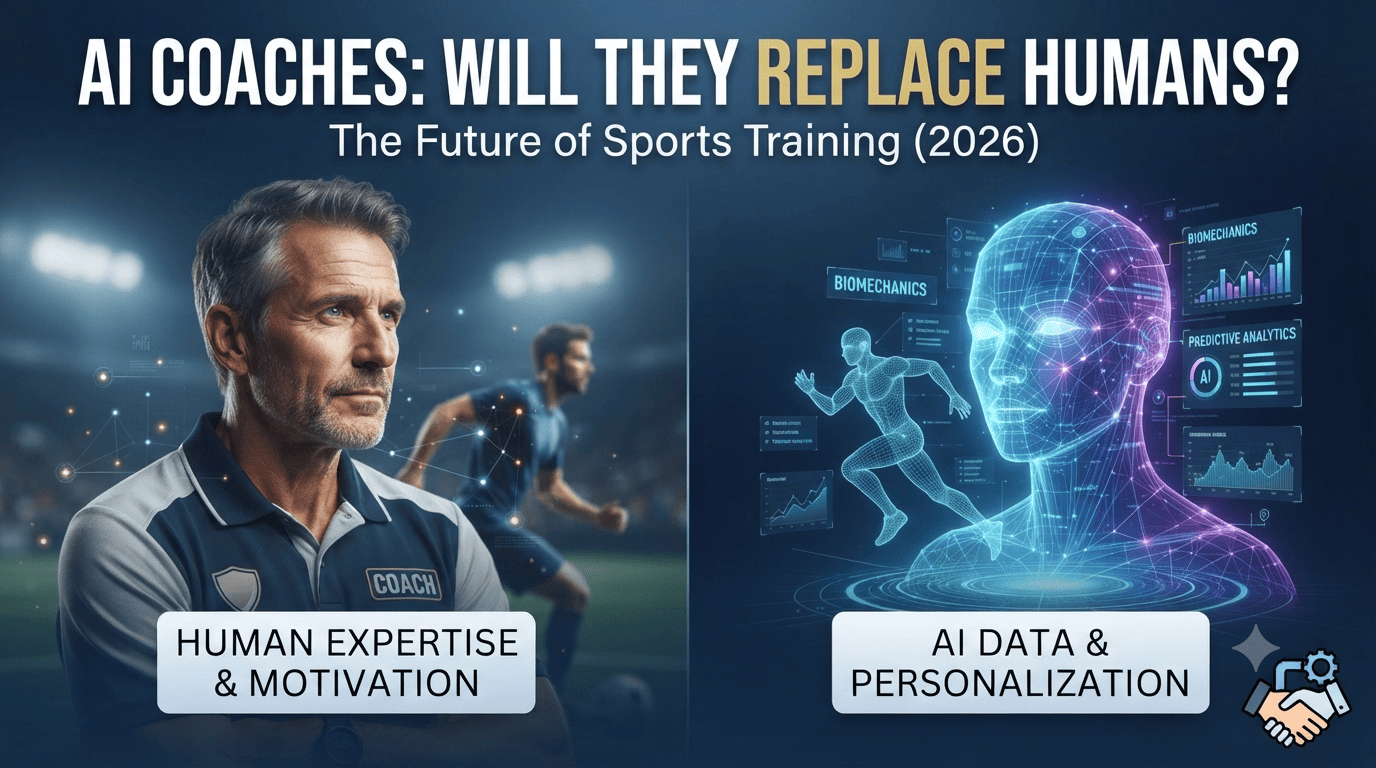
While AI offers incredible advantages, the relationship between technology and human coaching is more complex than simple replacement. The future of sports coaching may not be about humans versus machines, but about humans working together with AI.
What Are AI Coaches in Sports?
AI coaches are technology-based systems that use artificial intelligence, machine learning, sensors, and data analytics to provide training guidance.
Unlike traditional coaching methods based only on observation and experience, AI coaches analyze thousands of data points to make decisions.
AI coaching systems can monitor:
- Player movements.
- Training intensity.
- Fitness levels.
- Performance statistics.
- Recovery patterns.
- Injury risks.
- Game strategies.
These systems can provide real-time feedback and personalized recommendations for athletes.
How AI Is Transforming Sports Coaching
1. Performance Analysis
One of the biggest advantages of AI coaching is its ability to analyze performance data.
Traditional coaches may watch hours of game footage, but AI systems can process information much faster.
AI can identify:
- Player weaknesses.
- Technical mistakes.
- Movement patterns.
- Tactical opportunities.
- Performance improvements.
For example, in sports like football, basketball, and tennis, AI can analyze player positioning, decision-making, and efficiency during matches.
2. Personalized Training Programs
Every athlete has different strengths, weaknesses, and physical conditions.
AI coaches can create customized training plans based on:
- Age.
- Fitness level.
- Previous injuries.
- Performance goals.
- Training history.
Instead of using one training method for an entire team, AI allows athletes to receive highly personalized guidance.
3. Injury Prevention and Recovery
Injuries are one of the biggest challenges in professional sports.
AI technology can help reduce injury risks by analyzing:
- Muscle workload.
- Movement patterns.
- Fatigue levels.
- Recovery time.
Wearable devices can collect real-time information and alert coaches when an athlete may be at risk of injury.
This allows teams to make smarter decisions about training intensity and rest periods.
4. Real-Time Feedback During Training
AI systems can provide immediate feedback while athletes practice.
Examples include:
- Correcting running techniques.
- Improving shooting accuracy.
- Adjusting workout intensity.
- Analyzing body movements.
This allows athletes to make improvements faster without waiting for post-training reviews.
The Benefits of AI Coaches
1. Data-Driven Decisions
Human coaches often rely on experience and observation. AI adds another layer by providing scientific data.
Benefits include:
- More accurate performance analysis.
- Better strategic planning.
- Improved training efficiency.
2. 24/7 Availability
Unlike human coaches, AI systems can operate anytime.
Athletes can receive:
- Training recommendations.
- Progress tracking.
- Fitness guidance.
- Performance analysis.
whenever they need it.
3. Affordable Access to Coaching
Professional coaching has traditionally been expensive.
AI-powered coaching apps can make quality training accessible to:
- Amateur athletes.
- Young players.
- Fitness enthusiasts.
- Beginners.
This could democratize sports development worldwide.
Can AI Replace Human Coaches?
Although AI is powerful, completely replacing human coaches remains unlikely.
Sports are not only about numbers and statistics. They involve emotions, motivation, leadership, and human connection.
Human coaches provide qualities AI cannot fully replicate.
The Human Side of Coaching
Emotional Support
Athletes experience:
- Pressure.
- Failure.
- Anxiety.
- Confidence issues.
A human coach can understand emotions and provide personal encouragement.
Leadership and Team Building
Successful teams require:
- Trust.
- Communication.
- Team chemistry.
- Shared goals.
Human coaches play a crucial role in building these relationships.
Creativity and Adaptability
Sports situations constantly change.
A human coach can make creative decisions based on:
- Unexpected situations.
- Player emotions.
- Opponent behavior.
- Team dynamics.
AI can provide recommendations, but human judgment remains essential.
Examples of AI in Modern Sports
Football
AI is used for:
- Player tracking.
- Tactical analysis.
- Recruitment decisions.
- Injury prediction.
Teams analyze massive amounts of match data to improve performance.
Basketball
AI helps analyze:
- Shooting patterns.
- Defensive movements.
- Player efficiency.
Coaches use these insights to develop better strategies.
Tennis
AI technology helps players improve:
- Serve techniques.
- Shot selection.
- Match preparation.
Players can review detailed performance reports after matches.
Individual Fitness
AI fitness coaches are becoming popular through:
- Smart watches.
- Fitness applications.
- Virtual training platforms.
These tools provide customized workouts and progress tracking.
The Future: Human + AI Coaching
The future of sports coaching will likely combine the strengths of both humans and artificial intelligence.
AI will handle:
- Data analysis.
- Performance tracking.
- Pattern recognition.
- Training optimization.
Human coaches will focus on:
- Motivation.
- Leadership.
- Emotional support.
- Strategic decisions.
Together, they can create a more powerful coaching system.
Challenges of AI Coaching
Despite its advantages, AI coaching faces several challenges.
Lack of Emotional Intelligence
AI can analyze emotions through data, but it cannot truly understand human experiences.
Privacy Concerns
Sports data is extremely valuable. Protecting athlete information will become increasingly important.
Overdependence on Technology
Athletes and coaches should avoid relying entirely on AI recommendations.
Human experience and intuition remain valuable.
High Implementation Costs
Advanced AI systems may be expensive for smaller teams and organizations.
How Athletes Can Use AI Effectively
Athletes should view AI as a training partner rather than a replacement for coaches.
Effective strategies include:
- Using AI for performance analysis.
- Tracking fitness progress.
- Improving technical skills.
- Combining AI insights with human guidance.
The best results come from balancing technology with human expertise.
The Future of Sports Coaching in 2030 and Beyond
As AI technology continues to improve, sports coaching will become more personalized and data-driven.
Future possibilities include:
- AI virtual coaches.
- Real-time strategy suggestions during games.
- Advanced injury prediction systems.
- Fully personalized athlete development plans.
- Smart training environments.
However, the human element of sports will always remain important.
Athletes do not only need instructions—they need inspiration.
Conclusion
AI coaches are transforming the world of sports by providing advanced analytics, personalized training, and real-time feedback. They are helping athletes train smarter, prevent injuries, and improve performance.
However, artificial intelligence is unlikely to completely replace human trainers. Sports are built on passion, emotion, teamwork, and human relationships—qualities that machines cannot fully recreate.
The future of coaching is not about choosing between humans and AI. It is about combining human wisdom with artificial intelligence to create stronger, smarter, and more successful athletes.
The greatest coaches of the future may not be those who compete against AI, but those who know how to use it effectively.

You must be logged in to post a comment.