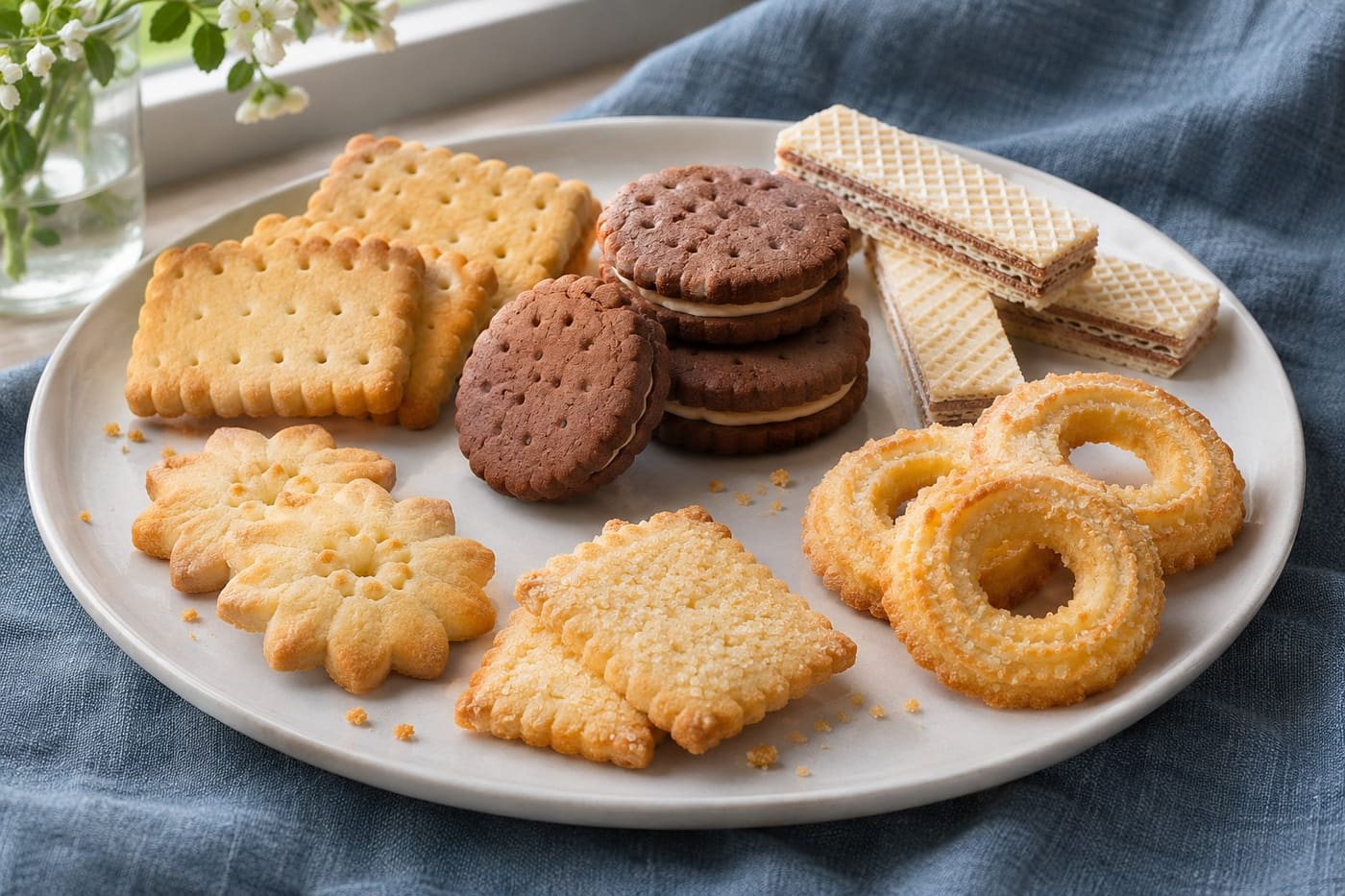
If the Willisauer Ringli you remember came in a HUG bag and the one on the shelf says Wernli, start by comparing the product name. HUG acquired Wernli in 2008, and the company announced that several HUG biscuit ranges would appear under Wernli branding from autumn 2025. The change gives shoppers a good reason to separate the name of the company, the name printed on the front and the information that identifies the food inside. Each answers a different question.
Wernli appeared at number two in a Switzerland Google Trends snapshot retrieved at 12:13 UTC on November 7, 2026. In the past-24-hours view sorted by search volume, with all categories and all trends included, the row was marked Active and showed 5K+. The top row, Rothenburg, was already covered separately. The snapshot provides a reason to answer the brand question today. The packaging change described here dates from 2025, and the Trends row does not establish what prompted searches.
How Wernli and HUG fit together
The Wernli company timeline traces its beginnings to a confectionery in Trimbach in 1905. The Wernli brothers took over the business in 1914 and established a biscuit factory. The timeline places the launch of Choco Petit Beurre in the 1960s. These dates help explain why the Wernli name has its own history even though it is now part of HUG.
The HUG corporate timeline records the 2008 acquisition and also describes the newer packaging changes. Think of HUG in two roles when you see the name. It is the company behind several brands, and it is also the brand on certain products. Wernli has its own place within that group. A company name in small print and a different brand name on the front can therefore both be accurate.
There is also a distinction between a company's historical home and where it makes a particular product today. Wernli's timeline describes production moving from Trimbach into HUG's facility at Malters during 2020–2022. If you want to know where the item in your hand was produced, look for the production information on that item. A founding story, a corporate address and a place printed in a traditional product name each give you a different kind of information.
Which products changed their packaging?
In its 120th-anniversary announcement, HUG identified Willisauer Ringli, Chnusper-Mischung, Nussstängeli, gingerbread and Christmas biscuit ranges as moving to Wernli packaging from autumn 2025. The announcement also covered selected single portions supplied as accompaniments to coffee, including Amandes, Nuss-Härzli and Willisauer Ringli. Wernli's German-language history separately names rusks, meringues and small dessert bases among the items that would remain under HUG.
The scope matters when you are looking for an old favourite. Try the full product name first, then try it with Wernli if your first search leads to older HUG packaging. For a bag of rings, include the word Original if you are trying to match the standard variant. For a café biscuit, check whether the listing refers to a single portion or a bag. The Wernli biscuit catalogue includes both retail and single-portion entries, so it helps to narrow the search before comparing results.
HUG describes the move as a rebranding. You can use the company's announcement to explain why a familiar name appears under a different logo. The ingredient panel on the current pack still answers the separate question of what is in that product today. A photograph of a bag from before the transition may help you recognise a name. It is less helpful when you need to match a current ingredient list, weight or supplier reference.
Two labels that show why the variant matters
The official entry for Willisauer Ringli Original describes a 290-gram bag. The ingredients shown include wheat flour, sugar, honey and citrus ingredients. The same page provides nutrition per 100 grams and for the full bag. Those two columns are useful for different comparisons, even though they refer to exactly the same contents. If you want to compare it with a smaller packet, start with the figures per 100 grams. If you want to understand the totals for that bag, read the package column.
The official page for Mini Choco Petit Beurre au lait describes a 125-gram pack with milk chocolate. Its label information shows wheat, milk, egg and soy ingredients and a separate statement about possible traces of almonds and hazelnuts. The word Mini is part of the identity of the example, just as au lait identifies the milk chocolate version. If a shop offers a similar-looking larger biscuit or another chocolate version, use its own label before carrying over any figures or ingredient assumptions.
These examples are useful even if you never buy either product. A ring-shaped biscuit and a chocolate-topped biscuit have different ingredient panels, and two versions within the same family can require separate checks. An assortment adds another layer because an attractive photo may show only a selection of shapes. Find the declaration for the assortment as sold. If there is an insert or separate breakdown, keep it with the outer box while people are choosing.
Reading the small print in a second language
The Swiss Federal Food Safety and Veterinary Office has an illustrated explanation of food labels. Start with the name that describes the food, called the Sachbezeichnung on the German page. It may sit near the ingredient list or elsewhere on the back. The brand helps you find the product family. This description tells you whether you have, for example, a biscuit with milk chocolate or a bag of traditional rings.
Look for Zutaten in German, ingrédients in French or ingredienti in Italian to locate the ingredients. When comparing two versions, identify the complete product name and weight before checking individual words. This is especially useful when a listing title is shortened or a screenshot shows only the middle of the back panel. Keep the front and back in the same set of photos so that you can connect the name to the declaration later.
On the Swiss authority's example, ingredients that require allergen disclosure are visually emphasised. Typography may vary, so scan the whole panel for highlighted words and read any separate trace statement. The Mini Choco Petit Beurre example shows why the distinction matters. Soy appears within the description of an ingredient. Almonds and hazelnuts appear in the separate statement about possible traces. If you are choosing for someone else, give them the actual packaging and let them review the information relevant to them. A translation of the front of the box is only a starting point.
Look for production and contact information as separate fields. The office's English-language guidance describes the declaration of the country of production for food sold in Switzerland. An overseas import may also have a retailer or importer sticker. Match the sticker and original panel to the exact item, especially if a retailer's website shows a different package size or a photo taken before the rebrand.
Compare weights and figures on the same basis
A shelf label and a nutrition label can both contain a number followed by “100 g,” but they measure different things. One can help you compare price for the same weight. The other can help you compare the composition of an equivalent weight. If the shelf label only gives the packet price, divide that price by the grams in the packet and multiply by 100. Apply the same calculation to the other product. A small gift box can cost less at checkout while costing more for each 100 grams.
Apply the same care to the numbers on the biscuit label. If you use the per-100-gram figure from one item, look for the equivalent figure on the other item. For a plate holding 25 grams, the figures per 100 grams are multiplied by one quarter. That calculation tells you about the weight you measured. A serving described as two biscuits can represent a different weight if the biscuits are miniatures, full-sized pieces or rings of different sizes.
A café portion, a shared bag and a gift tin also have different practical uses. A per-piece comparison may suit a café order where each cup gets one biscuit. A per-100-gram price comparison may suit someone filling several bowls from the same purchase. In both cases write the unit beside each number. That small step prevents you from treating a bag total as a serving or an individually wrapped piece as if it weighed as much as the one in a multipack.
Use the package for gifts, café orders and cupboard checks
Suppose you are putting together a small gift and the recipient remembers a particular biscuit from Switzerland. Ask for a product name or a photo and search both the older and newer brand pairings. Then compare the product description and weight. If you find a multipack, check whether the contents are separately wrapped or simply arranged inside one outer box. Keep the ingredient and date information available when you rewrap the gift.
If you are ordering for a café, write down the exact product and unit you expect the supplier to deliver. A single-portion ring and a 290-gram bag might share much of the product name, but they have different implications for portion count, handling and the information customers can see. When a delivery arrives under the newer brand, check the outer label against the supplier listing. If you need to keep allergen information on hand for counter staff, update the reference whenever you accept a new variant. The Swiss office also explains what information applies to unpackaged sales.
At home, take a clear photo of the back before pouring biscuits into a tin. Include the storage instructions, date and batch details if visible, along with the ingredients and name. If you keep two kinds in similar tins, name the photo or place a matching note inside the lid. An opened packet and a sealed spare can have different handling needs, so read the instructions for the one you are using. For a separate guide to dates and storage wording, see Food Date Labels: Read the Whole Instruction Before Planning Dinner.
Match old photos to a current packet
A dated photograph can be a useful clue if it shows the packet size or a name that a family member remembers. Save the date with the image and mark it as an older reference. If you are comparing several search results, make a short list with one line for each size and version. That helps you notice when a shop has paired the right name with a photo of a different pack. If two sellers give conflicting ingredient details, ask for a picture of the current back label, including the area around the declaration. A cropped product shot can hide a separate trace statement or the weight that would let you distinguish two otherwise similar products.
A quick check when two listings disagree
Imagine an online retailer shows the older HUG artwork while a current manufacturer page uses Wernli. First, line up the exact variant and the net weight. Next, compare the product descriptions. If the retailer only shows a front photo, look for a full label image or ask the seller which version it currently stocks. If you already have the packet, read the ingredient list and batch details directly from it. This is more precise than judging the illustration or assuming the online listing has been refreshed.
Use the company timeline for historical questions and the product catalogue for finding a named variant. Use the food authority's examples to interpret unfamiliar label fields. A current physical packet connects those sources to the item you can actually serve. If the decision depends on an unclear ingredient or trace statement, leave it unresolved until you can verify the exact pack with the maker or retailer.
The short answer for shoppers is that HUG owns Wernli and moved selected biscuit ranges to the Wernli brand from autumn 2025. If a package looks unfamiliar, compare the variant, weight and label before deciding whether it is the biscuit you were looking for. The new front can explain where to find it, and the back tells you what you are taking home.
Sources consulted 7 November 2026. Manufacturer pages are examples of the named variants. Google Trends records search activity at the retrieval time. The image is an original editorial illustration of generic biscuits.