
 What Is Blue Light?
Blue light is a part of the visible light spectrum with a short wavelength and high energy. It is naturally produced by the sun, but modern technology has introduced additional sources through artificial devices.
Common sources of blue light include:
- Smartphones.
- Laptops.
- Computer monitors.
- Tablets.
- LED televisions.
- Smart watches.
- LED lighting.
During the day, blue light helps regulate alertness and the body's natural rhythm. However, excessive exposure—especially at night—can interfere with important biological processes.
What Is Blue Light Syndrome?
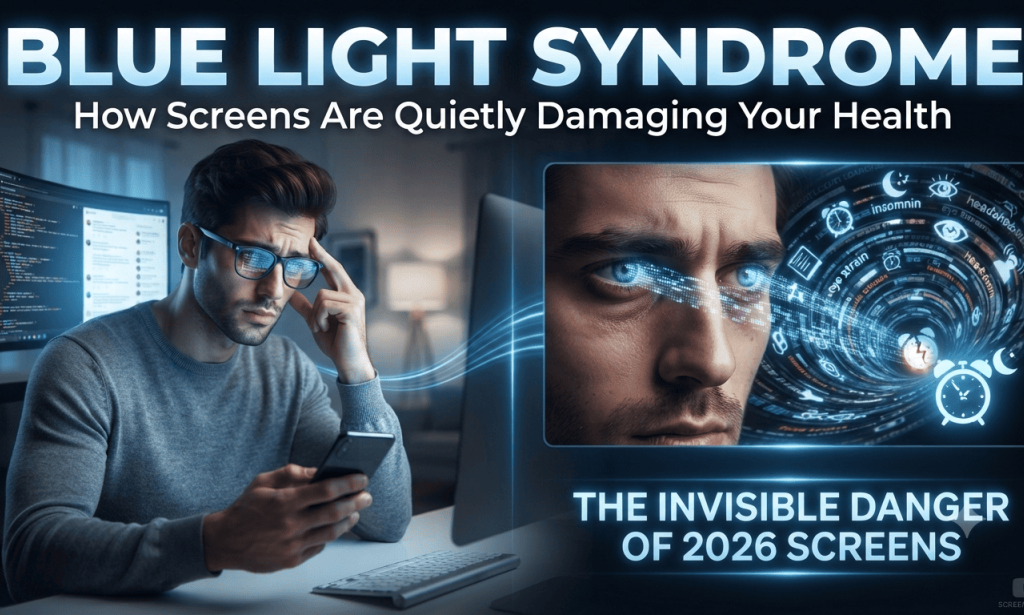
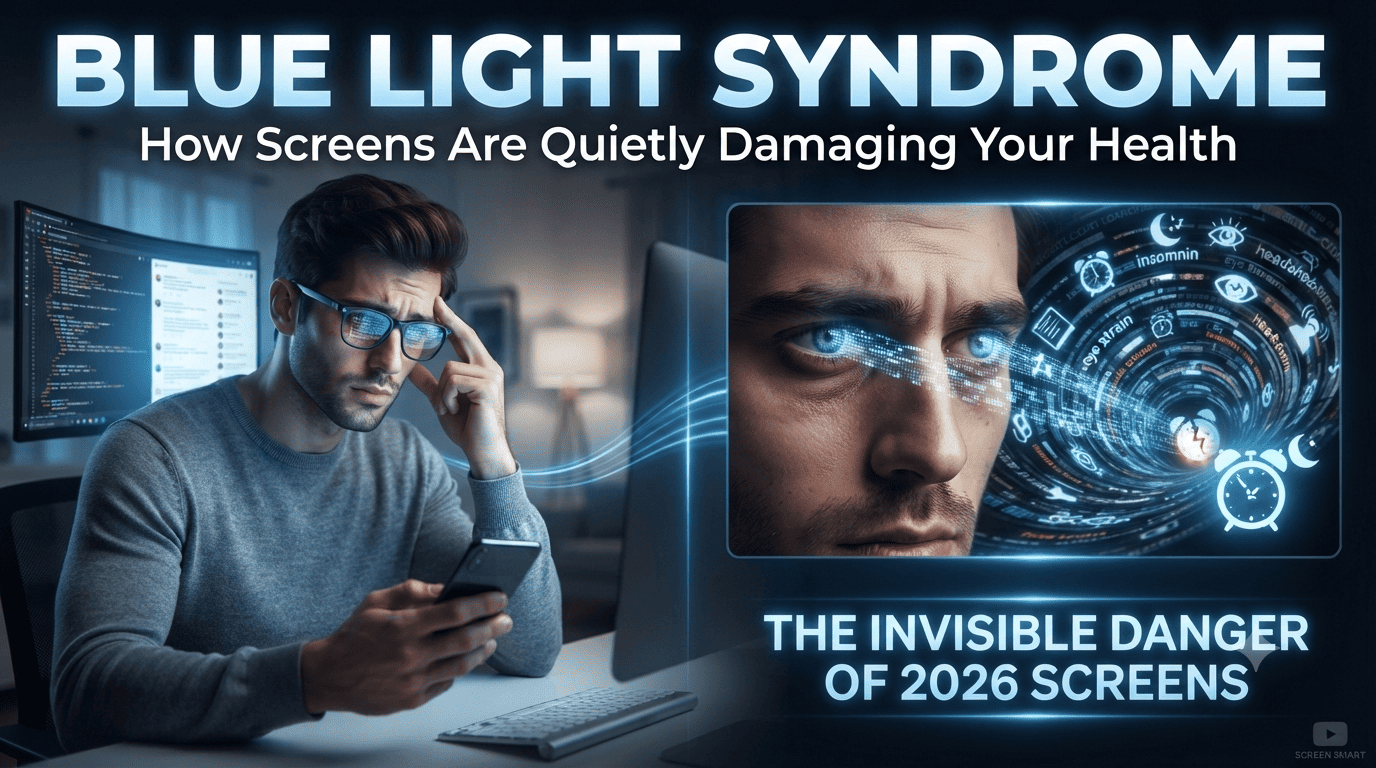
Blue Light Syndrome refers to the negative effects that may occur from prolonged exposure to blue light, especially from digital screens.
Although it is not a formal medical diagnosis, the term is commonly used to describe symptoms linked to excessive screen usage.
Common symptoms include:
- Digital eye strain.
- Difficulty sleeping.
- Headaches.
- Dry eyes.
- Fatigue.
- Reduced concentration.
- Increased mental stress.
As people spend more hours connected to digital devices, these issues are becoming increasingly common.
How Screens Affect Your Health
1. Disrupting Your Sleep Cycle
One of the biggest impacts of blue light exposure is its effect on sleep.
The human body produces a hormone called melatonin, which helps regulate sleep. Blue light exposure, especially before bedtime, can reduce melatonin production and make it harder for the brain to prepare for rest.
This can lead to:
- Difficulty falling asleep.
- Poor sleep quality.
- Feeling tired in the morning.
- Reduced energy during the day.
Many people unknowingly damage their sleep by scrolling on their phones late at night.
2. Digital Eye Strain
Spending long hours looking at screens forces the eyes to work continuously.
Digital eye strain can cause:
- Eye dryness.
- Blurred vision.
- Eye discomfort.
- Difficulty focusing.
- Burning sensations.
People who work on computers for several hours daily are especially vulnerable.
3. Increased Headaches and Fatigue
Extended screen exposure can contribute to headaches due to:
- Eye muscle fatigue.
- Poor posture.
- Bright screen settings.
- Reduced blinking.
Many people experience unexplained tiredness after long periods of digital activity because their brains are constantly processing information.
4. Reduced Attention and Productivity
Constant exposure to digital content can affect concentration.
Notifications, social media updates, and endless online information create frequent interruptions.
This may result in:
- Shorter attention spans.
- Difficulty focusing.
- Lower productivity.
- Mental exhaustion.
The problem is not only blue light itself but also the constant stimulation created by digital environments.
5. Impact on Mental Health
Heavy screen usage, especially social media consumption, has been linked with increased stress and emotional fatigue.
Excessive digital consumption may contribute to:
- Anxiety.
- Comparison with others.
- Information overload.
- Reduced real-world interaction.
Healthy screen habits can help protect mental well-being.
Why Blue Light Exposure Is Increasing in 2026
Modern lifestyles have increased screen dependency.
People now spend more time using devices for:
- Remote work.
- Online education.
- Digital entertainment.
- Social networking.
- Online shopping.
- Gaming.
Many individuals spend 8–12 hours daily looking at screens, making blue light exposure a modern health concern.
Signs You May Be Experiencing Blue Light Problems
You may need to reduce screen exposure if you experience:
- Trouble sleeping after using devices at night.
- Frequent eye discomfort.
- Morning tiredness.
- Regular headaches.
- Difficulty concentrating.
- Feeling mentally drained after screen use.
Recognizing these signs early can help prevent long-term problems.
How to Protect Yourself From Blue Light Damage
1. Follow the 20-20-20 Rule
One of the easiest ways to reduce eye strain:
Every 20 minutes:
- Look at something 20 feet away.
- Focus for at least 20 seconds.
This gives your eyes a necessary break.
2. Reduce Screen Time Before Bed
Experts recommend avoiding screens close to bedtime.
Helpful habits include:
- Turning off devices 30–60 minutes before sleep.
- Reading a physical book.
- Practicing relaxation activities.
- Keeping phones away from the bed.
A healthier nighttime routine can improve sleep quality.
3. Use Night Mode Settings
Most modern devices include blue light reduction features.
Examples:
- Night Shift.
- Eye Comfort Mode.
- Dark Mode.
- Blue light filters.
These settings can reduce the amount of blue light reaching your eyes.
4. Adjust Screen Brightness
A screen that is too bright or too dark can increase eye strain.
Try to:
- Match screen brightness with your environment.
- Avoid using extremely bright screens in dark rooms.
- Increase text size for easier reading.
5. Improve Your Workspace
A comfortable digital workspace can reduce physical stress.
Consider:
- Proper screen distance.
- Correct sitting posture.
- Good lighting.
- Monitor height adjustment.
Small changes can create a healthier environment.
6. Spend More Time Outdoors
Natural outdoor light helps maintain a healthy circadian rhythm.
Benefits include:
- Better sleep patterns.
- Improved mood.
- Reduced digital fatigue.
Balance screen time with real-world activities.
Blue Light Glasses: Do They Work?
Blue light glasses have become popular among digital users.
They are designed to filter some blue wavelengths from screens.
Some users report benefits such as:
- Reduced eye discomfort.
- Better comfort during long screen sessions.
- Improved nighttime screen experience.
However, they should not replace healthy screen habits. Taking breaks and managing screen time remain important.
The Role of Digital Minimalism
Digital minimalism is becoming an important solution to excessive screen exposure.
It encourages people to:
- Use technology intentionally.
- Remove unnecessary digital distractions.
- Spend more time offline.
- Create healthier technology habits.
Reducing unnecessary screen time is one of the most effective ways to protect overall health.
Healthy Screen Habits for Modern Life
A balanced digital lifestyle includes:
- Taking regular screen breaks.
- Maintaining proper sleep routines.
- Limiting unnecessary scrolling.
- Exercising regularly.
- Spending time outdoors.
- Creating device-free moments.
Technology should improve life—not control it.
The Future of Screen Health
As technology continues to evolve, companies are developing healthier digital experiences.
Future innovations may include:
- Advanced eye-friendly displays.
- AI-powered screen adjustment.
- Better wearable technology.
- Personalized digital wellness systems.
The goal is to create technology that works with human health rather than against it.
Conclusion
Blue Light Syndrome represents one of the hidden challenges of our digital age. While screens provide incredible benefits, excessive exposure can negatively affect sleep, eye health, productivity, and mental well-being.
The solution is not to eliminate technology but to use it more consciously. Simple changes like reducing nighttime screen use, taking regular breaks, and creating healthier digital habits can make a significant difference.
In a world where screens are everywhere, protecting your health begins with controlling how you use technology—not allowing technology to control you.

You must be logged in to post a comment.