

 What Is Circadian Rhythm?
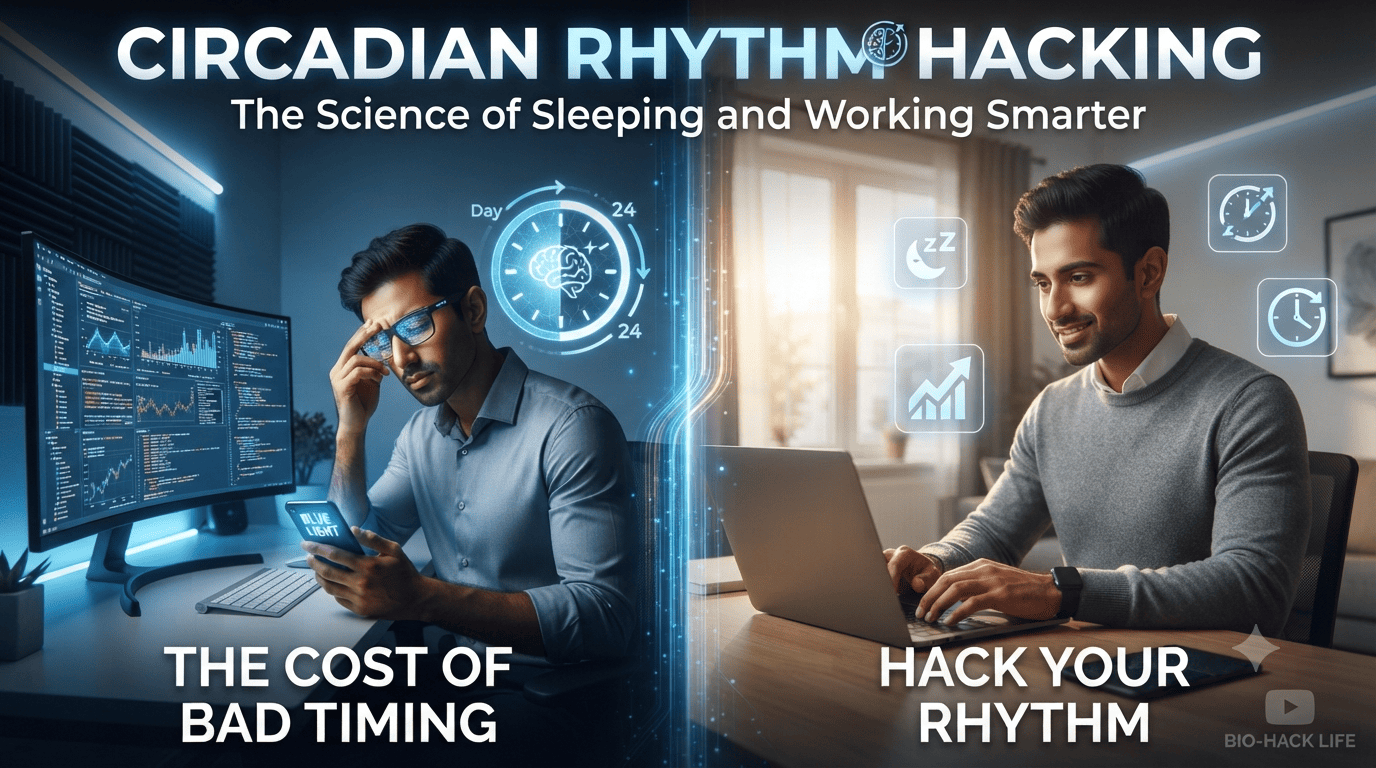
Circadian rhythm is the body's natural 24-hour biological cycle that controls many important functions, including:
- Sleep and wake patterns.
- Hormone production.
- Body temperature.
- Energy levels.
- Digestion.
- Mental alertness.
This internal clock is mainly influenced by light exposure, daily routines, food timing, and physical activity.
The brain uses environmental signals—especially sunlight—to determine when the body should be awake and when it should prepare for sleep.
Why Circadian Rhythm Matters for Productivity
Many people experience energy fluctuations throughout the day.
For example:
- Feeling highly focused in the morning.
- Experiencing an afternoon energy crash.
- Becoming more creative at night.
These patterns are not random. They are connected to your biological clock.
Understanding your circadian rhythm can help you:
- Schedule difficult tasks during peak focus periods.
- Improve sleep quality.
- Increase productivity.
- Reduce mental fatigue.
- Maintain better health.
The Science Behind Circadian Rhythm Hacking
Circadian rhythm hacking involves making small lifestyle changes that support the body's natural clock.
The goal is to optimize:
- Sleep timing.
- Work schedules.
- Light exposure.
- Meal timing.
- Exercise routines.
Instead of forcing yourself to perform at all times, you create an environment where your body naturally performs better.
How to Hack Your Circadian Rhythm
1. Master Your Morning Light Exposure
Light is the strongest signal that controls your internal clock.
Morning sunlight helps tell your brain:
"Start the day."
Exposure to natural light after waking can help:
- Increase alertness.
- Improve mood.
- Support healthy sleep cycles.
A simple habit:
- Spend 10–30 minutes outside after waking.
- Open curtains and allow natural light into your workspace.
This small change can have a powerful impact on your energy levels.
2. Create a Consistent Sleep Schedule
The human body loves consistency.
Going to sleep and waking up at different times every day can confuse your internal clock.
A better approach:
- Sleep at the same time each night.
- Wake up at the same time every morning.
- Maintain your routine even on weekends.
Consistency helps the body predict when to become active and when to rest.
3. Find Your Peak Productivity Hours
Everyone has different energy patterns.
Some people are:
Morning Types
They perform best early in the day.
Afternoon Types
They reach peak focus later.
Night Types
They feel more creative during evening hours.
Understanding your chronotype allows you to schedule work more effectively.
For example:
High-focus tasks:
- Writing.
- Strategy.
- Problem-solving.
should be done during your peak mental hours.
Low-focus tasks:
- Emails.
- Administrative work.
can be completed during lower-energy periods.
4. Optimize Your Work Environment
Your environment strongly influences your biological clock.
Helpful adjustments include:
- Bright natural light during daytime.
- Reduced screen brightness at night.
- Comfortable temperature.
- Minimal distractions.
A circadian-friendly workspace supports better concentration.
5. Control Evening Light Exposure
Artificial light at night can interfere with sleep preparation.
Especially:
- Smartphones.
- Tablets.
- Computer screens.
- Bright indoor lighting.
Excessive evening light can reduce melatonin production, making it harder to fall asleep.
Helpful habits:
- Reduce screen usage before bed.
- Use warm lighting at night.
- Avoid bright environments late in the evening.
6. Time Your Exercise Correctly
Exercise improves both physical and mental performance, but timing matters.
Morning exercise may help:
- Increase energy.
- Improve mood.
- Support wakefulness.
Afternoon exercise can improve:
- Physical performance.
- Strength.
- Endurance.
Avoid intense workouts too close to bedtime if they affect your sleep.
7. Use Food Timing to Support Your Body Clock
Eating patterns also influence circadian rhythm.
Helpful habits:
- Eat meals at consistent times.
- Avoid heavy meals late at night.
- Prioritize nutritious foods.
The body performs better when eating patterns match natural biological cycles.
Circadian Rhythm and Remote Work
Remote workers have more control over their schedules, making circadian optimization easier.
Instead of following a traditional 9-to-5 schedule, remote professionals can organize work around their energy levels.
Examples:
Morning:
- Deep work.
- Creative projects.
Afternoon:
- Meetings.
- Collaboration.
Evening:
- Planning.
- Learning.
- Personal activities.
This approach can improve both productivity and work satisfaction.
Circadian Rhythm and Mental Health
A healthy body clock supports emotional well-being.
Poor circadian habits may contribute to:
- Mood changes.
- Stress.
- Low energy.
- Poor concentration.
Better sleep timing and daily routines can improve emotional stability.
Common Circadian Rhythm Mistakes
1. Sleeping at Random Times
Irregular sleep schedules confuse the body's internal clock.
2. Using Screens Late at Night
Nighttime screen exposure can delay sleep signals.
3. Ignoring Natural Light
Spending all day indoors reduces important environmental signals.
4. Working Against Your Energy Pattern
Forcing difficult tasks during low-energy periods reduces efficiency.
Tools That Can Help With Circadian Optimization
Modern technology can support better biological habits.
Useful tools include:
- Smart watches.
- Sleep tracking apps.
- Light therapy devices.
- Productivity tracking tools.
- Smart lighting systems.
These tools provide insights into personal patterns.
The Future of Circadian Optimization
As health technology improves, circadian rhythm hacking may become more personalized.
Future innovations may include:
- AI-powered sleep recommendations.
- Personalized work schedules.
- Smart homes that adjust lighting automatically.
- Advanced health tracking systems.
The future of productivity may not be about doing more—it may be about timing everything better.
A Simple Daily Circadian-Friendly Routine
Morning
- Get natural sunlight.
- Exercise lightly.
- Plan important tasks.
Afternoon
- Complete focused work.
- Take movement breaks.
- Eat balanced meals.
Evening
- Reduce screen exposure.
- Relax your mind.
- Prepare for sleep.
Night
- Maintain a consistent bedtime.
- Keep your sleeping environment comfortable.
Conclusion
Circadian rhythm hacking represents a smarter approach to productivity and health. Instead of fighting against the body's natural design, we can learn to work with it.
By improving sleep timing, managing light exposure, scheduling work intelligently, and creating healthier routines, we can increase energy, focus, and overall performance.
The future of success is not only about working harder—it is about understanding yourself better.
When you align your lifestyle with your biological clock, you do not just sleep better. You live and work smarter.

You must be logged in to post a comment.