
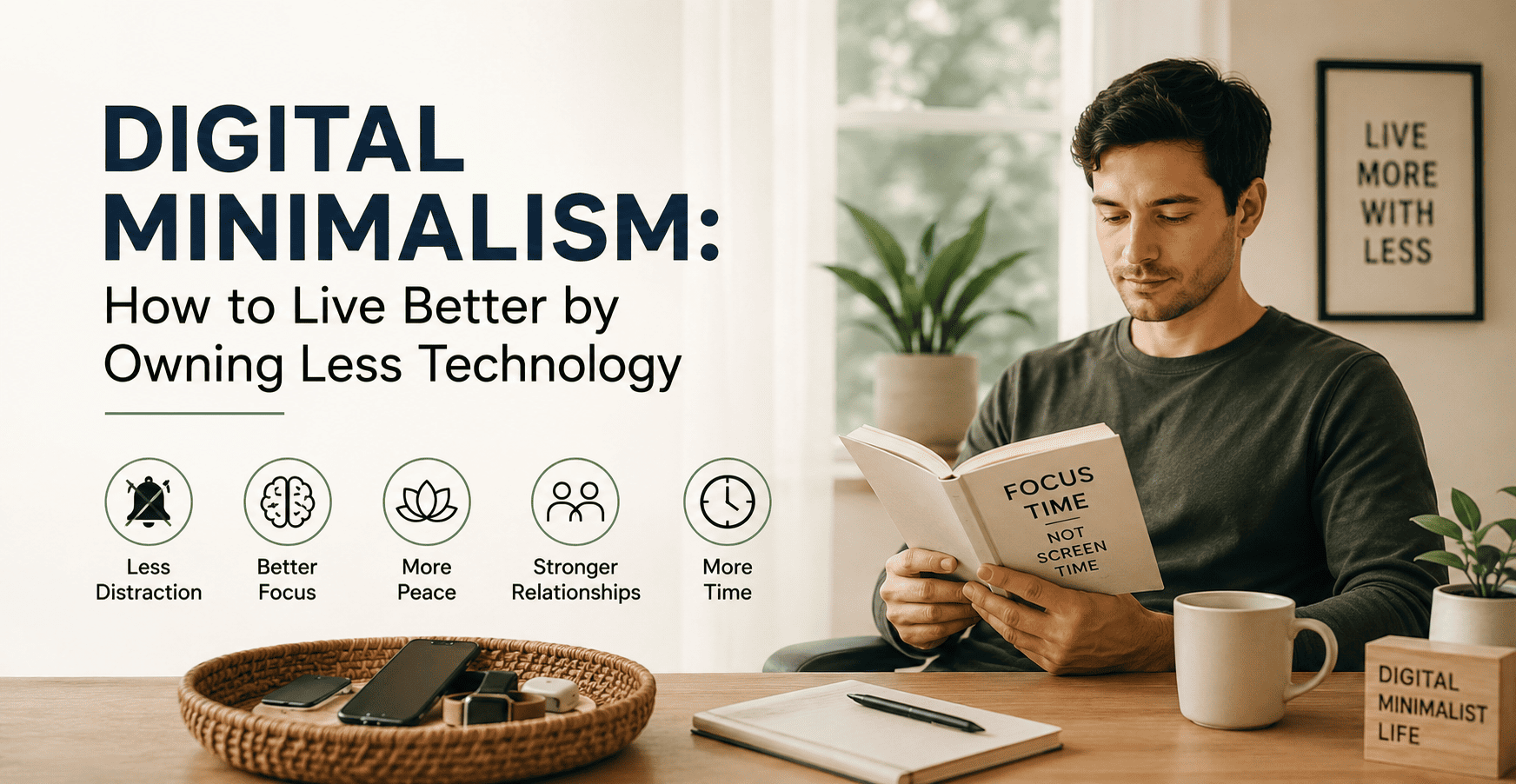
 What Is Digital Minimalism?
Digital minimalism is the practice of intentionally reducing the amount of technology and digital distractions in your life. It focuses on quality over quantity when it comes to using digital devices and online platforms.
The philosophy is simple:
- Use technology that serves your goals.
- Eliminate technology that wastes your time.
- Spend more time living in the real world.
Digital minimalists ask themselves one important question before using any technology:
"Does this technology significantly improve my life?"
If the answer is no, they either limit its use or remove it entirely.
Why We Are More Connected but Less Happy
Modern technology is designed to keep us engaged for as long as possible. Social media platforms, endless notifications, short-form videos, and recommendation algorithms constantly compete for our attention.
Some common signs of digital overload include:
- Checking your phone every few minutes.
- Feeling anxious without internet access.
- Spending hours scrolling social media.
- Difficulty concentrating on important tasks.
- Poor sleep quality.
- Feeling mentally exhausted despite doing very little.
Studies have shown that excessive screen time can negatively affect concentration, emotional well-being, and productivity. Many people consume digital content for several hours every day without realizing how much time is being lost.
Digital minimalism helps reclaim that time and energy.
Benefits of Digital Minimalism
1. Better Mental Health
Reducing digital clutter can significantly improve mental well-being. Constant exposure to social media comparisons, negative news, and information overload often leads to anxiety and stress.
Benefits include:
- Reduced stress levels.
- Improved mood.
- Better emotional stability.
- Increased mindfulness.
When your mind is no longer overwhelmed by endless digital inputs, it becomes easier to relax and focus on what truly matters.
2. Improved Productivity
Many professionals lose hours every day because of digital distractions. A quick five-minute social media check often turns into thirty minutes or more.
Digital minimalism helps you:
- Focus deeply on important work.
- Complete tasks faster.
- Improve time management.
- Reduce procrastination.
By removing unnecessary apps and notifications, you can create an environment that supports productivity rather than destroys it.
3. Better Relationships
Technology can sometimes create emotional distance between people. Many families sit together while everyone is looking at their own screens.
Digital minimalism encourages:
- Face-to-face conversations.
- Quality time with loved ones.
- Meaningful social interactions.
- Stronger emotional connections.
Being fully present during conversations can dramatically improve relationships with friends, family, and colleagues.
4. Higher Quality Sleep
Smartphones and laptops are often used late into the night. Blue light exposure and endless scrolling make it difficult for the brain to prepare for sleep.
Simple digital minimalist habits include:
- Avoiding screens before bedtime.
- Keeping smartphones outside the bedroom.
- Using traditional alarm clocks.
- Establishing a nighttime routine.
Many people experience better sleep within just a few days of reducing screen time.
Signs That You Need Digital Minimalism
You may benefit from digital minimalism if:
- Your screen time exceeds six hours daily.
- You constantly feel distracted.
- You struggle to focus while working or studying.
- You feel overwhelmed by digital notifications.
- Social media negatively affects your mood.
- You own multiple devices that you rarely use.
- You spend more time online than offline.
Recognizing these signs is the first step toward making positive changes.
Practical Ways to Practice Digital Minimalism
Remove Unnecessary Apps
Go through every app on your smartphone and ask:
- Do I use it regularly?
- Does it improve my life?
- Is it worth my time?
Delete applications that provide little or no value.
Turn Off Notifications
Notifications are one of the biggest productivity killers.
Consider disabling notifications for:
- Social media.
- Shopping applications.
- Entertainment platforms.
- Promotional emails.
Only keep notifications that are truly important.
Limit Social Media Usage
You do not need to quit social media completely. Instead:
- Set daily time limits.
- Use social media with purpose.
- Unfollow accounts that negatively affect your mood.
- Schedule specific times for checking your feeds.
Intentional usage is the key.
Create Tech-Free Zones
Designate areas in your home where technology is not allowed.
Examples include:
- Dining tables.
- Bedrooms.
- Family gathering spaces.
- Reading corners.
These spaces encourage healthier habits and deeper human connections.
Own Fewer Devices
Many people own:
- Multiple smartphones.
- Tablets.
- Smartwatches.
- Gaming consoles.
- Extra laptops.
Ask yourself whether you truly need all of them.
Owning fewer devices often means:
- Less distraction.
- Lower expenses.
- Easier maintenance.
- Better focus.
Minimalism is not about deprivation—it is about intentional ownership.
The 30-Day Digital Declutter Challenge
A popular digital minimalist strategy is the 30-day digital declutter.
For thirty days:
- Remove optional technologies.
- Avoid unnecessary digital entertainment.
- Reduce social media usage.
- Spend more time offline.
- Explore hobbies and activities.
- Reintroduce only the technologies that genuinely improve your life.
Many people discover that they do not miss most of the technologies they thought they needed.
Healthy Offline Alternatives
Instead of spending hours online, try:
- Reading books.
- Exercising.
- Walking outdoors.
- Learning a new skill.
- Journaling.
- Spending time with family.
- Meditation.
- Gardening.
- Cooking.
- Volunteering.
Digital minimalism creates space for activities that provide lasting satisfaction.
Common Myths About Digital Minimalism
Myth 1: You Must Quit Technology
False.
Digital minimalism encourages intentional technology use, not complete elimination.
Myth 2: It's Only for Older People
False.
Students, professionals, entrepreneurs, and content creators can all benefit from reducing digital distractions.
Myth 3: Minimalism Means Being Less Productive
False.
Many highly successful individuals deliberately limit their technology usage to improve productivity and creativity.
How Digital Minimalism Saves Money
Owning less technology can reduce expenses such as:
- Frequent smartphone upgrades.
- Subscription services.
- Gaming purchases.
- Digital impulse shopping.
- Device repairs and accessories.
By buying fewer gadgets, people often save hundreds or even thousands of dollars over time.
Digital Minimalism for Remote Workers
Remote workers can especially benefit from digital minimalism.
Some useful habits include:
- Keeping work and personal devices separate.
- Scheduling email checking times.
- Using focus applications.
- Taking regular screen breaks.
- Maintaining work-life boundaries.
Technology should support your career—not consume your entire day.
Building a Sustainable Digital Lifestyle
Digital minimalism is not a one-time challenge. It is a long-term lifestyle choice.
Ask yourself regularly:
- Is this technology helping me?
- Am I using it intentionally?
- Could I live better with less?
Small changes made consistently often produce significant improvements over time.
Conclusion
Digital minimalism offers a powerful solution to one of modern life's biggest challenges—technology overload. By intentionally choosing what technology deserves a place in your life, you can improve your productivity, mental health, relationships, and overall happiness.
Owning less technology does not mean living with less convenience. It means living with more purpose. The goal is not to disconnect from the world but to reconnect with the things that matter most.
In a world that constantly encourages us to consume more, digital minimalism reminds us that sometimes, less truly is more.

You must be logged in to post a comment.