
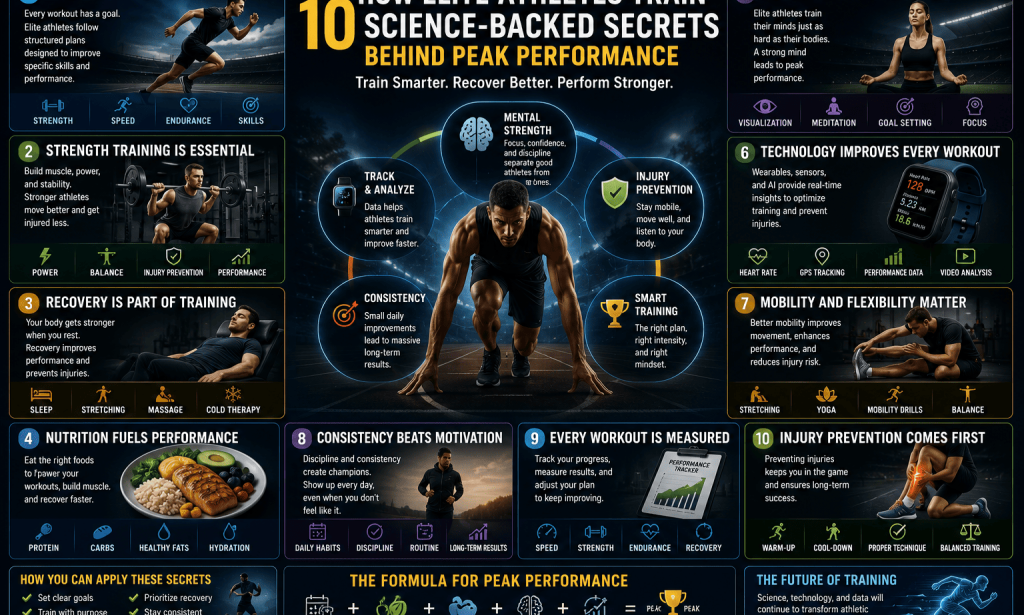
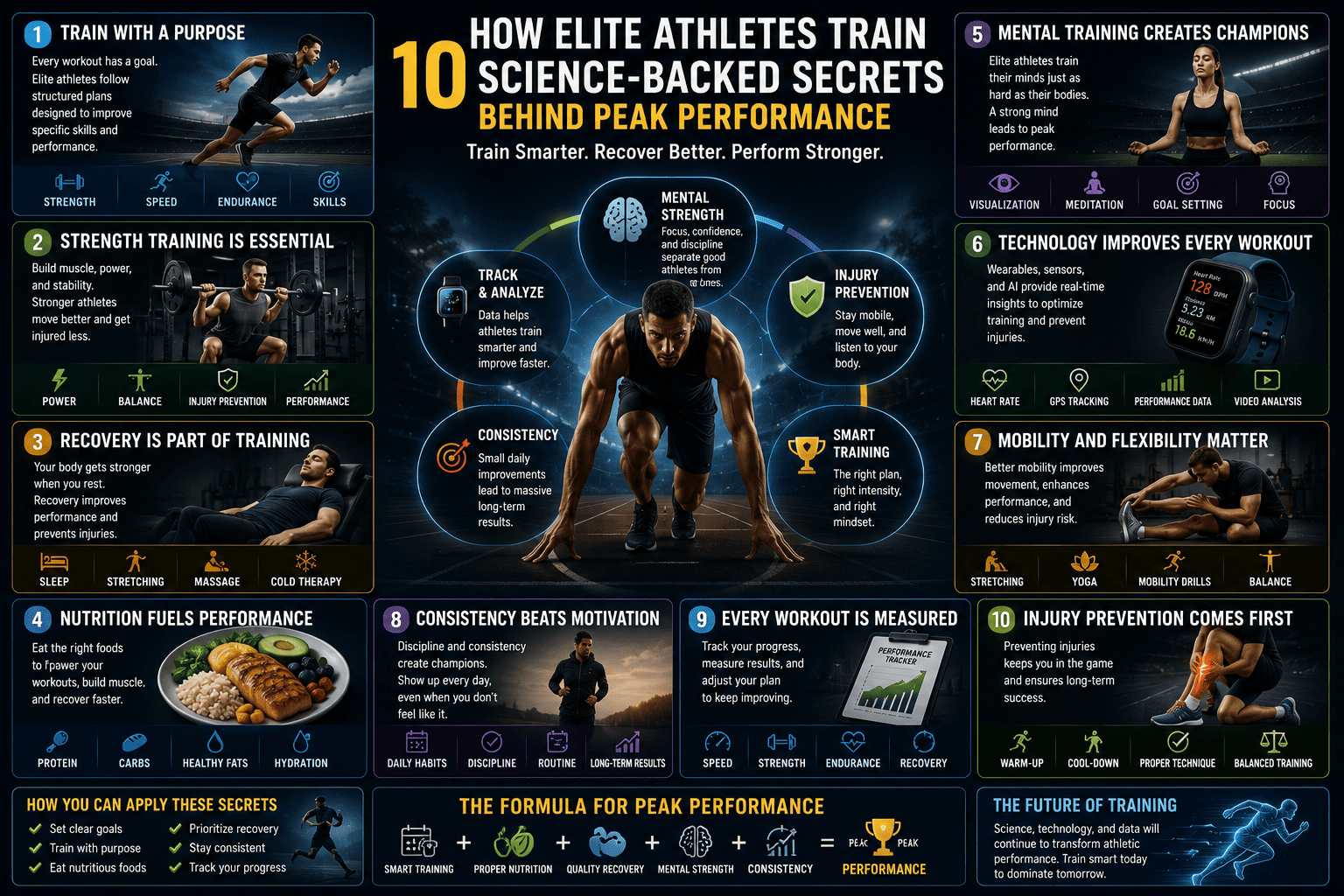
 How Elite Athletes Train: 10 Science-Backed Secrets Behind Peak Performance
Every sports fan admires the incredible speed of sprinters, the endurance of marathon runners, the power of football players, and the precision of professional tennis stars. While natural talent certainly plays a role, research consistently shows that elite performance is built through structured training, proper recovery, excellent nutrition, and strong mental preparation.
Today's professional athletes rely on sports scientists, nutritionists, physiotherapists, psychologists, and performance coaches. Their training is carefully planned to improve every aspect of physical and mental performance while minimizing injuries.
The good news is that many of these proven methods are not limited to Olympic champions. Whether you're an amateur athlete, a fitness enthusiast, or someone simply trying to become healthier, these principles can help you train more effectively.
Let's explore the ten science-backed secrets that elite athletes use to achieve peak performance.
1. They Train With a Purpose
Elite athletes rarely exercise randomly. Every workout has a specific goal.
Some sessions focus on:
- Building strength
- Increasing speed
- Improving endurance
- Enhancing flexibility
- Developing agility
- Practicing sport-specific skills
Professional coaches divide the season into different training phases called periodization. Each phase targets a different objective, ensuring athletes improve steadily without overtraining.
Instead of doing the same workout every day, elite athletes constantly adjust their routines based on progress and upcoming competitions.
2. Strength Training Is Essential
Many people associate strength training only with bodybuilders, but almost every professional athlete lifts weights.
Strength training helps athletes:
- Produce more power
- Improve balance
- Increase speed
- Protect joints
- Reduce injury risk
- Improve posture
Exercises like squats, deadlifts, lunges, bench presses, pull-ups, and overhead presses build full-body strength.
Modern sports science emphasizes functional strength rather than simply building larger muscles.
Athletes train movements—not just muscles.
3. Recovery Is Part of Training
One of the biggest misconceptions about fitness is believing that improvement happens during exercise.
In reality, muscles become stronger during recovery.
Elite athletes prioritize:
- Quality sleep
- Stretching
- Massage therapy
- Foam rolling
- Cold-water immersion
- Active recovery workouts
Most professional athletes aim for 8–10 hours of quality sleep because sleep supports muscle repair, hormone balance, memory, and reaction time.
Ignoring recovery often leads to fatigue, decreased performance, and injuries.
4. Nutrition Fuels Performance
Professional athletes treat food like fuel.
Their diets include balanced amounts of:
Protein
Supports muscle repair and growth.
Examples:
- Chicken
- Fish
- Eggs
- Greek yogurt
- Beans
Carbohydrates
Provide energy for training.
Examples:
- Rice
- Oats
- Potatoes
- Fruits
- Whole grains
Healthy Fats
Support hormone production and long-term energy.
Examples:
- Nuts
- Avocados
- Olive oil
- Seeds
Hydration is equally important.
Even mild dehydration can reduce speed, endurance, concentration, and reaction time.
5. Mental Training Creates Champions
Elite performance is as much mental as physical.
Professional athletes regularly practice:
- Visualization
- Meditation
- Controlled breathing
- Positive self-talk
- Goal setting
- Focus exercises
Sports psychologists help athletes remain calm under pressure.
Many Olympic champions mentally rehearse competitions hundreds of times before stepping onto the field.
Mental preparation builds confidence and improves decision-making during high-pressure moments.
6. Technology Improves Every Workout
Modern sports technology has transformed athlete development.
Professional teams use wearable devices that measure:
- Heart rate
- Running speed
- Distance covered
- Calories burned
- Sleep quality
- Recovery status
- Training intensity
Coaches analyze this information to adjust training loads and prevent overtraining.
Video analysis also helps athletes improve technique by identifying small movement errors that are invisible during normal practice.
Artificial intelligence is increasingly being used to predict injury risks and optimize training plans.
7. Mobility and Flexibility Matter
Strong muscles alone don't create elite athletes.
Mobility allows joints to move through their full range of motion.
Professional athletes include:
- Dynamic stretching
- Mobility drills
- Yoga
- Pilates
- Balance exercises
Improved mobility increases movement efficiency while reducing injury risks.
Athletes who move better usually perform better.
8. Consistency Beats Motivation
Motivation comes and goes.
Discipline remains.
Elite athletes train according to schedules rather than emotions.
Even when they don't feel motivated, they complete planned workouts because consistency produces long-term improvements.
Small daily improvements become massive results over months and years.
Champions understand that success is built one training session at a time.
9. Every Workout Is Measured
Professional athletes constantly track progress.
Common performance measurements include:
- Sprint times
- Jump height
- Strength records
- Heart rate recovery
- Body composition
- Flexibility
- Endurance tests
Tracking performance helps coaches identify weaknesses and adjust future training.
Without measurement, improvement becomes difficult to evaluate.
10. Injury Prevention Comes First
Missing weeks of training due to injury can erase months of progress.
Elite athletes invest heavily in injury prevention.
Their routines often include:
- Proper warm-ups
- Cool-down sessions
- Mobility exercises
- Correct lifting technique
- Balanced muscle development
- Recovery monitoring
Rather than pushing through pain, professionals address small problems before they become serious injuries.
Staying healthy is one of the biggest competitive advantages in sports.
How You Can Train Like an Elite Athlete
You don't need access to an Olympic training center to apply these principles.
Start by following these habits:
- Set clear weekly training goals.
- Build strength two or three times each week.
- Include cardio for endurance.
- Warm up before every workout.
- Stretch after training.
- Sleep at least seven to nine hours.
- Eat balanced meals with enough protein.
- Drink plenty of water.
- Track your workouts.
- Stay consistent throughout the year.
Small improvements repeated consistently produce remarkable long-term results.
Common Mistakes to Avoid
Many beginners make mistakes that slow progress:
- Skipping recovery days
- Ignoring nutrition
- Training too intensely every day
- Comparing themselves to professionals
- Using poor exercise technique
- Not tracking progress
- Sleeping too little
- Focusing only on appearance instead of performance
Avoiding these mistakes can significantly improve both results and safety.
The Future of Elite Training
Sports science continues to evolve rapidly. Artificial intelligence, wearable sensors, motion-capture systems, genetic research, and personalized training programs are shaping the future of athletic performance.
Coaches can now analyze thousands of data points to design individualized training plans that maximize performance while minimizing injury risks.
As technology advances, athletes will continue finding smarter—not just harder—ways to improve.

You must be logged in to post a comment.