
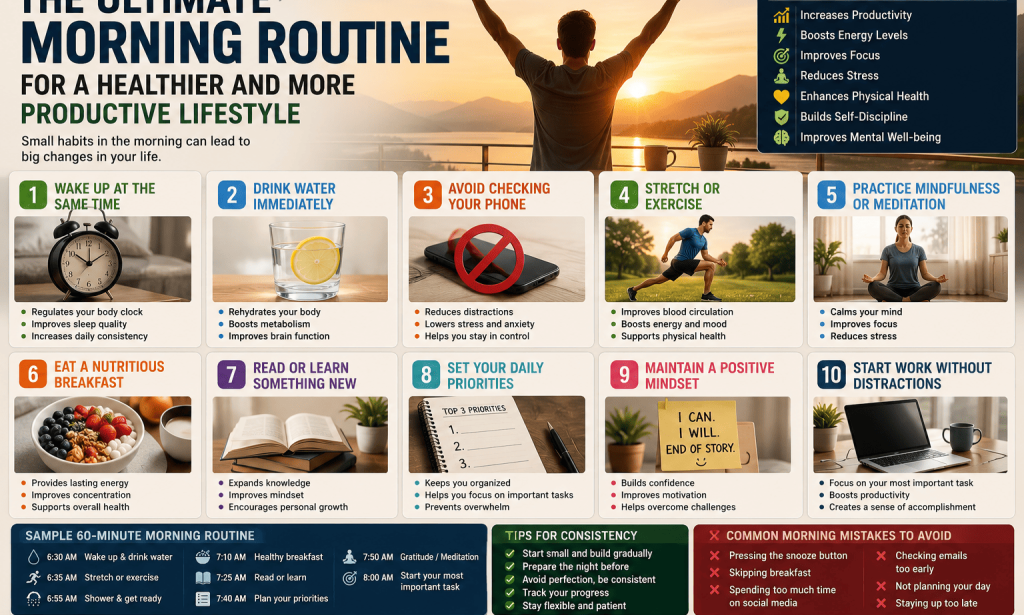
 The Ultimate Morning Routine for a Healthier and More Productive Lifestyle
How you begin your morning often determines how the rest of your day unfolds. While many people wake up feeling rushed, stressed, or distracted, highly productive individuals tend to follow intentional morning routines that prepare both their mind and body for success.
A morning routine is more than just waking up early. It's about creating healthy habits that improve your physical health, mental clarity, emotional well-being, and overall productivity. Even spending the first 60–90 minutes of your day wisely can lead to long-term positive changes.
The best part? You don't need to wake up at 4:00 AM or follow a complicated schedule. The perfect morning routine is one that fits your lifestyle and helps you stay consistent.
In this article, we'll explore a practical morning routine that anyone can adopt to build a healthier and more productive life.
Why Your Morning Routine Matters
Your brain is most refreshed after a good night's sleep. The first hour of your day is when your decisions and actions can influence your mood, energy, and focus.
A consistent morning routine offers several benefits, including:
- Increased productivity
- Better physical health
- Improved mental focus
- Reduced stress
- Higher energy levels
- Better time management
- Improved emotional well-being
- Greater self-discipline
Instead of reacting to emails, notifications, or social media first thing in the morning, you take control of your day before the world demands your attention.
Step 1: Wake Up at the Same Time Every Day
Consistency is more important than waking up extremely early.
Your body has an internal clock, known as the circadian rhythm. Going to bed and waking up at the same time every day helps regulate this rhythm, leading to better sleep quality and improved energy.
Tips for waking up consistently:
- Set one alarm instead of multiple snooze alarms.
- Sleep for 7–8 hours each night.
- Avoid using your phone before bedtime.
- Place your alarm away from the bed so you must get up.
A regular sleep schedule can make mornings feel much easier over time.
Step 2: Drink Water Immediately After Waking Up
After several hours of sleep, your body becomes mildly dehydrated. Drinking a glass of water first thing in the morning helps rehydrate your body and supports essential functions.
Benefits of morning hydration include:
- Boosts metabolism
- Improves digestion
- Increases alertness
- Supports brain function
- Helps remove toxins
Some people like to add a slice of lemon for flavor, but plain water is perfectly effective.
Step 3: Avoid Checking Your Phone Immediately
Many people begin their day by scrolling through social media or reading emails. While this may seem harmless, it can quickly lead to distractions and unnecessary stress.
Instead of reaching for your phone, use the first 30 minutes to focus on yourself.
Ideas include:
- Deep breathing
- Meditation
- Stretching
- Journaling
- Reading
- Planning your day
Protecting your mental space early in the morning can improve concentration for the rest of the day.
Step 4: Stretch or Exercise
Physical movement wakes up your muscles, improves circulation, and increases energy.
You don't need an intense workout every morning. Even 20–30 minutes of movement can make a noticeable difference.
Options include:
- Walking
- Jogging
- Yoga
- Bodyweight exercises
- Cycling
- Light strength training
Regular exercise releases endorphins, often called "feel-good hormones," which help improve mood and reduce stress.
Step 5: Practice Mindfulness or Meditation
Modern life is filled with distractions. Taking a few quiet moments each morning can help calm your mind before the day becomes busy.
Meditation doesn't have to be complicated.
Simply:
- Sit comfortably.
- Close your eyes.
- Focus on your breathing.
- Let distracting thoughts pass without judgment.
Even five to ten minutes of mindfulness can reduce anxiety and improve focus.
If meditation isn't for you, try gratitude journaling by writing down three things you're thankful for.
Step 6: Eat a Nutritious Breakfast
Breakfast provides the energy your body needs to start the day.
Instead of sugary cereals or pastries, choose foods that provide long-lasting energy.
Healthy breakfast ideas include:
- Oatmeal with fruit
- Eggs and whole-grain toast
- Greek yogurt with berries
- Smoothies with spinach and banana
- Peanut butter on whole-grain bread
A balanced breakfast should include protein, healthy fats, and complex carbohydrates.
This combination helps stabilize blood sugar levels and keeps you feeling full longer.
Step 7: Read or Learn Something New
Personal growth begins with continuous learning.
Spend 15–20 minutes each morning reading a book, listening to a podcast, or watching educational content.
Topics might include:
- Leadership
- Finance
- Health
- Business
- Productivity
- Communication
- Technology
- Personal development
Learning consistently expands your knowledge and keeps your mind active.
Step 8: Set Your Daily Priorities
Many people spend the day reacting to unexpected tasks instead of focusing on what truly matters.
Before starting work, identify your top three priorities.
Ask yourself:
- What must be completed today?
- Which task has the biggest impact?
- What can wait until tomorrow?
Writing these priorities in a notebook or planner keeps you organized and prevents overwhelm.
Step 9: Maintain a Positive Mindset
The way you think influences your actions.
Positive thinking doesn't mean ignoring challenges. It means believing that you can handle them.
Consider starting each day with positive affirmations, such as:
- I am capable.
- I will make progress today.
- I can solve difficult problems.
- Every day is an opportunity to improve.
These statements may seem simple, but they help reinforce confidence and resilience.
Step 10: Start Work Without Distractions
Once your morning routine is complete, begin your most important task before checking social media or responding to less urgent messages.
This concept is often called "eating the frog," which means completing your hardest or most valuable task first.
Benefits include:
- Higher productivity
- Reduced procrastination
- Greater sense of accomplishment
- Less stress later in the day
Focus on one task at a time instead of multitasking.
Sample 60-Minute Morning Routine
Here's an example of how you might structure your morning:
6:30 AM – Wake up and drink a glass of water
6:35 AM – Stretch or do light exercise
6:55 AM – Shower and get ready
7:10 AM – Healthy breakfast
7:25 AM – Read or listen to an educational podcast
7:40 AM – Plan your top three priorities
7:50 AM – Practice gratitude or meditation
8:00 AM – Begin your most important task
Adjust the schedule based on your personal needs and responsibilities.
Common Morning Routine Mistakes
Avoid these habits if you want a productive start to the day:
- Pressing the snooze button repeatedly
- Skipping breakfast
- Spending too much time on social media
- Checking emails immediately after waking up
- Not planning your day
- Staying up too late at night
- Ignoring physical activity
Small mistakes repeated daily can reduce productivity over time.
Tips for Building a Consistent Morning Routine
Creating a morning routine takes patience.
Here are a few strategies:
- Start with just one or two new habits.
- Prepare your clothes and breakfast the night before.
- Keep your phone away from your bed.
- Use a habit tracker.
- Be flexible—missing one day doesn't mean you've failed.
Consistency is more important than perfection.

You must be logged in to post a comment.