
 How Regular Exercise Improves Your Mind and Body
Exercise is often associated with weight loss or building muscle, but its benefits go far beyond physical appearance. Regular physical activity is one of the most powerful tools for improving overall health, enhancing mental well-being, and preventing chronic diseases. In today's world, where many people spend hours sitting at desks or using digital devices, staying active has become more important than ever.
The human body is designed to move. When we exercise regularly, we strengthen our muscles, improve cardiovascular health, boost brain function, and reduce the risk of many illnesses. At the same time, exercise helps reduce stress, improve mood, and increase confidence.
The good news is that you don't need to be a professional athlete or spend hours in the gym to enjoy these benefits. Even simple activities like walking, cycling, swimming, dancing, or yoga can significantly improve your health when practiced consistently.
In this article, we'll explore how regular exercise benefits both the body and mind, and how you can build a sustainable fitness routine for long-term wellness.
Why Exercise Is Essential
Physical activity is a natural part of a healthy lifestyle. Exercise helps your body function efficiently by improving circulation, strengthening muscles, supporting healthy joints, and maintaining a healthy weight.
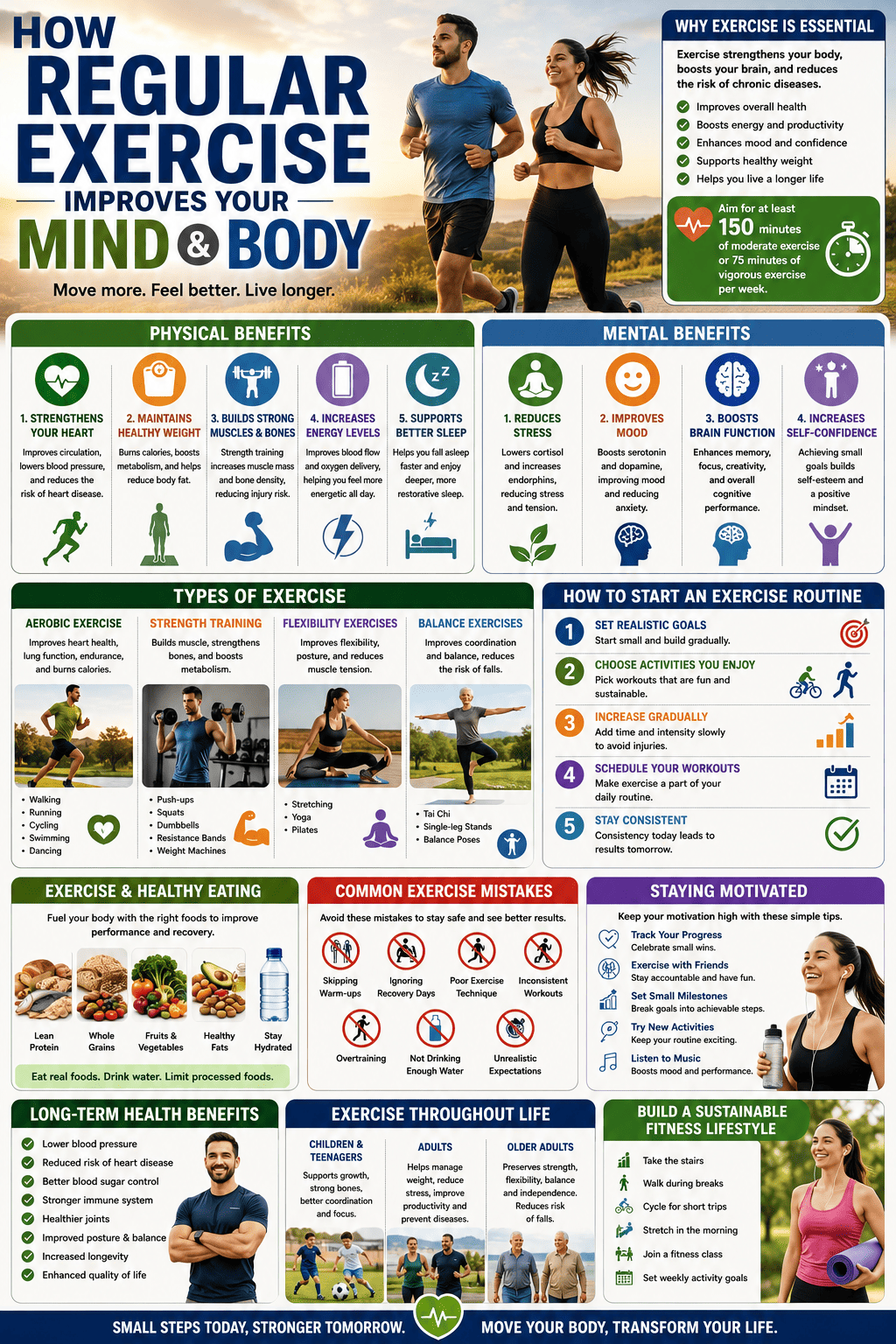
Health experts recommend that adults engage in at least 150 minutes of moderate-intensity exercise or 75 minutes of vigorous exercise each week, along with muscle-strengthening activities at least two days per week.
Meeting these recommendations can greatly reduce the risk of many chronic health conditions while improving quality of life.
Physical Benefits of Regular Exercise
1. Strengthens Your Heart
The heart is a muscle, and like any other muscle, it becomes stronger with regular exercise.
Activities such as brisk walking, jogging, swimming, and cycling improve cardiovascular fitness by helping the heart pump blood more efficiently.
Benefits include:
- Lower blood pressure
- Improved circulation
- Reduced risk of heart disease
- Better oxygen delivery throughout the body
A stronger heart contributes to better overall health and endurance.
2. Helps Maintain a Healthy Weight
Exercise burns calories and helps balance the energy you consume through food.
Combined with a nutritious diet, regular physical activity supports healthy weight management by:
- Increasing metabolism
- Preserving lean muscle mass
- Reducing body fat
- Improving insulin sensitivity
Consistency is more important than intensity when it comes to maintaining a healthy weight.
3. Builds Stronger Muscles and Bones
Strength training and weight-bearing exercises stimulate muscle growth and improve bone density.
Examples include:
- Bodyweight exercises
- Resistance bands
- Weightlifting
- Hiking
- Stair climbing
Strong muscles improve posture, reduce injury risk, and make daily activities easier.
Healthy bones also reduce the risk of osteoporosis as you age.
4. Increases Energy Levels
Many people believe exercise makes them tired, but regular activity actually increases energy over time.
Exercise improves blood flow and delivers more oxygen and nutrients to your muscles and organs.
As a result, everyday tasks become easier and less exhausting.
5. Supports Better Sleep
People who exercise regularly often experience:
- Falling asleep faster
- Deeper sleep
- Better sleep quality
- Improved recovery
Exercise also helps regulate the body's internal clock, making it easier to maintain a consistent sleep schedule.
Avoid intense workouts immediately before bedtime if they interfere with your sleep.
Mental Benefits of Regular Exercise
1. Reduces Stress
Exercise lowers levels of stress hormones like cortisol while increasing the production of endorphins, often called the "feel-good" chemicals.
Even a 20–30 minute walk can help reduce daily stress and improve your mood.
2. Improves Mood
Physical activity stimulates the release of neurotransmitters such as serotonin and dopamine, which play an important role in emotional well-being.
Regular exercise has been shown to reduce symptoms of anxiety and mild depression while increasing feelings of happiness and relaxation.
3. Boosts Brain Function
Exercise increases blood flow to the brain, supporting memory, learning, and concentration.
Studies suggest that physically active people often experience:
- Better focus
- Faster thinking
- Improved memory
- Enhanced creativity
- Better decision-making
Exercise also supports long-term brain health and may reduce the risk of cognitive decline with age.
4. Increases Self-Confidence
Achieving fitness goals, no matter how small, builds confidence and self-esteem.
Whether you walk an extra mile, lift a heavier weight, or simply stay consistent with your routine, each accomplishment reinforces a positive mindset.
Feeling physically stronger often leads to greater confidence in other areas of life.
Different Types of Exercise
A balanced fitness routine includes different forms of physical activity.
Aerobic Exercise
Examples include:
- Walking
- Running
- Cycling
- Swimming
- Dancing
Benefits:
- Heart health
- Lung function
- Endurance
- Fat burning
Strength Training
Examples include:
- Push-ups
- Squats
- Resistance bands
- Dumbbells
- Weight machines
Benefits:
- Muscle growth
- Bone strength
- Improved metabolism
Flexibility Exercises
Examples include:
- Stretching
- Yoga
- Pilates
Benefits:
- Better posture
- Reduced muscle tension
- Increased mobility
- Lower injury risk
Balance Exercises
Especially important for older adults.
Examples include:
- Tai Chi
- Single-leg stands
- Yoga balance poses
These exercises improve coordination and reduce the risk of falls.
How to Start an Exercise Routine
Beginning a fitness journey doesn't have to be overwhelming.
Here are simple steps for beginners:
Set Realistic Goals
Start with achievable goals, such as walking for 20 minutes three times a week.
Choose Activities You Enjoy
You're more likely to stay consistent if you enjoy your workouts.
Increase Gradually
Avoid doing too much too soon.
Increase duration and intensity slowly to prevent injuries.
Schedule Your Workouts
Treat exercise like an important appointment.
Consistency builds long-term habits.
Exercise and Healthy Eating
Exercise works best when combined with proper nutrition.
Support your workouts by:
- Eating lean protein
- Choosing whole grains
- Consuming fruits and vegetables
- Staying hydrated
- Limiting processed foods
Fueling your body properly helps improve performance and recovery.
Common Exercise Mistakes
Avoid these common mistakes:
- Skipping warm-ups
- Ignoring recovery days
- Poor exercise technique
- Inconsistent workouts
- Overtraining
- Not drinking enough water
- Unrealistic expectations
Listening to your body helps prevent injuries and burnout.
Staying Motivated
Maintaining motivation can be challenging, but these strategies help:
- Track your progress
- Exercise with friends
- Set small milestones
- Celebrate achievements
- Try new activities
- Listen to music while exercising
Remember that motivation comes and goes, but habits create lasting success.
Long-Term Health Benefits
People who exercise regularly often experience:
- Lower blood pressure
- Reduced risk of heart disease
- Better blood sugar control
- Stronger immune system
- Healthier joints
- Improved posture
- Better balance
- Increased longevity
- Enhanced quality of life
Exercise is one of the few lifestyle habits that positively affects nearly every system in the human body.
Exercise Throughout Different Stages of Life
Children and Teenagers
Regular physical activity supports healthy growth, stronger bones, better coordination, and improved concentration in school.
Adults
Exercise helps manage weight, reduce stress, improve productivity, and lower the risk of chronic diseases.
Older Adults
Staying active preserves muscle strength, balance, flexibility, and independence while reducing the risk of falls and age-related health issues.
No matter your age, it's never too late to begin exercising and enjoy its benefits.
Creating a Sustainable Fitness Lifestyle
The key to long-term success is consistency rather than perfection.
Build exercise into your daily routine by:
- Taking the stairs instead of the elevator
- Walking during lunch breaks
- Cycling for short trips
- Stretching in the morning
- Joining a local fitness class
- Setting weekly activity goals
Small daily actions can lead to significant improvements over time.

You must be logged in to post a comment.