
 What Is Invisible Technology?
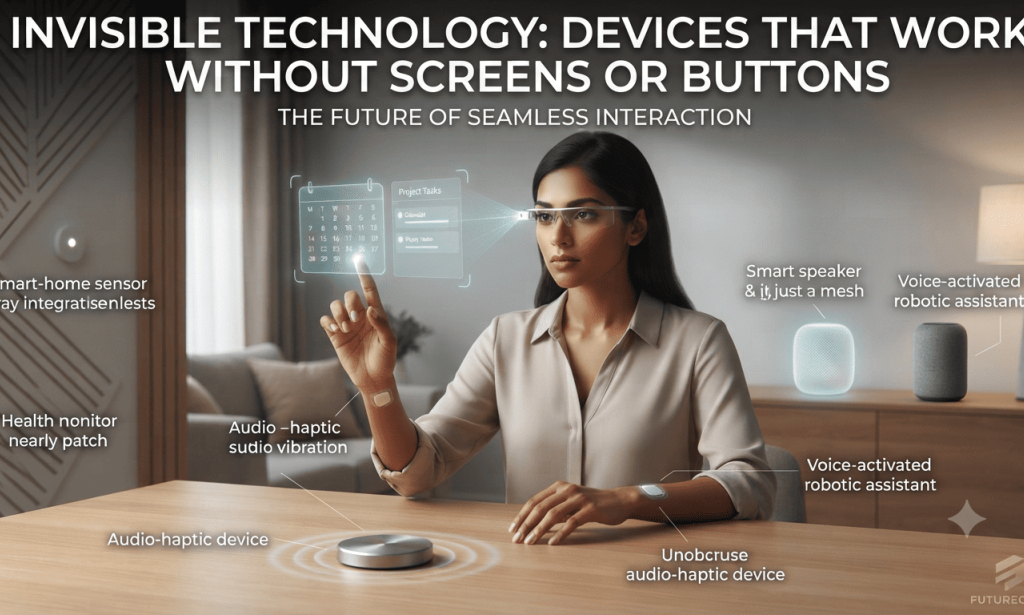
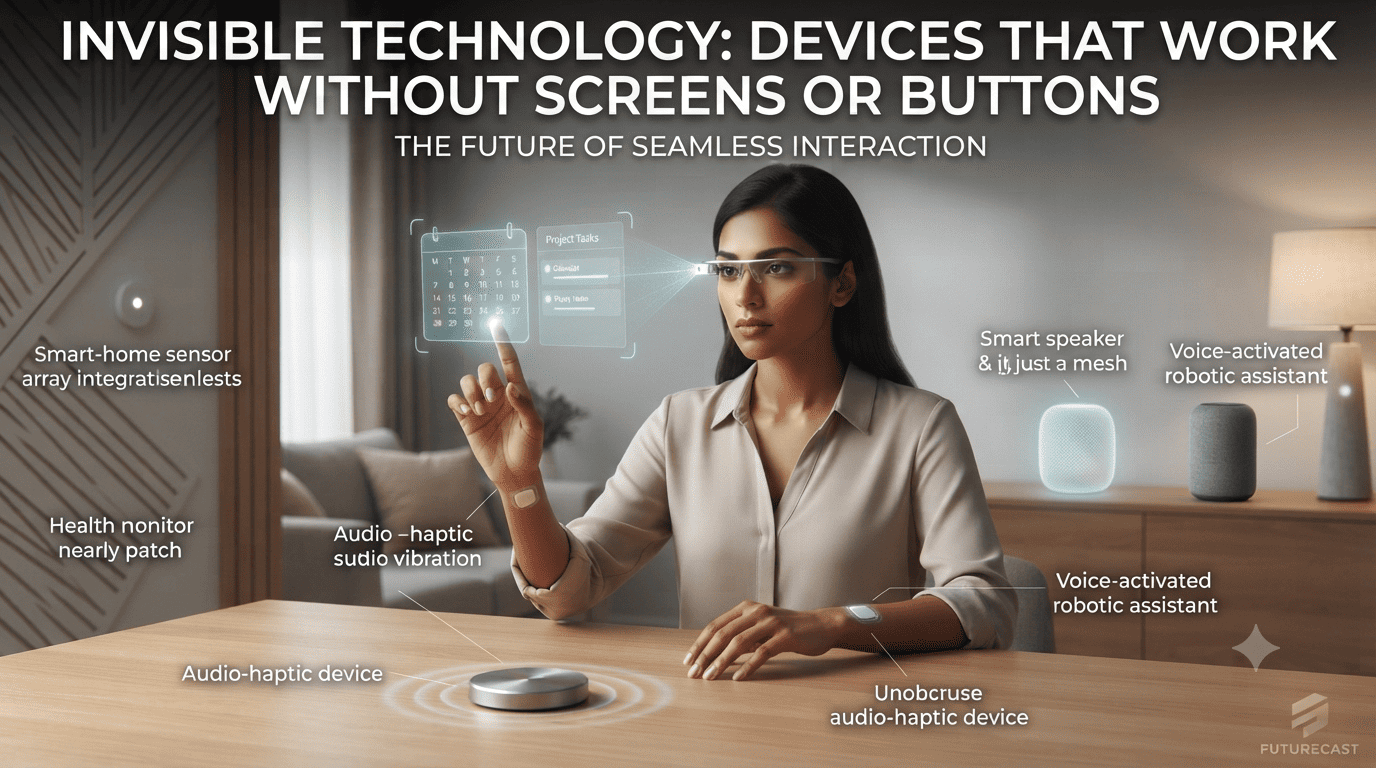
Invisible technology refers to smart devices and systems that operate without requiring traditional physical interfaces like screens, keyboards, or buttons.
Instead, they use:
- Artificial intelligence (AI)
- Voice commands
- Motion detection
- Sensors
- Biometrics
- Machine learning
- Augmented reality (AR)
The goal is simple:
Technology should work for humans naturally, instead of forcing humans to adapt to technology.
1. Voice-Controlled Devices Will Replace Traditional Controls
Voice assistants are one of the first examples of invisible technology.
Today, people already use voice commands to:
- Play music
- Search information
- Control smart devices
- Set reminders
By 2030, voice interaction will become much more advanced.
Future devices will understand:
- Natural conversations
- Emotions
- Personal preferences
- Different accents
- Context
Instead of opening apps or pressing buttons, people may simply say:
“Prepare my meeting room for tomorrow morning.”
The system could automatically adjust lighting, temperature, presentation equipment, and schedules.
2. Smart Homes Will Disappear Into the Background
Future homes will not look like technology-filled spaces.
Instead, technology will become invisible.
Walls, furniture, and appliances will contain intelligent systems that can:
- Adjust lighting automatically
- Monitor energy usage
- Detect safety risks
- Control temperature
- Recognize family members
For example:
Your home may know that you usually wake up at 7 AM and automatically prepare your environment before you get out of bed.
Lights slowly turn on, coffee starts brewing, and the temperature adjusts automatically.
No buttons. No screens. Just a smarter living experience.
3. Wearable Technology Will Become Almost Invisible
Current wearable devices like smartwatches are visible on our bodies.
However, future wearables may become much smaller and more integrated.
Examples include:
- Smart contact lenses
- Smart clothing
- Health-monitoring skin patches
- Invisible earbuds
- AI-powered glasses
These devices could monitor:
- Heart rate
- Blood pressure
- Stress levels
- Body temperature
- Physical activity
Instead of checking a screen, information could appear through voice feedback or augmented reality.
4. AI Assistants Will Become Personal Digital Companions
The future AI assistant will not be an app on your phone.
It will become an invisible companion that understands your life.
A personal AI could:
- Manage your schedule
- Suggest decisions
- Organize tasks
- Monitor health habits
- Provide reminders
For example:
Your AI assistant may notice:
“You have been sleeping less this week. Your productivity may decrease tomorrow. Consider going to bed earlier.”
It will work silently in the background to improve your daily life.
5. Gesture-Controlled Technology Will Change Interaction
Future devices may understand human movements without physical contact.
Using cameras, sensors, and AI, people will control technology through gestures.
Examples:
- Moving your hand to adjust volume
- Eye movements to select options
- Body gestures to control smart environments
This will be especially useful in:
- Cars
- Hospitals
- Gaming
- Virtual reality
- Smart workplaces
Technology will respond to natural human actions.
6. Invisible Technology in Healthcare
Healthcare will become one of the biggest areas for invisible technology.
Future medical devices may continuously monitor health without requiring hospital visits.
Examples:
- Smart clothing tracking vital signs
- Invisible sensors inside environments
- AI systems predicting health problems
Doctors could receive real-time health information and detect problems earlier.
For patients, healthcare will become more preventive rather than reactive.
Instead of waiting until someone becomes sick, technology will help prevent illness.
7. Cars Without Traditional Controls
The future of transportation will also become screenless.
Modern cars already have large touchscreens, but future vehicles may remove many physical controls.
AI-powered vehicles will understand:
- Voice commands
- Eye movements
- Driver behavior
- Road conditions
A passenger might simply say:
“Take me to the office.”
The vehicle will handle navigation, safety, and driving automatically.
8. Invisible Technology in Businesses
Companies will use invisible technology to improve productivity.
Offices of the future may include:
- AI meeting assistants
- Smart environments
- Automated workflows
- Voice-controlled systems
Employees will spend less time managing software and more time focusing on creative work.
Technology will become a silent partner rather than a tool that requires constant attention.
Benefits of Invisible Technology
1. More Convenience
People will complete tasks faster without interacting with complicated devices.
2. Better Accessibility
People with disabilities may benefit from technology controlled by voice, gestures, or brain signals.
3. Improved Efficiency
AI systems can automate repetitive tasks and reduce human effort.
4. More Personalized Experiences
Technology will adapt to individual needs and preferences.
Challenges and Concerns
Privacy Issues
Invisible technology collects large amounts of personal data.
Important questions include:
- Who controls this information?
- How is it stored?
- Can companies misuse it?
Security Risks
Connected invisible devices could become targets for cyber attacks.
Human Dependency
As technology becomes more integrated into life, people may become overly dependent on AI systems.
The Future: Technology That Disappears
The biggest change in the future of technology will not be bigger screens or faster devices.
It will be the disappearance of technology itself.
The best technology will become so natural that people will stop noticing it.
By 2030, the question may no longer be:
“Where is my device?”
Instead, it will be:
“How did technology already know what I needed?”
Invisible technology will create a world where machines quietly assist humans, making everyday life simpler, smarter, and more connected.

You must be logged in to post a comment.