
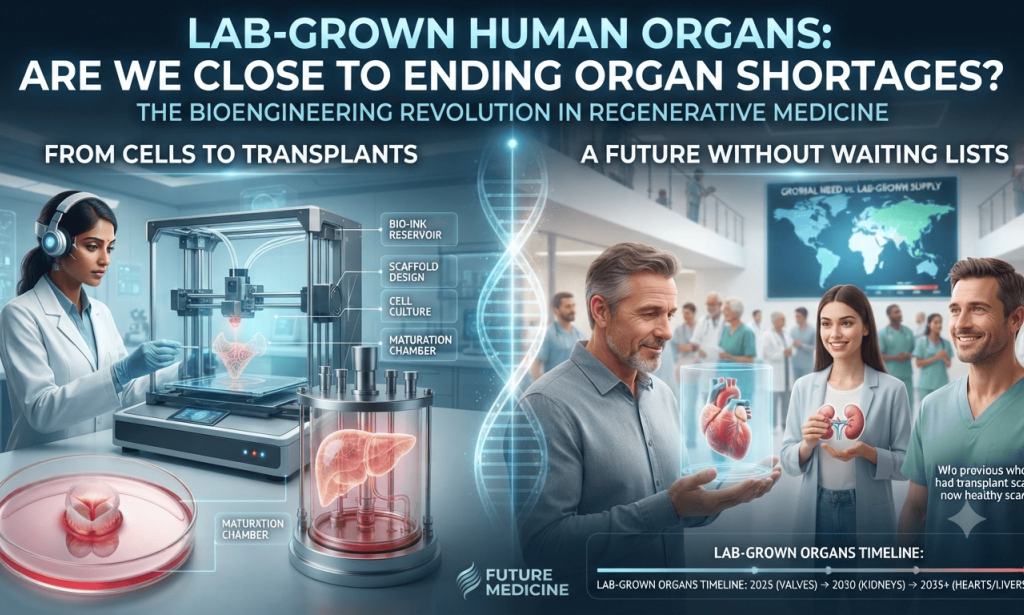
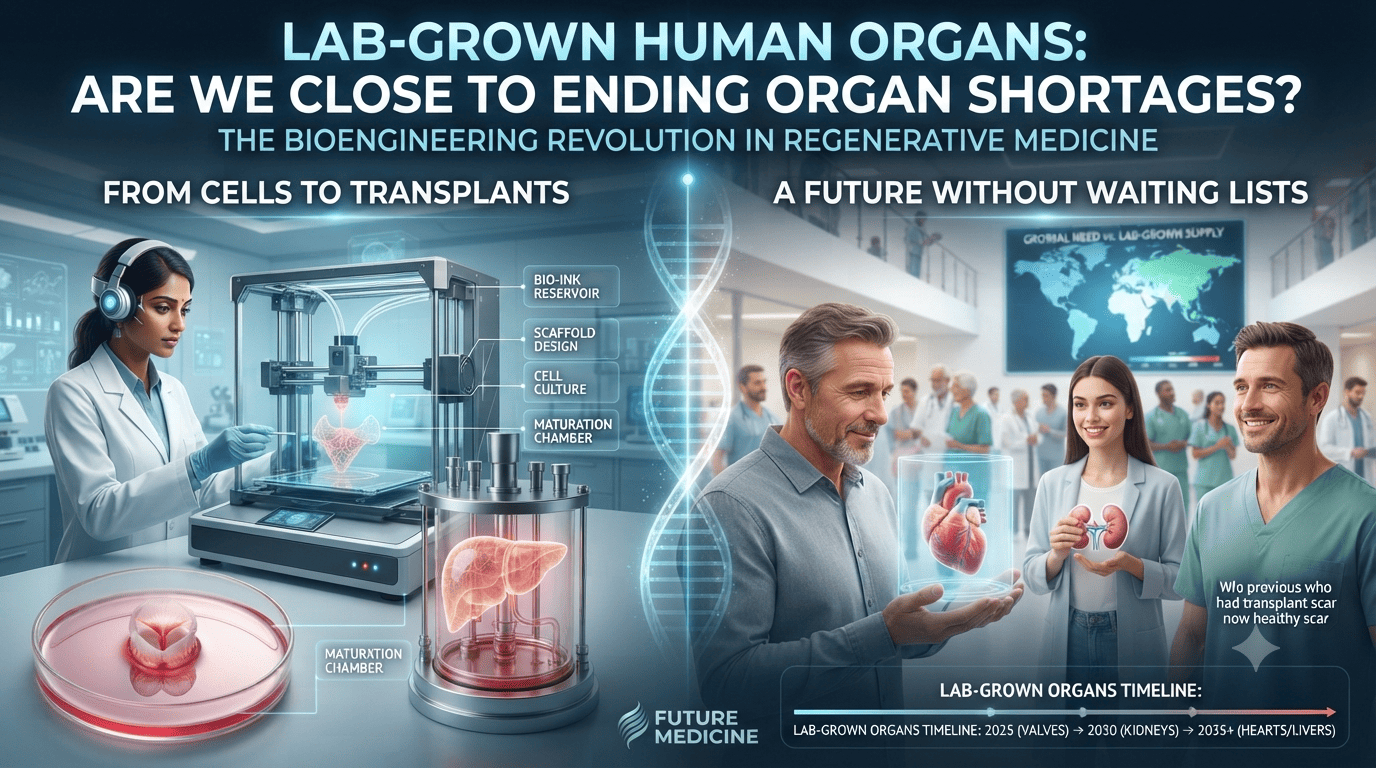
 What Are Lab-Grown Human Organs?
Lab-grown organs are biological organs created using human cells and advanced scientific techniques rather than traditional organ donation.
The idea is to create organs that can function like natural human organs and safely replace damaged ones.
Scientists use technologies such as:
- Stem cell research
- Tissue engineering
- 3D bioprinting
- Regenerative medicine
- Artificial intelligence
The ultimate goal is to create personalized organs made from a patient's own cells, reducing the risk of rejection.
Why Is There an Organ Shortage Crisis?
Millions of people worldwide suffer from organ failure, but the supply of donated organs remains limited.
Commonly transplanted organs include:
- Kidneys
- Hearts
- Livers
- Lungs
- Pancreas
The biggest challenges are:
- Not enough donors
- Long waiting lists
- Patients becoming too sick before receiving organs
- Organ rejection after transplantation
A reliable source of lab-grown organs could completely change this situation.
1. Stem Cells: The Foundation of Future Organs
Stem cells are one of the most important technologies behind lab-grown organs.
Unlike normal cells, stem cells can develop into different types of cells, such as:
- Heart cells
- Kidney cells
- Liver cells
- Nerve cells
Scientists can take a patient's own cells and transform them into stem cells. These cells can then be guided to grow into specific tissues.
For example:
A patient with kidney failure could potentially have kidney cells created from their own genetic material.
This could make future transplants safer and more personalized.
2. 3D Bioprinting: Printing Human Organs Layer by Layer
One of the most exciting developments is 3D bioprinting.
Similar to a traditional 3D printer, bioprinters build biological structures layer by layer using:
- Living cells
- Biomaterials
- Growth factors
Scientists are already experimenting with printing:
- Skin tissue
- Cartilage
- Blood vessels
- Small organ structures
In the future, advanced bioprinters could potentially create complex organs like hearts and kidneys.
However, creating organs with millions of perfectly connected cells remains a major challenge.
3. Artificial Intelligence Is Speeding Up Organ Research
Artificial intelligence is becoming a powerful tool in regenerative medicine.
AI can help scientists:
- Analyze biological data
- Design better tissues
- Predict cell behavior
- Improve organ development
Machine learning algorithms can identify patterns that humans may miss, helping researchers develop new methods faster.
AI could become an important partner in creating functional artificial organs.
4. Mini Organs Are Already Being Developed
Scientists have already created small laboratory versions of human organs called organoids.
Organoids are miniature 3D structures that imitate some functions of real organs.
Researchers have developed organoids for:
- Brains
- Kidneys
- Livers
- Intestines
Although organoids are not yet complete replacement organs, they are extremely useful for:
- Testing medicines
- Studying diseases
- Understanding human biology
They represent an important step toward future organ replacement.
5. Growing Organs Inside Animals
Another approach involves using animals to grow human-compatible organs.
Scientists are researching methods where human cells are introduced into animal embryos to create organs suitable for transplantation.
This field, known as organ xenotransplantation, aims to create alternative sources of organs.
However, it raises important ethical questions about:
- Animal welfare
- Genetic modification
- Safety risks
How Close Are We to Growing Full Human Organs?
Although progress has been impressive, fully lab-grown replacement organs are still not widely available.
Current achievements include:
✅ Lab-grown tissues
✅ Miniature organ models
✅ Artificial skin and cartilage
✅ Experimental animal organ transplants
Major challenges remain:
- Creating complex blood vessel networks
- Ensuring long-term organ function
- Preventing immune rejection
- Producing organs at a large scale
Experts believe some simpler tissues may become common sooner, while fully functional organs like hearts and kidneys may require more years of research.
Potential Benefits of Lab-Grown Organs
1. Ending Organ Waiting Lists
The biggest benefit would be creating a reliable supply of replacement organs.
Patients would no longer need to wait years for a donor.
2. Personalized Medicine
Organs created from a patient's own cells could reduce rejection problems.
Doctors could create treatments specifically designed for each individual.
3. Better Drug Testing
Lab-grown organs could allow scientists to test medicines more accurately before human trials.
This could speed up medical discoveries and reduce risks.
4. Longer Human Lifespans
As regenerative medicine improves, damaged organs could potentially be repaired or replaced, helping people live healthier lives.
Ethical and Safety Concerns
1. Who Will Have Access?
Advanced medical technologies can be expensive.
A major question is whether lab-grown organs will be available equally to everyone.
2. Genetic and Biological Risks
Scientists must ensure that artificial organs are safe and function properly for many years.
3. Ethical Questions
Growing human tissues raises debates about:
- The limits of biotechnology
- Human enhancement
- The use of animal-human biological systems
The Future of Organ Transplants
The future of transplantation may look very different.
Instead of waiting for a donor, doctors may one day:
- Take a small sample of a patient's cells
- Convert them into stem cells
- Grow a replacement organ
- Transplant it back into the patient
This could make organ shortages a problem of the past.
Conclusion
Lab-grown human organs represent one of the most exciting breakthroughs in modern medicine.
While scientists are not yet able to produce fully functional replacement organs on demand, progress in stem cells, artificial intelligence, and biotechnology is bringing this future closer.
The dream of creating personalized organs for every patient may still require years of research, but the direction is clear:
The future of organ transplantation may not depend on finding donors — it may depend on growing new organs.

You must be logged in to post a comment.