
What Is Mental Health?
Mental health refers to emotional, psychological, and social well-being. It affects how we think, feel, and behave in daily life.
Good mental health helps you:
- Manage stress effectively
- Build healthy relationships
- Make thoughtful decisions
- Stay productive
- Adapt to life's changes
- Enjoy everyday activities
Mental health exists on a spectrum, and everyone experiences ups and downs from time to time.
Common Causes of Stress and Anxiety
Stress and anxiety can arise from many different situations.
Some common causes include:
- Heavy workload
- Financial concerns
- Relationship challenges
- Academic pressure
- Poor sleep
- Health concerns
- Major life changes
- Social isolation
- Excessive screen time
- Lack of physical activity
Recognizing your personal stressors is the first step toward managing them.
Signs of Stress and Anxiety
Symptoms vary from person to person, but common signs include:
Emotional Signs
- Feeling overwhelmed
- Irritability
- Constant worry
- Difficulty relaxing
- Mood changes
Physical Signs
- Headaches
- Muscle tension
- Fatigue
- Poor sleep
- Fast heartbeat
Behavioral Signs
- Difficulty concentrating
- Changes in appetite
- Avoiding social activities
- Procrastination
- Reduced motivation
If symptoms are persistent or interfere with daily life, it's important to seek support from a qualified healthcare professional.
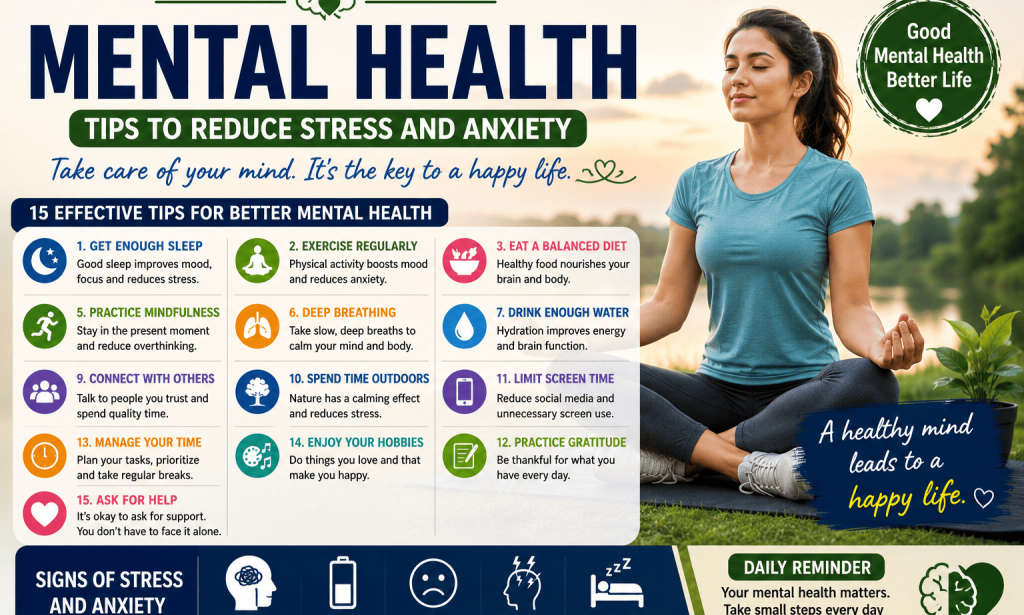
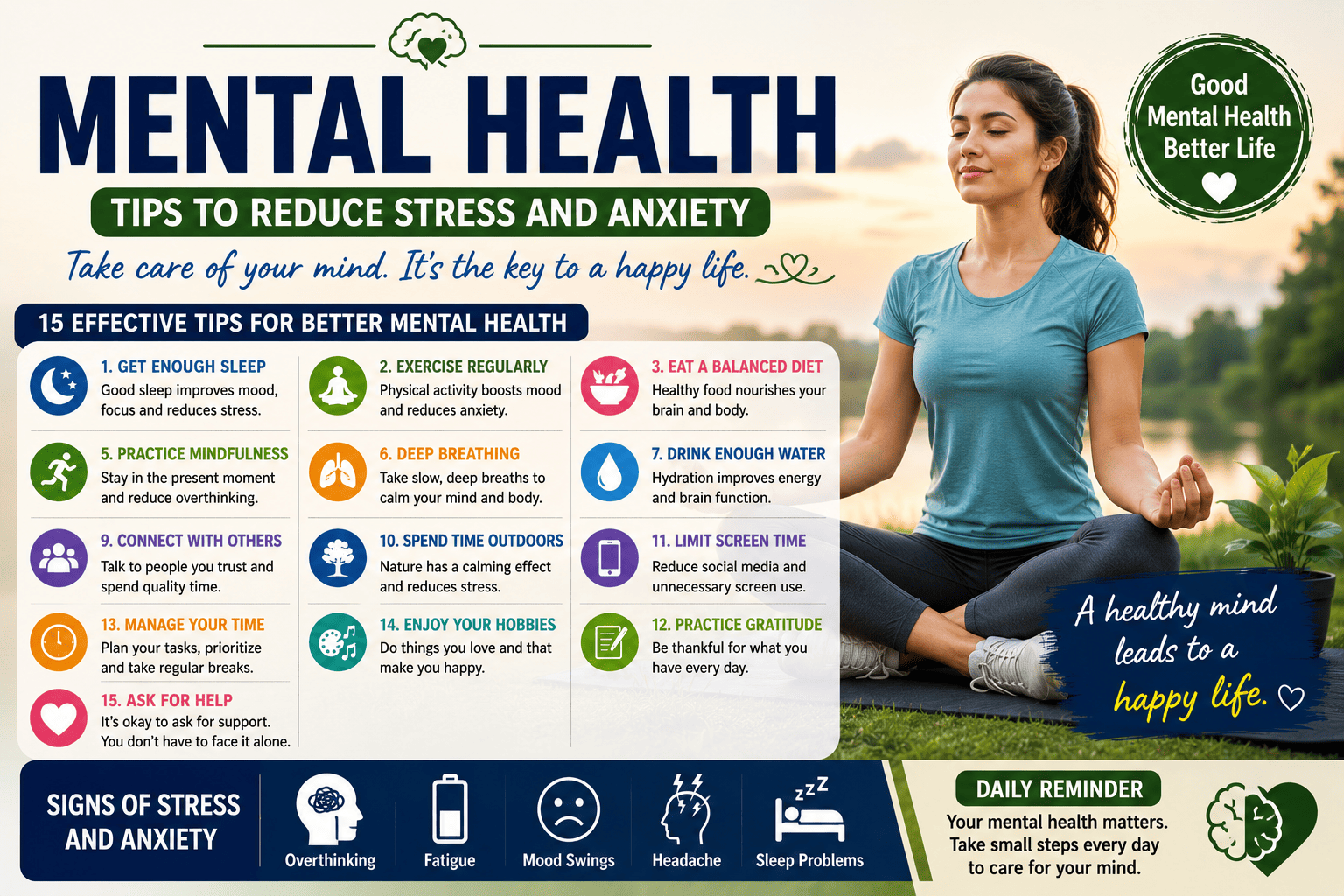
15 Effective Tips to Improve Mental Health
1. Get Enough Sleep
Quality sleep plays a major role in emotional well-being.
Most adults benefit from about 7–9 hours of sleep each night.
Better sleep can improve:
- Mood
- Memory
- Concentration
- Energy
- Stress management
2. Exercise Regularly
Physical activity supports both physical and mental health.
Exercise may help:
- Reduce stress
- Improve mood
- Increase confidence
- Promote better sleep
Even a 30-minute walk can make a positive difference.
3. Eat a Balanced Diet
Nutrition influences brain function and overall well-being.
Choose foods such as:
- Fruits
- Vegetables
- Whole grains
- Lean protein
- Healthy fats
- Nuts and seeds
Limiting highly processed foods and sugary drinks can also support overall health.
4. Practice Deep Breathing
Slow, controlled breathing can help you relax during stressful moments.
Try inhaling slowly through your nose, holding briefly, and exhaling gently through your mouth.
Practicing for a few minutes each day may help promote calmness.
5. Practice Mindfulness
Mindfulness involves paying attention to the present moment without judgment.
It can help improve:
- Focus
- Emotional awareness
- Stress management
Simple mindfulness practices include quiet breathing, mindful walking, or paying close attention to everyday activities.
6. Stay Connected with Others
Healthy relationships provide emotional support.
Spend time with:
- Family
- Friends
- Supportive colleagues
- Community groups
Talking with someone you trust can help reduce feelings of isolation.
7. Limit Screen Time
Too much time on phones or social media may contribute to stress for some people.
Consider:
- Taking regular screen breaks
- Turning off unnecessary notifications
- Avoiding screens before bedtime
8. Spend Time Outdoors
Nature has a calming effect for many people.
Activities such as walking in a park, gardening, or simply sitting outside may help you feel refreshed.
9. Stay Physically Active Throughout the Day
In addition to structured exercise, everyday movement matters.
Take short walking breaks, stretch regularly, or use the stairs when possible.
10. Practice Gratitude
Writing down a few things you're grateful for each day can help shift attention toward positive experiences.
A gratitude journal is a simple habit that many people find beneficial.
11. Learn Time Management
Poor time management often increases stress.
Helpful strategies include:
- Prioritizing important tasks
- Breaking large projects into smaller steps
- Using a daily planner
- Taking regular breaks
12. Enjoy Your Hobbies
Creative activities can improve emotional well-being.
Examples include:
- Reading
- Painting
- Photography
- Gardening
- Cooking
- Playing music
Doing something enjoyable regularly supports a balanced lifestyle.
13. Drink Enough Water
Hydration supports overall health, including normal brain function.
Keep a water bottle nearby and drink fluids regularly throughout the day.
14. Reduce Caffeine If It Makes You Feel Anxious
Some people are more sensitive to caffeine than others.
If you notice that caffeine increases nervousness or affects sleep, consider reducing your intake.
15. Ask for Help When You Need It
Everyone needs support sometimes.
If stress or anxiety becomes overwhelming or persists for a long time, talking to a qualified mental health professional can be an important step.
Seeking help is a sign of strength, not weakness.
Healthy Daily Routine for Better Mental Health
Morning
- Wake up at a consistent time
- Drink water
- Stretch for a few minutes
- Eat a nutritious breakfast
Afternoon
- Take short breaks during work or study
- Eat a balanced lunch
- Go for a brief walk
Evening
- Exercise or relax
- Spend time with family
- Limit social media
Night
- Read a book
- Practice relaxation
- Sleep at a consistent time
Habits That May Increase Stress
Try to reduce habits such as:
- Sleeping too little
- Skipping meals
- Excessive screen time
- Smoking
- Excessive alcohol use
- Constant multitasking
- Negative self-talk
- Avoiding physical activity
Replacing unhealthy habits gradually with healthier ones can improve overall well-being.
Benefits of Good Mental Health
Maintaining good mental health can help you:
- Think more clearly
- Handle stress better
- Build stronger relationships
- Improve productivity
- Sleep better
- Increase self-confidence
- Enjoy daily life
- Support physical health
Mental and physical health are closely connected.
Frequently Asked Questions (FAQ)
What is mental health?
Mental health refers to emotional, psychological, and social well-being. It influences how people think, feel, and respond to life's challenges.
How can I reduce stress naturally?
Regular exercise, healthy eating, quality sleep, mindfulness, deep breathing, and spending time with supportive people can all help reduce stress.
Is anxiety normal?
Feeling anxious from time to time is a normal part of life. However, persistent or severe anxiety that affects daily activities should be discussed with a healthcare professional.
Does exercise improve mental health?
Yes. Regular physical activity has been shown to support mood, reduce stress, and improve overall well-being.
When should I seek professional help?
If stress, anxiety, or emotional difficulties continue for weeks, become severe, or interfere with work, school, relationships, or daily life, it's a good idea to consult a qualified healthcare provider or mental health professional.

You must be logged in to post a comment.