
What Is Quantum Computing?
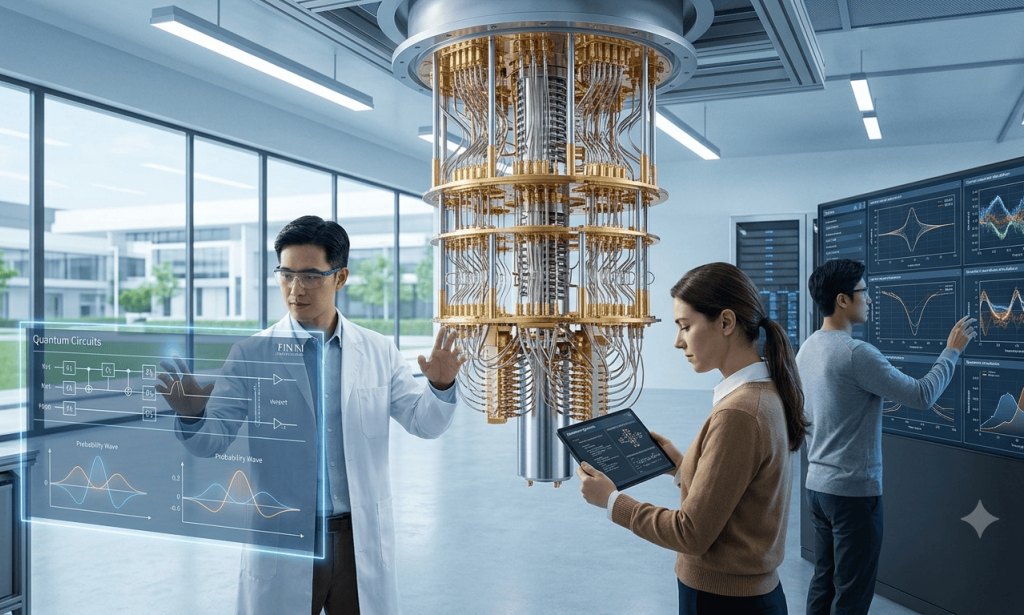
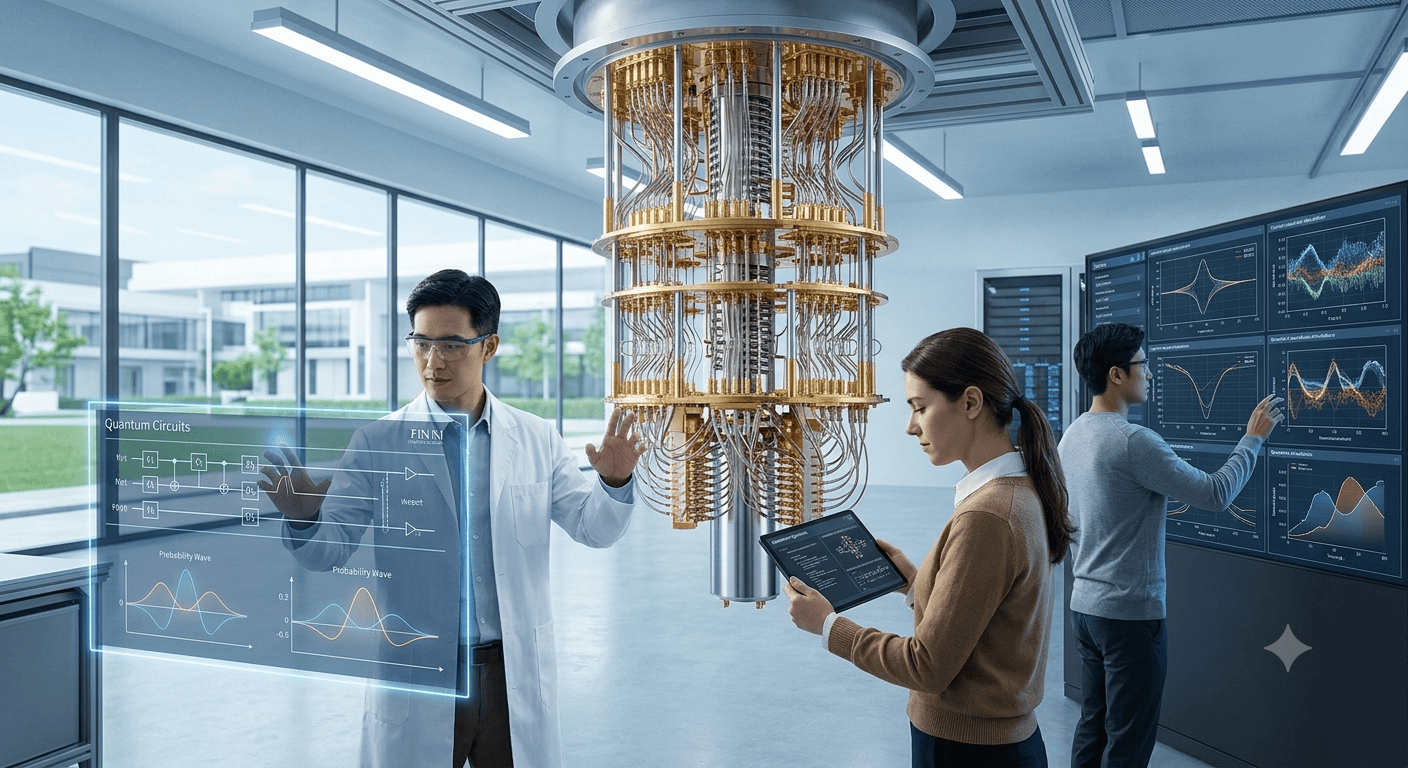
Quantum computing is an advanced type of computing technology that uses the principles of quantum physics to process information.
Traditional computers use bits, which have two possible states:
- 0
- 1
Quantum computers use qubits, which can exist in multiple states through a quantum property called superposition.
This allows quantum computers to perform many calculations simultaneously, making them extremely powerful for specific types of problems.
How Quantum Computers Work
Quantum computing is based on several important concepts from quantum physics.
1. Qubits
Qubits are the basic units of quantum information.
Unlike normal computer bits, qubits can represent:
- 0
- 1
- A combination of both states
This ability allows quantum computers to process complex calculations more efficiently.
2. Superposition
Superposition allows quantum particles to exist in multiple states at the same time.
In computing, this means quantum computers can explore multiple possible solutions simultaneously.
This makes them useful for solving highly complex problems.
3. Quantum Entanglement
Quantum entanglement is a unique connection between quantum particles.
When qubits become entangled, the state of one qubit can be connected to another, even across distances.
This helps quantum computers perform advanced calculations more efficiently.
4. Quantum Interference
Quantum interference allows quantum systems to increase the probability of correct solutions while reducing incorrect possibilities.
Together, these principles make quantum computers fundamentally different from traditional computers.
Difference Between Quantum and Traditional Computers
Traditional computers are excellent for everyday tasks such as:
- Browsing the internet
- Running applications
- Gaming
- Office work
However, some problems require enormous computing power.
Quantum computers may perform better in areas like:
- Complex simulations
- Scientific research
- Advanced mathematics
- Large-scale optimization
A quantum computer will not replace traditional computers but will work alongside them to solve specialized problems.
Applications of Quantum Computing
Quantum computing has the potential to transform many industries.
1. Healthcare and Medicine
One of the most promising uses of quantum technology is healthcare.
Quantum computers may help scientists:
- Discover new medicines
- Understand complex diseases
- Analyze biological systems
- Develop personalized treatments
Drug discovery, which normally takes many years, could become faster with quantum simulations.
2. Artificial Intelligence and Machine Learning
Quantum computing may improve the capabilities of artificial intelligence.
It can help AI systems:
- Process larger datasets
- Train models faster
- Solve complex optimization problems
The combination of quantum computing and AI could create more advanced intelligent systems.
3. Cybersecurity
Cybersecurity is another major area where quantum technology will have a significant impact.
Quantum computers may:
- Create stronger encryption methods
- Improve security systems
- Detect complex cyber threats
At the same time, powerful quantum computers could challenge current encryption methods, making quantum security solutions necessary.
4. Scientific Research
Scientists can use quantum computers to simulate complex natural processes.
Applications include:
- Physics research
- Climate modeling
- Material discovery
- Space science
Quantum computers may help answer scientific questions that are currently impossible to solve.
5. Business and Finance
Businesses may use quantum computing for:
- Risk analysis
- Market predictions
- Investment optimization
- Supply chain management
Companies could make better decisions by analyzing complex data more efficiently.
Benefits of Quantum Technology
Quantum computing offers several important advantages.
1. Solving Complex Problems
Quantum computers can handle problems that are too difficult for traditional computers.
2. Faster Scientific Discoveries
Researchers can perform advanced simulations and experiments more quickly.
3. Improved Innovation
Quantum technology may lead to breakthroughs in medicine, energy, and materials.
4. Better Data Processing
Quantum systems can analyze complex information in new ways.
5. Advanced Security
Quantum encryption could create stronger protection for digital information.
Challenges of Quantum Computing
Although quantum computing has great potential, it also faces several challenges.
1. Technical Complexity
Building and maintaining quantum computers is extremely difficult.
Qubits are very sensitive and require special environments to operate.
2. High Development Costs
Quantum research requires advanced equipment, specialized scientists, and significant investment.
3. Error Correction Problems
Quantum systems are vulnerable to errors caused by environmental factors.
Scientists are developing new methods to improve quantum accuracy.
4. Limited Availability
Currently, quantum computers are mainly available to research institutions and large technology companies.
Wider public access may take more time.
The Future Impact of Quantum Computing
The future of quantum computing is expected to bring major changes across industries.
Future developments may include:
1. Advanced Medical Breakthroughs
Quantum computers may help create new treatments and solve complex biological problems.
2. Smarter Artificial Intelligence
Quantum-powered AI systems may become faster and more capable.
3. Climate Solutions
Quantum technology may help scientists develop better solutions for climate challenges.
4. Next Generation Computing
Quantum computers may become an important part of future technology infrastructure.
As research continues, quantum computing could become one of the most important technological advancements of the 21st century.
Quantum Computing vs Artificial Intelligence
Although both technologies are advanced, they serve different purposes.
Artificial Intelligence:
- Focuses on creating systems that can learn and make decisions.
- Uses existing computing technology.
Quantum Computing:
- Focuses on creating extremely powerful computing systems.
- Uses quantum physics principles.
In the future, these technologies may work together to create more powerful solutions.
Frequently Asked Questions (FAQs)
1. What is quantum computing in simple words?
Quantum computing is a new type of computing that uses quantum physics to solve complex problems faster than traditional computers.
2. Will quantum computers replace normal computers?
No. Quantum computers will work alongside traditional computers for specialized tasks.
3. Why is quantum computing important?
It can help solve difficult problems in medicine, science, cybersecurity, and business.
4. When will quantum computers become common?
Quantum technology is developing rapidly, but widespread use may still require many years of research and improvement.

You must be logged in to post a comment.