
 What Is Silent Burnout?
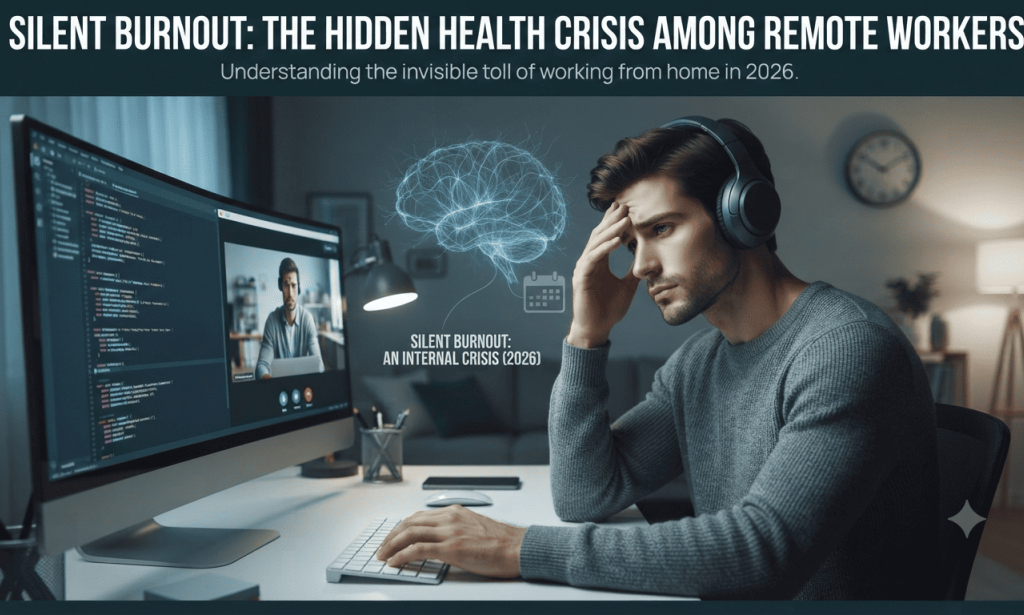
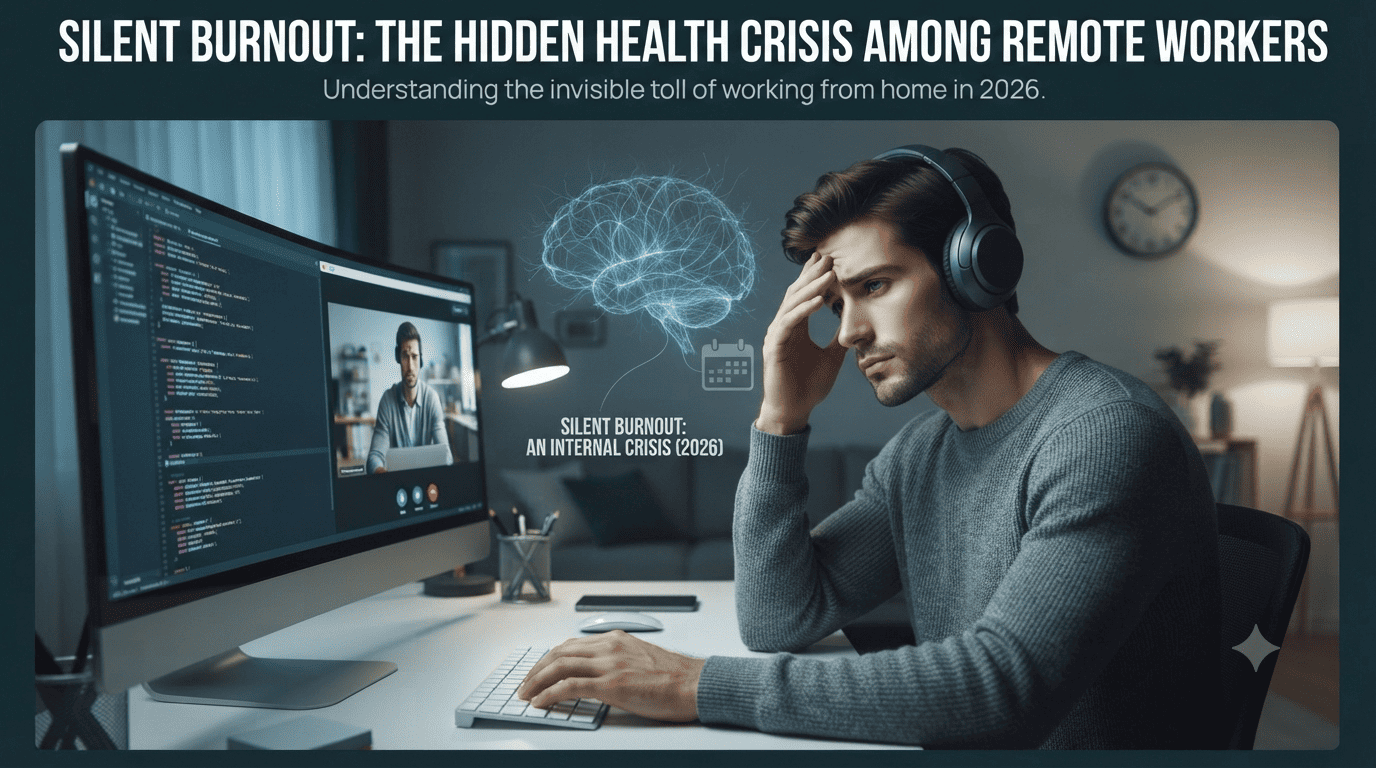
Silent burnout is a condition where a person experiences mental and emotional exhaustion but continues to function normally on the outside.
A person experiencing silent burnout may still:
- Complete work assignments.
- Meet deadlines.
- Attend virtual meetings.
- Communicate professionally.
However, internally they may feel:
- Constantly tired.
- Emotionally drained.
- Disconnected from their work.
- Unable to relax.
- Unmotivated.
The word “silent” represents the fact that many people hide their struggles and continue working without seeking support.
Why Silent Burnout Is Increasing Among Remote Workers
Remote work has created many opportunities, but it has also introduced new psychological challenges.
1. The Office Never Truly Closes
One of the biggest problems with remote work is the disappearance of physical boundaries.
In a traditional office:
- Employees leave work and return home.
- Working hours are clearly defined.
- The workplace and personal life are separate.
Remote workers often experience the opposite.
Their home becomes their office, making it difficult to mentally switch off.
Many workers find themselves:
- Checking emails late at night.
- Answering messages during weekends.
- Completing unfinished tasks after normal hours.
Over time, this creates a cycle of continuous work.
2. The Pressure to Prove Productivity
Remote employees often feel pressure to demonstrate that they are working.
Because managers cannot physically observe them, some workers develop “always online” habits.
This may include:
- Responding instantly to every message.
- Attending unnecessary meetings.
- Working longer hours.
- Avoiding breaks.
Although these behaviors may appear responsible, they can slowly lead to exhaustion.
3. Digital Exhaustion and Information Overload
Remote work depends heavily on digital communication.
A typical remote employee may spend hours on:
- Video calls.
- Emails.
- Team chats.
- Project management platforms.
- Online documents.
Constant digital interaction creates cognitive overload.
The brain receives continuous information but gets very little time to recover.
This can result in:
- Reduced attention.
- Mental fatigue.
- Lower creativity.
- Difficulty making decisions.
4. Lack of Human Connection
One hidden disadvantage of remote work is reduced social interaction.
Traditional workplaces provide natural opportunities for:
- Casual conversations.
- Team relationships.
- Emotional support.
- Shared experiences.
Remote workers may spend entire days communicating only through screens.
Over time, this can create feelings of:
- Isolation.
- Loneliness.
- Lack of belonging.
Humans are naturally social, and meaningful connections are important for mental health.
5. The "Perfect Remote Worker" Pressure
Many remote professionals feel pressure to appear successful.
They may believe they must:
- Always be productive.
- Never complain.
- Handle everything independently.
- Avoid showing weakness.
This mindset can cause people to ignore their own needs.
Eventually, the pressure to perform can become overwhelming.
Warning Signs of Silent Burnout
Silent burnout develops gradually, making it difficult to identify.
Here are some common signs:
1. Feeling Tired All the Time
You may feel exhausted even after sleeping or taking breaks.
This constant tiredness can affect:
- Work performance.
- Personal relationships.
- Daily activities.
2. Losing Interest in Work
A person experiencing burnout may no longer feel excited about projects they once enjoyed.
Signs include:
- Lack of motivation.
- Feeling emotionally disconnected.
- Completing tasks without enthusiasm.
3. Reduced Creativity
Burnout affects the brain's ability to think creatively.
People may struggle with:
- Generating new ideas.
- Solving problems.
- Making decisions.
4. Increased Irritability
Emotional exhaustion can make people more sensitive.
Small problems may feel overwhelming, leading to:
- Frustration.
- Anger.
- Emotional reactions.
5. Poor Sleep Quality
Stress and overthinking can interfere with sleep.
Common issues include:
- Difficulty falling asleep.
- Waking up frequently.
- Feeling tired after waking.
How Silent Burnout Affects Health
Ignoring burnout can create long-term consequences.
Mental Health Effects
Silent burnout may contribute to:
- Chronic stress.
- Anxiety.
- Emotional exhaustion.
- Reduced confidence.
- Negative thinking patterns.
Physical Health Effects
Long-term stress can affect the body by causing:
- Headaches.
- Muscle tension.
- Low energy.
- Sleep problems.
- Reduced immune function.
Mental and physical health are closely connected.
How Remote Workers Can Prevent Silent Burnout
1. Create a Clear Work Schedule
A flexible schedule does not mean unlimited working hours.
Set boundaries by:
- Starting work at a fixed time.
- Ending work at a fixed time.
- Avoiding unnecessary after-hours communication.
2. Build a Dedicated Workspace
A separate workspace helps the brain understand when work begins and ends.
Even a small area can create psychological separation.
3. Take Regular Digital Breaks
Continuous screen exposure increases mental fatigue.
Useful habits:
- Step away from screens every hour.
- Take short walks.
- Spend time outdoors.
- Practice relaxation techniques.
4. Prioritize Sleep and Recovery
Rest is not a waste of time—it is necessary for productivity.
Healthy habits include:
- Maintaining a consistent sleep schedule.
- Avoiding work before bedtime.
- Reducing nighttime screen usage.
5. Maintain Real Human Connections
Remote workers should actively create opportunities for social interaction.
Examples:
- Meeting friends.
- Joining communities.
- Attending professional events.
- Working occasionally outside the home.
How Companies Can Reduce Remote Worker Burnout
Organizations play an important role in creating healthier remote environments.
Companies should focus on:
Measuring Results Instead of Online Presence
Productivity should not be based on who stays online the longest.
Reducing Unnecessary Meetings
Too many virtual meetings create fatigue and reduce focused work time.
Encouraging Mental Health Support
Companies can provide:
- Wellness programs.
- Flexible schedules.
- Mental health resources.
- Employee support systems.
The Role of AI in Preventing Burnout
Artificial intelligence may become a valuable tool for healthier remote work.
AI can help by:
- Automating repetitive tasks.
- Organizing schedules.
- Reducing administrative work.
- Improving productivity.
The purpose of AI should be to reduce workload—not increase expectations.
The Future of Remote Work and Mental Wellness
The future workplace will focus not only on efficiency but also on employee well-being.
Future trends may include:
- AI-powered productivity assistance.
- Flexible working systems.
- Mental health-focused workplace policies.
- Four-day work models.
- Personalized work environments.
Companies that prioritize employee health will likely create stronger and more sustainable teams.
Conclusion
Silent burnout is one of the hidden challenges of the remote work era. While remote work provides freedom and flexibility, it can also create invisible pressure, digital exhaustion, and emotional fatigue.
The solution is not to reject remote work but to build healthier working habits.
By creating boundaries, taking meaningful breaks, maintaining social connections, and recognizing early warning signs, remote workers can protect their mental health while continuing to succeed professionally.
The future of work should not only focus on achieving more—it should focus on creating a healthier way to achieve success.

You must be logged in to post a comment.