
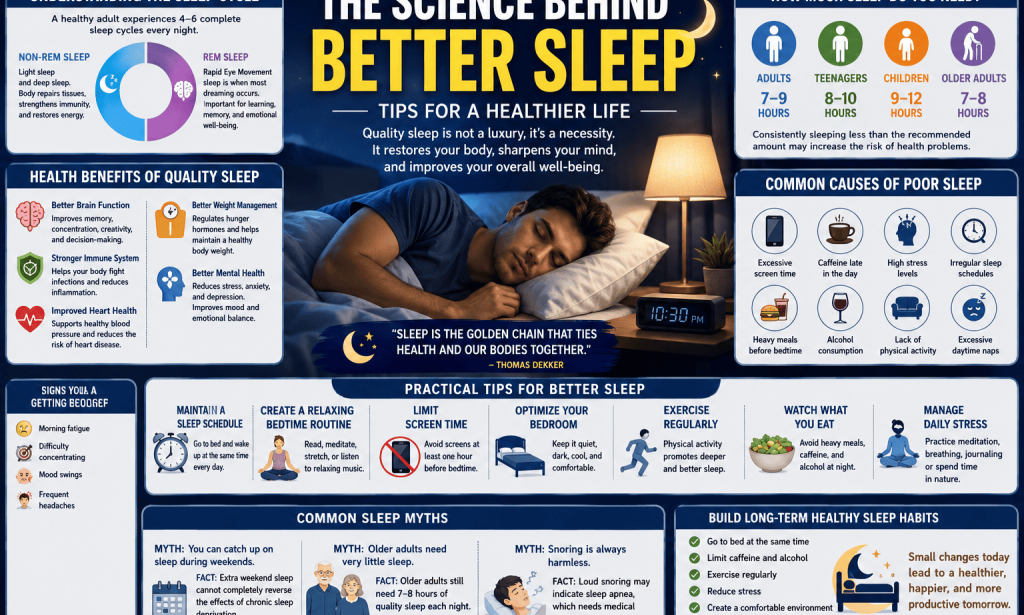
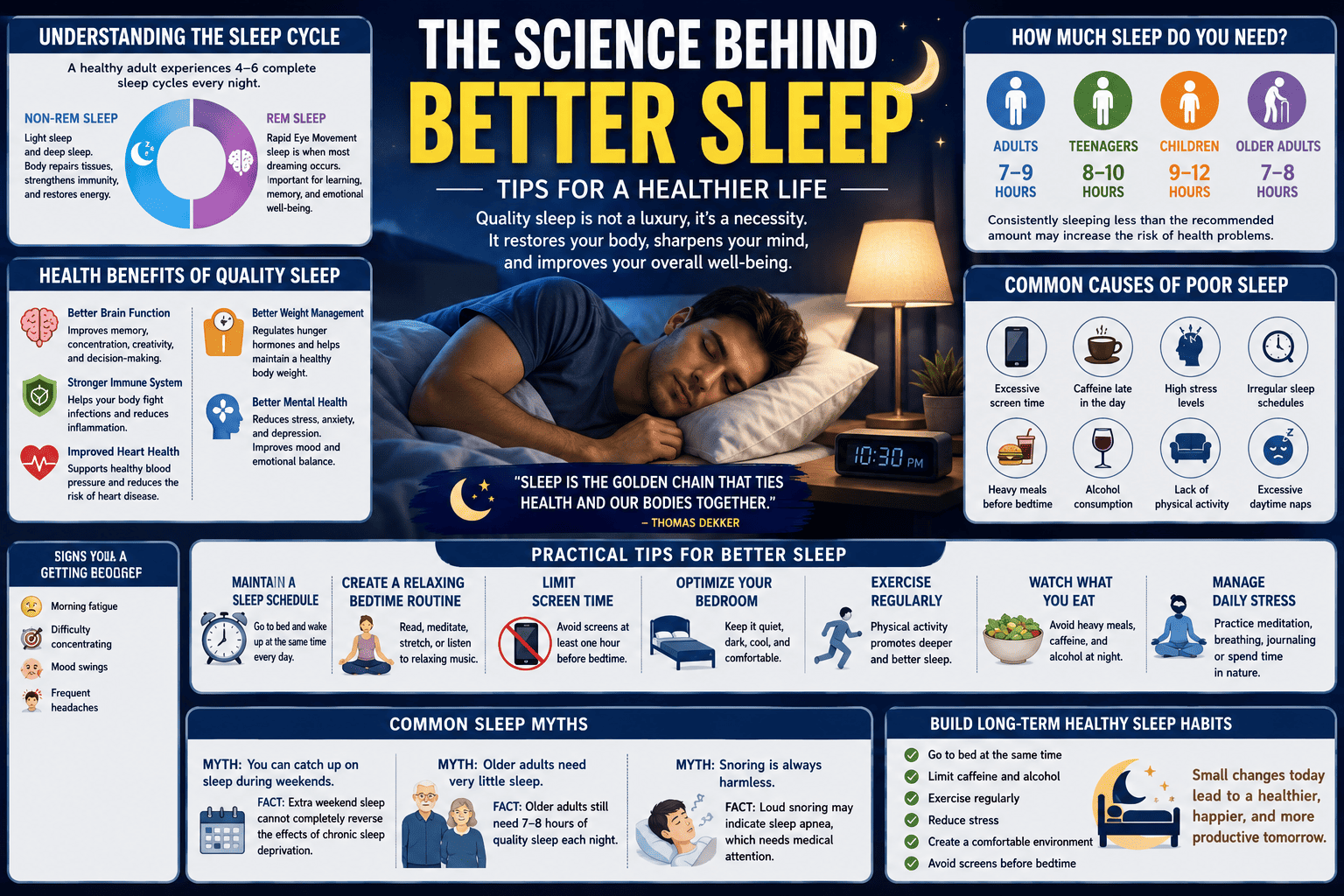
 The Science Behind Better Sleep: Tips for a Healthier Life
Sleep is often overlooked in today's busy world. Many people sacrifice hours of sleep to meet work deadlines, study for exams, scroll through social media, or watch late-night entertainment. While this may seem harmless in the short term, poor sleep can have serious consequences for both physical and mental health.
Modern science has shown that sleep is not simply a period of rest. During sleep, the body repairs tissues, strengthens the immune system, balances hormones, consolidates memories, and restores energy. Without enough quality sleep, nearly every system in the body is affected.
Understanding how sleep works and learning healthy sleep habits can improve your overall well-being, increase productivity, and reduce the risk of chronic diseases. Let's explore the science behind better sleep and discover practical ways to improve your nightly rest.
Why Sleep Is Essential
Sleep is as important as healthy eating and regular exercise. Every night, your body goes through complex biological processes that help maintain physical and mental health.
During sleep, your brain organizes information collected throughout the day, helping improve learning and memory. At the same time, your muscles recover from daily activities, damaged cells are repaired, and hormones responsible for growth and metabolism are released.
Without enough sleep, these essential processes become less effective, leading to fatigue, poor concentration, weakened immunity, and reduced performance.
Understanding the Sleep Cycle
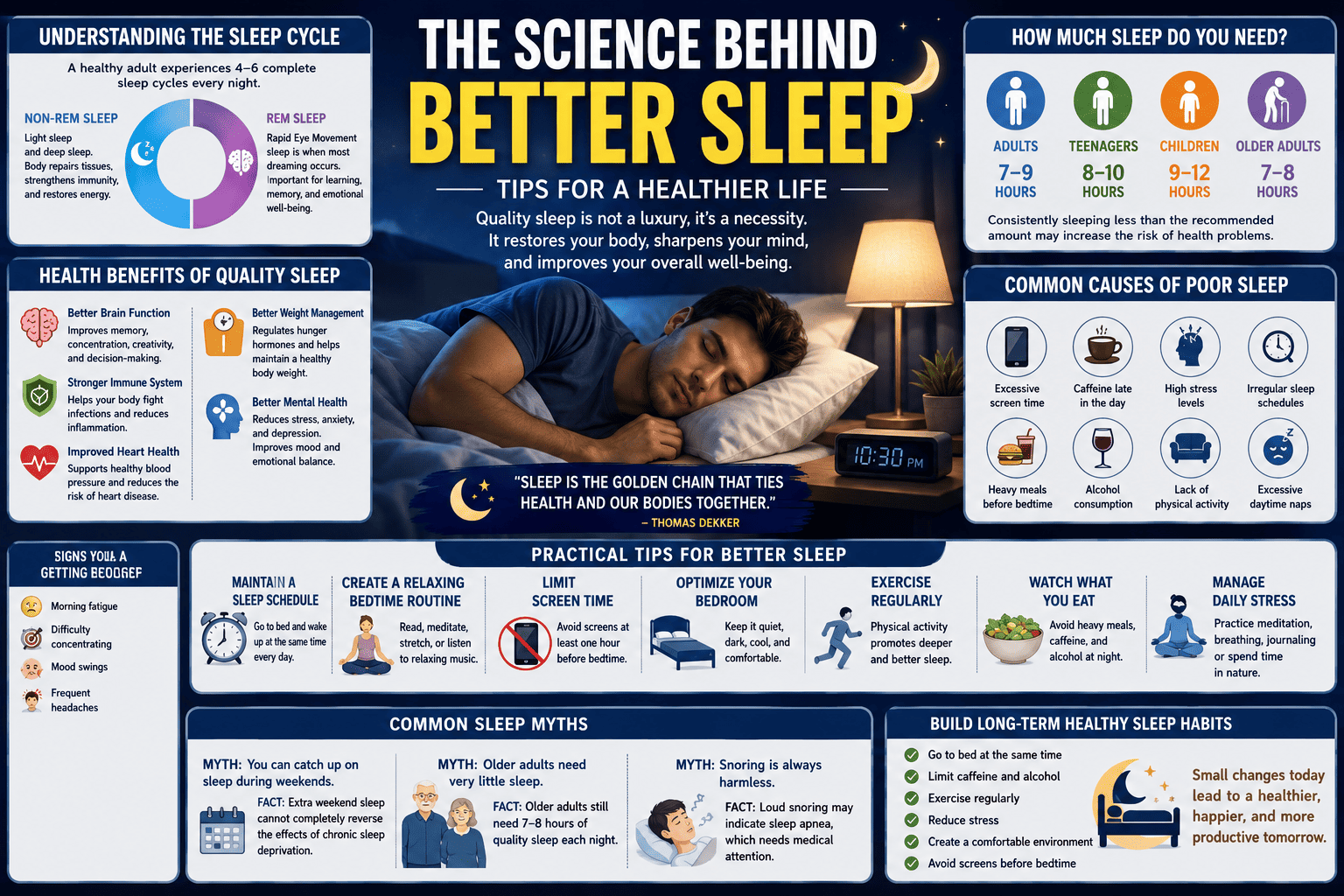
Sleep consists of several stages that repeat throughout the night. These stages are divided into two main categories:
Non-REM Sleep
This stage includes light sleep and deep sleep. During deep sleep, the body repairs muscles, strengthens bones, restores energy, and supports immune function.
REM Sleep
Rapid Eye Movement (REM) sleep is when most dreaming occurs. This stage is critical for learning, emotional regulation, creativity, and memory formation.
A healthy adult typically experiences four to six complete sleep cycles every night. Interrupting these cycles can reduce sleep quality, even if the total number of sleeping hours seems sufficient.
How Much Sleep Do You Need?
Sleep requirements vary depending on age.
General recommendations include:
- Adults: 7–9 hours
- Teenagers: 8–10 hours
- School-age children: 9–12 hours
- Older adults: 7–8 hours
While individual needs differ slightly, consistently sleeping less than the recommended amount may increase the risk of health problems.
The Health Benefits of Quality Sleep
Getting enough quality sleep provides numerous health benefits.
Better Brain Function
Sleep improves concentration, decision-making, creativity, and problem-solving abilities.
People who sleep well tend to perform better at work and school.
Stronger Immune System
While you sleep, your immune system produces proteins called cytokines that help fight infections and inflammation.
People who regularly get enough sleep are generally more resistant to common illnesses.
Improved Heart Health
Poor sleep has been associated with high blood pressure, heart disease, stroke, and irregular heart rhythms.
Healthy sleep helps regulate blood pressure and supports cardiovascular health.
Better Weight Management
Sleep influences hormones that control hunger and fullness.
Lack of sleep often increases cravings for sugary and high-calorie foods while reducing self-control around eating.
Maintaining healthy sleep habits can support weight management and reduce the risk of obesity.
Better Mental Health
Quality sleep plays a vital role in emotional balance.
Insufficient sleep increases the risk of anxiety, depression, mood swings, and emotional stress.
Getting enough rest helps improve emotional resilience and overall happiness.
Common Causes of Poor Sleep
Many lifestyle habits interfere with healthy sleep.
Some of the most common causes include:
- Excessive screen time before bed
- Drinking caffeine late in the day
- High stress levels
- Irregular sleep schedules
- Heavy meals before bedtime
- Alcohol consumption
- Lack of physical activity
- Excessive daytime naps
Identifying these habits is the first step toward improving sleep quality.
Practical Tips for Better Sleep
Improving sleep doesn't usually require medication. Small lifestyle changes often make a significant difference.
Maintain a Consistent Sleep Schedule
Go to bed and wake up at the same time every day, including weekends.
This helps regulate your body's internal clock.
Create a Relaxing Bedtime Routine
Spend the last hour before bed doing calming activities such as:
- Reading
- Meditation
- Gentle stretching
- Listening to relaxing music
- Deep breathing exercises
These activities signal your brain that it's time to sleep.
Limit Screen Time
Phones, tablets, computers, and televisions emit blue light that suppresses melatonin, the hormone responsible for sleep.
Try turning off electronic devices at least one hour before bedtime.
Optimize Your Bedroom
A comfortable sleeping environment can greatly improve sleep quality.
Your bedroom should be:
- Quiet
- Dark
- Cool
- Comfortable
- Free from unnecessary distractions
Blackout curtains, comfortable pillows, and supportive mattresses can all contribute to better sleep.
Exercise Regularly
Regular physical activity promotes deeper and more restorative sleep.
Walking, cycling, swimming, yoga, or strength training can all improve sleep quality.
However, avoid intense exercise immediately before bedtime.
Watch What You Eat
Avoid:
- Heavy meals before bed
- Excessive caffeine
- Sugary drinks
- Energy drinks
- Large amounts of alcohol
Instead, choose light evening meals and stay hydrated throughout the day.
Manage Daily Stress
Stress is one of the biggest causes of insomnia.
Healthy stress management techniques include:
- Journaling
- Meditation
- Yoga
- Mindfulness
- Spending time in nature
- Talking with family or friends
Reducing stress helps your mind relax before bedtime.
The Connection Between Sleep and Productivity
Many people believe working longer hours leads to greater success.
Research suggests the opposite.
People who sleep well often:
- Learn faster
- Make better decisions
- Solve problems more effectively
- Have stronger memory
- Make fewer mistakes
- Stay focused longer
Quality sleep is one of the most effective productivity tools available.
Sleep and Physical Fitness
Fitness doesn't end when your workout is over.
During sleep:
- Muscles recover
- Growth hormone is released
- Protein synthesis increases
- Energy stores are replenished
Without adequate sleep, recovery slows, increasing injury risk and reducing athletic performance.
Signs You May Not Be Getting Enough Sleep
You may need more sleep if you frequently experience:
- Morning fatigue
- Difficulty concentrating
- Mood swings
- Frequent headaches
- Increased appetite
- Low motivation
- Poor memory
- Daytime sleepiness
Recognizing these symptoms early allows you to make positive changes.
Myths About Sleep
Several myths prevent people from developing healthy sleep habits.
Myth 1: You Can Catch Up on Sleep During Weekends
Extra weekend sleep cannot completely reverse the effects of chronic sleep deprivation.
Consistency matters more.
Myth 2: Older Adults Need Very Little Sleep
Although sleep patterns change with age, older adults still need approximately seven to eight hours.
Myth 3: Snoring Is Always Harmless
Frequent loud snoring may indicate sleep apnea, a medical condition that should be evaluated by a healthcare professional.
Building Long-Term Healthy Sleep Habits
Improving sleep is a gradual process.
Focus on building sustainable habits such as:
- Going to bed at the same time
- Limiting caffeine
- Exercising regularly
- Reducing stress
- Creating a comfortable sleep environment
- Avoiding screens before bedtime
Small improvements practiced consistently often lead to significant long-term benefits.

You must be logged in to post a comment.