
 What Is Longevity Science?
Longevity science is the study of extending human lifespan and improving health during aging.
It focuses on understanding:
- Why humans age
- How cells become damaged
- How diseases develop with age
- How aging processes can be slowed
The goal is not only to add more years to life but also to increase healthspan — the number of years a person lives in good physical and mental condition.
How Long Can Humans Live?
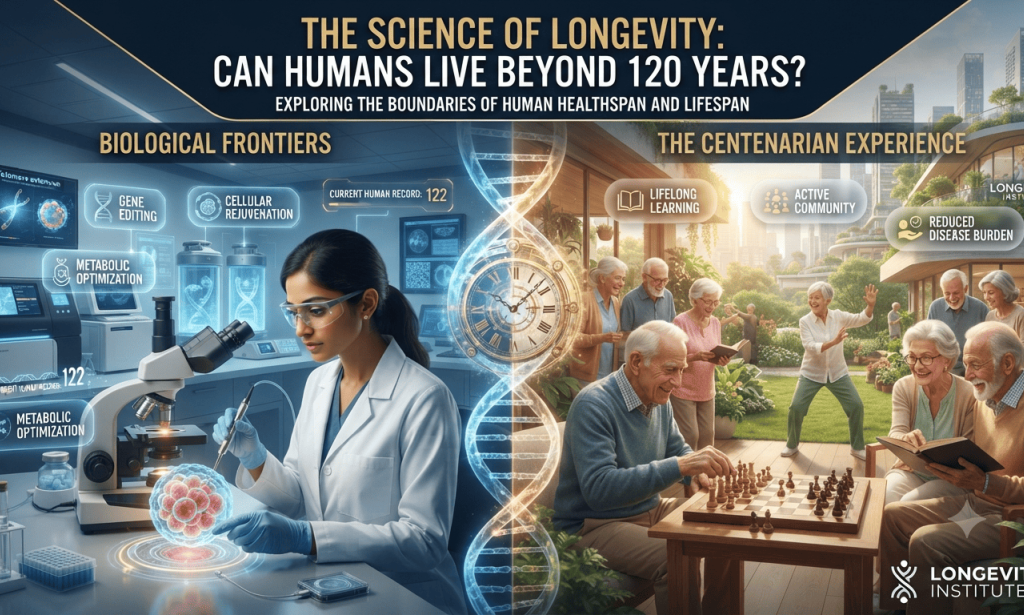
The oldest verified human lifespan belongs to Jeanne Calment, who lived to 122 years old.
This suggests that humans may already have a natural limit around this range.
However, researchers are investigating whether future medical breakthroughs could push this boundary further.
Possible future lifespans:
- 100+ years becoming common
- 120+ years becoming achievable for more people
- 130+ years remaining uncertain
The challenge is not only extending life but preventing age-related diseases.
1. Understanding Why Humans Age
Aging is not caused by one single factor. Scientists believe it happens because of multiple biological changes.
Major causes include:
Cellular Damage
Over time, cells accumulate damage from:
- Environmental stress
- DNA changes
- Metabolic processes
This reduces the body's ability to repair itself.
Telomere Shortening
Telomeres are protective structures at the ends of chromosomes.
Every time cells divide, telomeres become shorter. When they become too short, cells lose their ability to function properly.
Declining Stem Cell Activity
Stem cells help repair damaged tissues.
As humans age, stem cells become less active, slowing the body's natural repair system.
2. Genetic Research and Aging
Scientists are studying genes linked to longer and healthier lives.
Some people naturally live longer because of genetic factors that help protect against:
- Heart disease
- Cancer
- Brain decline
Researchers are exploring ways to influence these biological pathways using advanced genetic technologies.
Future treatments may help activate protective genes or repair harmful genetic changes.
3. The Role of Artificial Intelligence in Longevity
Artificial intelligence is becoming an important tool in aging research.
AI can analyze massive amounts of biological information to:
- Discover aging patterns
- Identify disease risks
- Develop new medicines
- Predict health problems earlier
For example:
AI systems can study thousands of biological markers and identify which factors are connected to healthy aging.
This could help doctors create personalized longevity plans.
4. Anti-Aging Drugs and Therapies
Scientists are investigating several treatments that may slow aging processes.
Senolytics
Senolytic drugs aim to remove damaged cells called senescent cells.
These damaged cells can contribute to inflammation and age-related diseases.
Metformin Research
Metformin, a common diabetes medication, is being studied for possible effects on aging-related processes.
Rapamycin Research
Rapamycin is another compound being studied because of its effects on cellular aging pathways.
However, these treatments are still under research and are not proven solutions for extending human lifespan.
5. Regenerative Medicine: Repairing the Human Body
One major approach to longevity is repairing damaged tissues instead of simply treating diseases.
Regenerative medicine includes:
- Stem cell therapies
- Tissue engineering
- Lab-grown organs
- Advanced wound healing
In the future, damaged organs may be replaced or repaired, allowing people to maintain healthier bodies for longer.
6. The Future of Personalized Health
Future healthcare may become highly personalized.
Instead of treating diseases after they appear, doctors may monitor:
- Genetic information
- Blood markers
- Lifestyle patterns
- Cellular health
AI-powered health systems could predict risks and recommend personalized interventions.
This shift could transform medicine from:
Disease treatment → Disease prevention
7. Lifestyle Still Matters
Although advanced technology is important, everyday habits remain critical for longevity.
Scientific research consistently links longer healthy lives with:
Healthy Diet
Eating a balanced diet rich in:
- Vegetables
- Fruits
- Whole foods
- Healthy proteins
can support long-term health.
Regular Exercise
Physical activity helps maintain:
- Muscle strength
- Heart health
- Brain function
Quality Sleep
Sleep plays an important role in:
- Memory
- Hormone balance
- Cellular repair
Strong Social Connections
Maintaining relationships and social activity is also associated with healthier aging.
Can Humans Become Immortal?
Most scientists do not believe true immortality is possible.
The human body has complex biological limits, and completely stopping aging remains beyond current science.
However, extending healthy lifespan is a realistic scientific goal.
The future may not be about living forever but about:
- Living longer
- Staying healthier
- Reducing age-related diseases
Challenges of Extreme Longevity
Ethical Questions
If humans live much longer, society may face questions about:
- Population growth
- Resource availability
- Retirement systems
- Inequality in access to treatments
Safety Concerns
New anti-aging technologies must be carefully tested to ensure they do not create unexpected health risks.
Cost and Accessibility
Advanced longevity treatments may initially be expensive, creating concerns about equal access.
The Future of Human Lifespan
By 2030 and beyond, scientists expect major progress in:
- AI-powered medicine
- Genetic research
- Regenerative therapies
- Personalized healthcare
While living beyond 120 years is still uncertain, the possibility is becoming a serious area of scientific research.
The next generation may not only live longer — they may also experience healthier and more active lives at older ages.
Conclusion
The science of longevity is changing how we think about aging.
Humans may not achieve immortality, but breakthroughs in biotechnology, artificial intelligence, and regenerative medicine could significantly extend healthy human life.
The biggest goal of longevity research is not simply adding more years — it is adding more healthy, meaningful years.
The future question may not be:
“How long can humans live?”
It may become:
“How healthy can humans remain while living longer?”

You must be logged in to post a comment.