
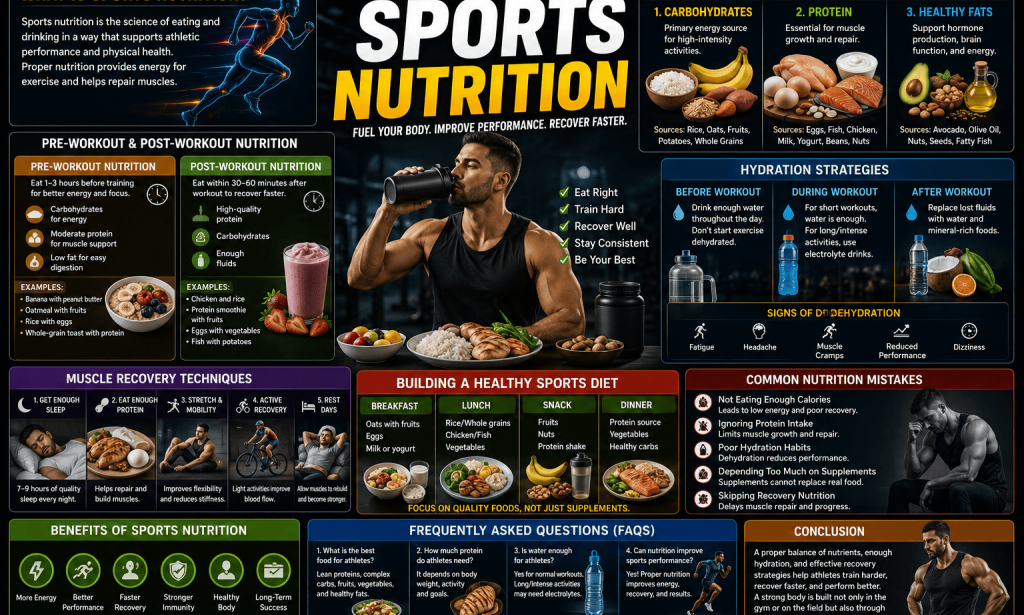
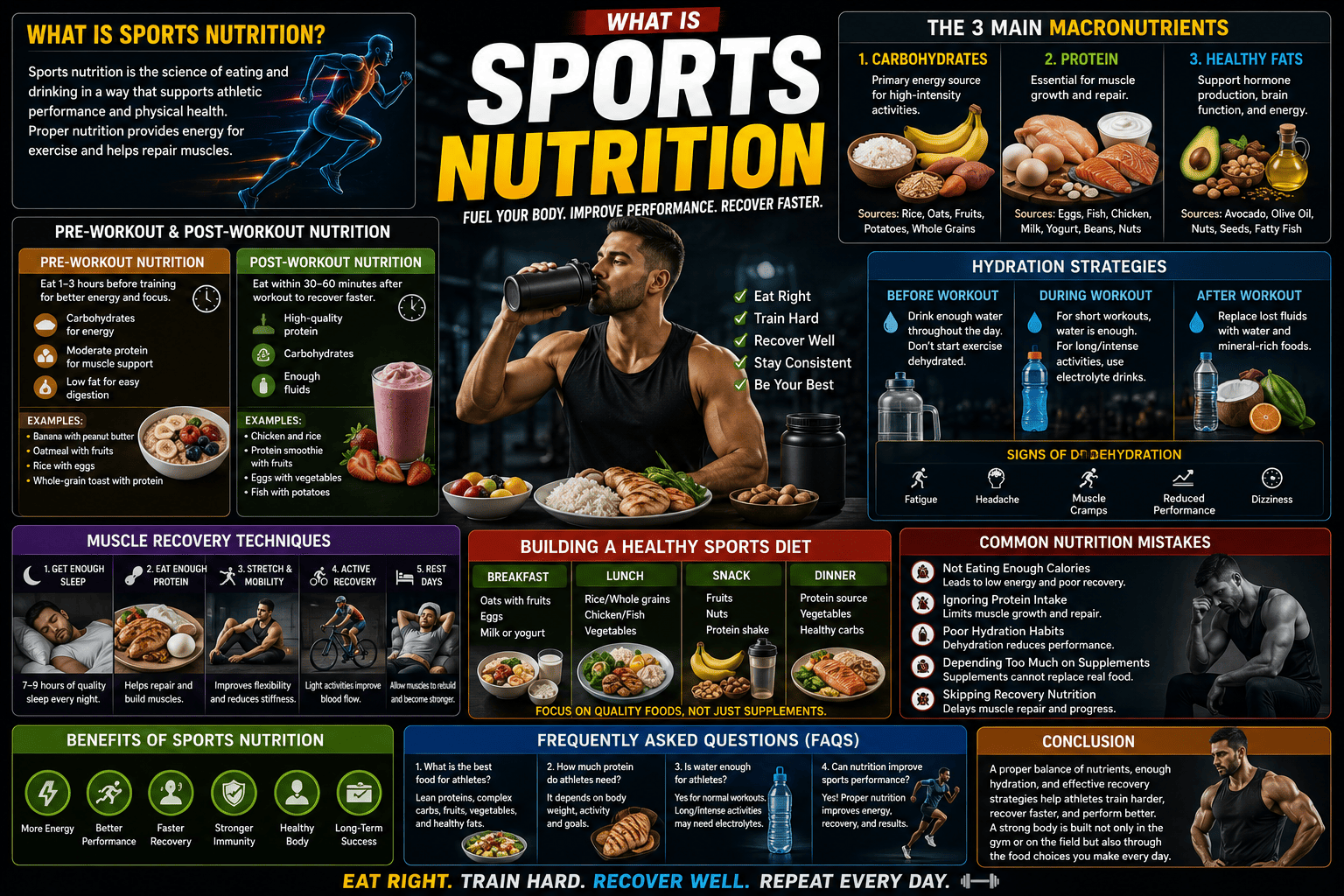
 What Is Sports Nutrition?
Sports nutrition is the science of eating and drinking in a way that supports athletic performance and physical health. When you exercise, your body uses energy stored from food, and proper nutrition helps replace that energy while repairing muscles.
The three main macronutrients required for athletes are:
1. Carbohydrates
Carbohydrates are the primary energy source for high-intensity activities. Foods like rice, oats, fruits, potatoes, and whole grains provide fuel for workouts.
Athletes who participate in running, football, cycling, or intense training need enough carbohydrates to maintain energy levels.
2. Protein
Protein is essential for muscle growth and repair. During exercise, muscle fibers experience small damage, and protein helps rebuild them stronger.
Good protein sources include:
- Eggs
- Fish
- Chicken
- Milk
- Greek yogurt
- Beans
- Nuts
3. Healthy Fats
Healthy fats support hormone production, brain function, and long-term energy. Sources include:
- Avocado
- Olive oil
- Nuts
- Seeds
- Fatty fish
A balanced combination of these nutrients creates the foundation of an effective sports diet plan.
Pre-Workout and Post-Workout Nutrition
Nutrition before and after exercise can significantly affect performance and recovery.
Pre-Workout Nutrition
Eating the right foods before training gives your body enough energy to perform better.
A good pre-workout meal should include:
- Carbohydrates for energy
- Moderate protein for muscle support
- Low amounts of fat to avoid digestion problems
Examples:
- Banana with peanut butter
- Oatmeal with fruits
- Rice with eggs
- Whole-grain toast with protein
Try to eat your pre-workout meal 1–3 hours before exercise.
Post-Workout Nutrition
After training, your body needs nutrients to repair muscles and restore energy levels.
A good post-workout meal should contain:
- High-quality protein
- Carbohydrates
- Enough fluids
Examples:
- Chicken and rice
- Protein smoothie with fruits
- Eggs with vegetables
- Fish with potatoes
Proper post-workout nutrition supports muscle recovery and helps prepare your body for the next training session.
Hydration Strategies for Athletes
Water is one of the most important elements of sports performance. Even a small amount of dehydration can reduce strength, focus, and endurance.
Hydration for athletes should be a priority before, during, and after exercise.
Before Workout:
Drink enough water throughout the day. Avoid starting exercise when your body is already dehydrated.
During Workout:
For short workouts, water is usually enough. For longer and intense activities, athletes may need drinks containing electrolytes such as sodium and potassium.
After Workout:
Replace lost fluids by drinking water and consuming foods that contain minerals.
Signs of dehydration include:
- Fatigue
- Headache
- Muscle cramps
- Reduced performance
- Dizziness
Maintaining proper hydration helps the body regulate temperature and improves athletic performance.
Muscle Recovery Techniques
Recovery is just as important as training. Without proper recovery, athletes may experience fatigue, poor performance, and increased injury risk.
Here are some effective muscle recovery techniques:
1. Get Enough Sleep
Sleep is when the body repairs muscles and restores energy. Most athletes need around 7–9 hours of quality sleep every night.
2. Eat Enough Protein
Protein provides the building blocks needed for muscle repair. Consuming protein after workouts helps speed up recovery.
3. Stretching and Mobility Exercises
Light stretching improves flexibility and reduces muscle stiffness after intense workouts.
4. Active Recovery
Low-intensity activities like walking, swimming, or light cycling can improve blood flow and help muscles recover.
5. Rest Days
Rest days allow muscles to rebuild and become stronger. Training every day without recovery can reduce progress.
Building a Healthy Sports Diet
A healthy sports diet should be balanced, consistent, and suitable for your personal goals.
A simple daily sports diet plan may include:
Breakfast:
- Oats with fruits
- Eggs
- Milk or yogurt
Lunch:
- Rice or whole grains
- Chicken/fish
- Vegetables
Snack:
- Fruits
- Nuts
- Protein shake
Dinner:
- Protein source
- Vegetables
- Healthy carbohydrates
Athletes should focus on quality foods rather than depending only on supplements.
Common Nutrition Mistakes Athletes Make
Many beginners make mistakes that affect their performance and progress.
1. Not Eating Enough Calories
Some athletes reduce food intake too much, which can decrease energy and slow recovery.
2. Ignoring Protein Intake
Not consuming enough protein can limit muscle growth and repair.
3. Poor Hydration Habits
Many athletes drink water only when they feel thirsty. By that time, dehydration may already affect performance.
4. Depending Too Much on Supplements
Supplements can help in certain situations, but they cannot replace a balanced diet.
5. Skipping Recovery Nutrition
Not eating after workouts can delay muscle repair and reduce future performance.
Frequently Asked Questions (FAQs)
1. What is the best food for athletes?
The best foods for athletes include lean proteins, complex carbohydrates, fruits, vegetables, and healthy fats.
2. How much protein do athletes need?
Protein needs depend on body weight, activity level, and goals. Most active people benefit from a higher protein intake compared to inactive individuals.
3. Is water enough for athletes?
For normal workouts, water is usually enough. Longer and intense activities may require electrolytes.
4. Can nutrition improve sports performance?
Yes. Proper nutrition provides energy, improves recovery, and helps athletes perform better.
Conclusion
Sports nutrition is a key part of achieving better athletic performance and maintaining a healthy body. A proper balance of nutrients, enough hydration, and effective recovery strategies can help athletes train harder and recover faster.
Whether your goal is building muscle, improving endurance, or becoming a better athlete, following a balanced sports diet plan and focusing on muscle recovery will help you achieve long-term success.
A strong body is built not only in the gym or on the field but also through the food choices you make every day.

You must be logged in to post a comment.