
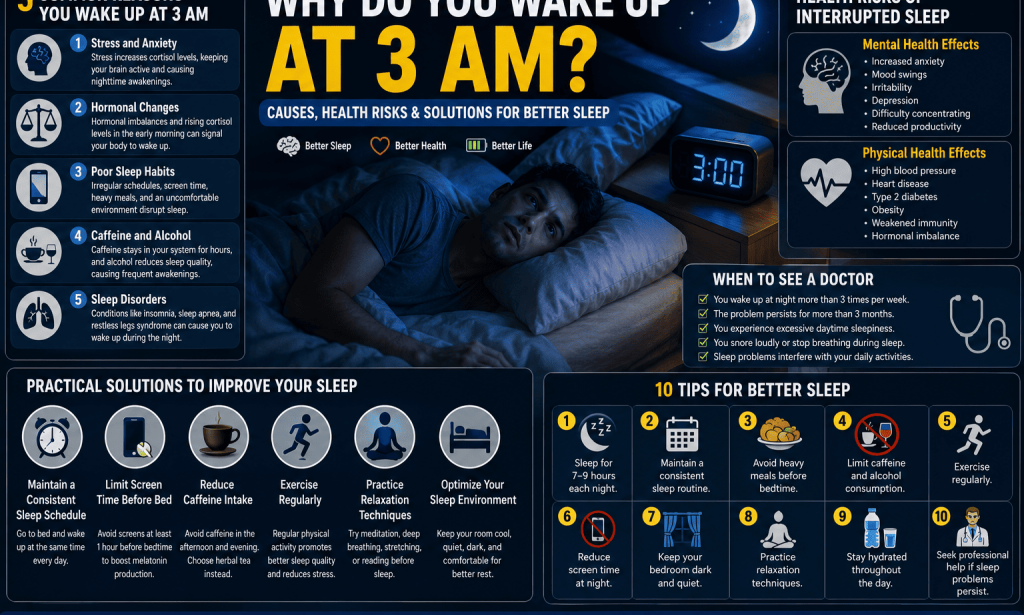
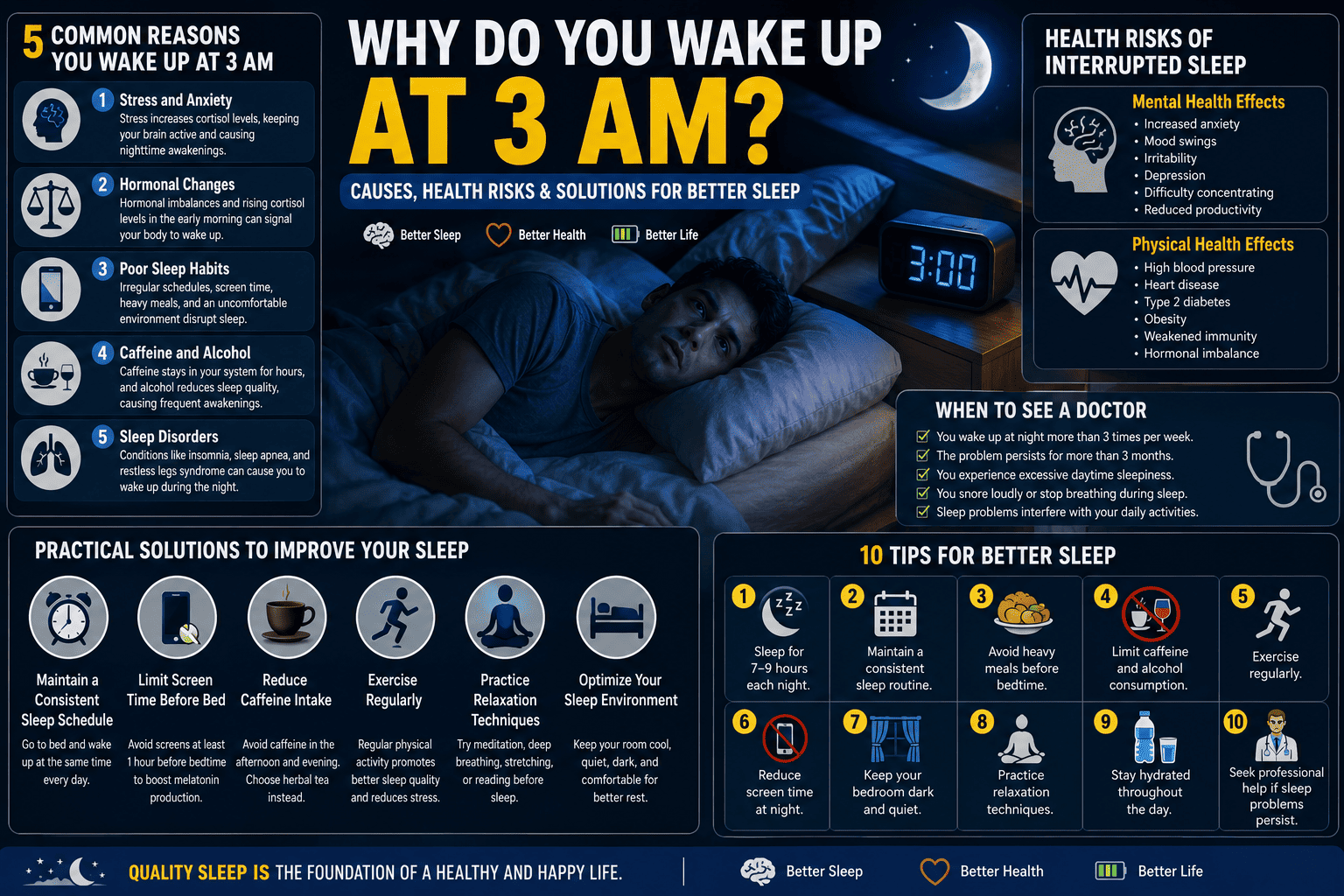
 1. Stress and Anxiety
One of the most common reasons people wake up during the night is stress. Financial worries, work pressure, relationship issues, or overthinking can keep your brain active even while your body is asleep.
Stress increases the production of cortisol, often called the "stress hormone." Elevated cortisol levels can disrupt your sleep cycle and cause you to wake up unexpectedly during the night.
2. Hormonal Changes
Your body's internal clock, also known as the circadian rhythm, regulates hormone production throughout the day and night. During the early morning hours, cortisol levels naturally begin to rise in preparation for waking up.
If your hormones are out of balance, your body may signal you to wake up earlier than necessary, particularly around 3 AM.
3. Poor Sleep Habits
Irregular sleeping schedules can significantly affect sleep quality. Going to bed at different times every night or sleeping too little may cause disruptions in your sleep cycle.
Common sleep habits that contribute to nighttime awakenings include:
- Using electronic devices before bedtime.
- Eating heavy meals late at night.
- Sleeping in an uncomfortable environment.
- Inconsistent sleep schedules.
4. Caffeine and Alcohol Consumption
Many people underestimate the effects of caffeine and alcohol on sleep. Coffee, energy drinks, and certain soft drinks can remain in your system for several hours.
Similarly, alcohol may initially make you feel sleepy, but it often reduces sleep quality and causes frequent awakenings during the second half of the night.
5. Sleep Disorders
Certain sleep disorders may cause people to wake up repeatedly during the night. These include:
- Insomnia
- Sleep apnea
- Restless legs syndrome
- Chronic pain-related sleep disturbances
Sleep apnea, in particular, is a serious condition in which breathing repeatedly stops and starts during sleep. Individuals with sleep apnea often wake up suddenly without realizing the cause.
Health Risks of Interrupted Sleep
Frequently waking up at night can have both short-term and long-term effects on your health.
Mental Health Effects
Poor sleep is closely linked to mental health problems. Chronic sleep disruption may lead to:
- Increased anxiety
- Mood swings
- Irritability
- Depression
- Difficulty concentrating
- Reduced productivity
Your brain requires adequate sleep to process emotions and memories effectively. Sleep deprivation can negatively impact emotional stability and cognitive performance.
Physical Health Effects
Interrupted sleep can also affect various bodily functions, including:
- Immune system performance
- Blood pressure regulation
- Hormonal balance
- Metabolism
- Heart health
Several studies suggest that long-term sleep deprivation may increase the risk of:
- High blood pressure
- Type 2 diabetes
- Obesity
- Cardiovascular disease
- Weakened immunity
Reduced Daily Performance
People who do not get quality sleep often experience:
- Daytime fatigue
- Reduced focus and concentration
- Poor decision-making abilities
- Lower energy levels
- Increased stress levels
Sleep is essential for maintaining both physical and mental performance throughout the day.
When Should You See a Doctor?
Occasionally waking up at 3 AM is usually harmless. However, you should consider consulting a healthcare professional if:
- You wake up at night more than three times per week.
- The problem persists for longer than three months.
- You experience excessive daytime sleepiness.
- You snore loudly or stop breathing during sleep.
- Sleep problems interfere with your daily activities.
Early diagnosis can help identify underlying sleep disorders or medical conditions that require treatment.
Practical Solutions to Improve Your Sleep
Maintain a Consistent Sleep Schedule
Try going to bed and waking up at the same time every day, including weekends. Consistency helps regulate your body's internal clock.
Limit Screen Time Before Bed
Avoid using smartphones, tablets, or computers at least one hour before bedtime. Blue light exposure can suppress melatonin production and delay sleep.
Reduce Caffeine Intake
Avoid consuming caffeine late in the afternoon or evening. Consider switching to herbal tea or caffeine-free beverages before bedtime.
Exercise Regularly
Regular physical activity promotes better sleep quality. Even a 30-minute walk each day can improve your sleep patterns.
Practice Relaxation Techniques
Stress management techniques such as:
- Meditation
- Deep breathing exercises
- Light stretching
- Reading a book
can help calm your mind before sleep.
Optimize Your Sleep Environment
Make your bedroom comfortable by:
- Keeping it cool and quiet.
- Using comfortable pillows and mattresses.
- Minimizing light exposure.
- Reducing noise distractions.
10 Tips for Better Sleep
- Sleep for 7–9 hours each night.
- Maintain a consistent sleep routine.
- Avoid heavy meals before bedtime.
- Limit caffeine and alcohol consumption.
- Exercise regularly.
- Reduce screen time at night.
- Keep your bedroom dark and quiet.
- Practice relaxation techniques.
- Stay hydrated throughout the day.
- Seek professional help if sleep problems persist.

You must be logged in to post a comment.