
 What Is an E-Commerce Business?
An e-commerce business is any business that buys or sells products or services through the internet. Customers can browse products, place orders, make payments, and receive deliveries without visiting a physical store.
Popular types of e-commerce businesses include:
- Business-to-Consumer (B2C)
- Business-to-Business (B2B)
- Consumer-to-Consumer (C2C)
- Direct-to-Consumer (D2C)
Some common e-commerce products include:
- Fashion and apparel
- Electronics
- Home and lifestyle products
- Digital products
- Beauty and skincare items
- Educational resources
The flexibility and scalability of e-commerce make it one of the most attractive business models for entrepreneurs.
Choosing the Right E-Commerce Business Model
Selecting the right business model is one of the most important decisions when starting an online store.
1. Dropshipping
With dropshipping, you don't need to keep inventory. Products are shipped directly from suppliers to customers.
Advantages:
- Low startup costs
- No inventory management
- Easy to scale
Disadvantages:
- Lower profit margins
- Less control over shipping and product quality
2. Private Labeling
Private labeling allows you to sell products under your own brand name.
Advantages:
- Strong brand identity
- Higher profit potential
- Customer loyalty opportunities
3. Print-on-Demand
This model is ideal for custom-designed products such as:
- T-shirts
- Mugs
- Posters
- Phone cases
Products are manufactured only when customers place orders.
4. Manufacturing Your Own Products
Creating your own products offers greater control and branding opportunities, although it requires higher investment and planning.
Choose the business model that best matches your budget, skills, and goals.
Finding Profitable Products
One of the biggest reasons e-commerce businesses fail is choosing the wrong products.
Before launching your store, conduct market research by analyzing:
- Customer demand
- Product competition
- Profit margins
- Market trends
- Customer reviews
Look for products that:
- Solve real problems
- Have growing demand
- Offer healthy profit margins
- Can be marketed effectively online
Avoid selling products solely because they are trending unless you understand their long-term market potential.
Building Your Online Store
Your website is the foundation of your e-commerce business.
A successful online store should include:
User-Friendly Design
Your website should be:
- Easy to navigate
- Mobile-friendly
- Fast-loading
- Professional-looking
Essential Pages
Include:
- Homepage
- Product pages
- About Us page
- Contact page
- Shipping policy
- Return and refund policy
- Privacy policy
Product Descriptions
Write clear and informative product descriptions that explain:
- Features
- Benefits
- Specifications
- Usage instructions
High-quality product images also improve customer confidence and increase conversions.
Payment and Shipping Strategies
Providing convenient payment options improves customer satisfaction.
Common payment methods include:
- Credit and debit cards
- Digital wallets
- Online payment gateways
- Bank transfers
For shipping, focus on:
- Reliable delivery services
- Reasonable shipping costs
- Tracking options
- Fast delivery times
Clear communication regarding delivery times can help reduce customer complaints.
Marketing Your E-Commerce Business
Even the best products will not sell without proper marketing.
1. Search Engine Optimization (SEO)
SEO helps your website rank higher in search engine results.
Focus on:
- Keyword research
- Optimized product pages
- Quality content
- Technical SEO improvements
2. Social Media Marketing
Use platforms such as:
- YouTube
Create valuable content that builds trust and encourages engagement.
3. Email Marketing
Email marketing remains one of the most effective ways to increase sales.
Use emails for:
- Product promotions
- Discounts
- Customer updates
- Cart recovery campaigns
4. Paid Advertising
Advertising can help grow your business faster.
Popular options include:
- Search ads
- Social media ads
- Shopping ads
- Retargeting campaigns
Always monitor advertising performance to maximize your return on investment.
Customer Service and Retention
Successful e-commerce businesses focus on customer relationships.
Provide:
- Fast responses
- Clear communication
- Easy return policies
- Helpful support
Happy customers are more likely to:
- Purchase again
- Recommend your business
- Leave positive reviews
Customer retention is often more profitable than constantly acquiring new customers.
Common Beginner Mistakes
Many entrepreneurs make avoidable mistakes when starting their online businesses.
1. Choosing Products Without Research
Poor product selection can significantly reduce sales opportunities.
2. Ignoring Branding
A professional brand creates trust and improves customer loyalty.
3. Neglecting SEO
Without SEO, customers may struggle to find your store organically.
4. Poor Customer Support
Slow responses and unclear policies can damage your reputation.
5. Overspending on Advertising
Spending large amounts on ads without proper strategy can quickly drain your budget.
Always test and optimize your marketing campaigns.
Future Trends in E-Commerce
The future of e-commerce continues to evolve rapidly.
Emerging trends include:
- Artificial intelligence-powered shopping experiences
- Personalized product recommendations
- Voice commerce
- Mobile shopping growth
- Sustainable business practices
- Automated customer support
- Social commerce integration
Businesses that adapt to technological changes will have a competitive advantage in the coming years.
Practical Tips for Success
Here are some strategies for building a successful e-commerce business:
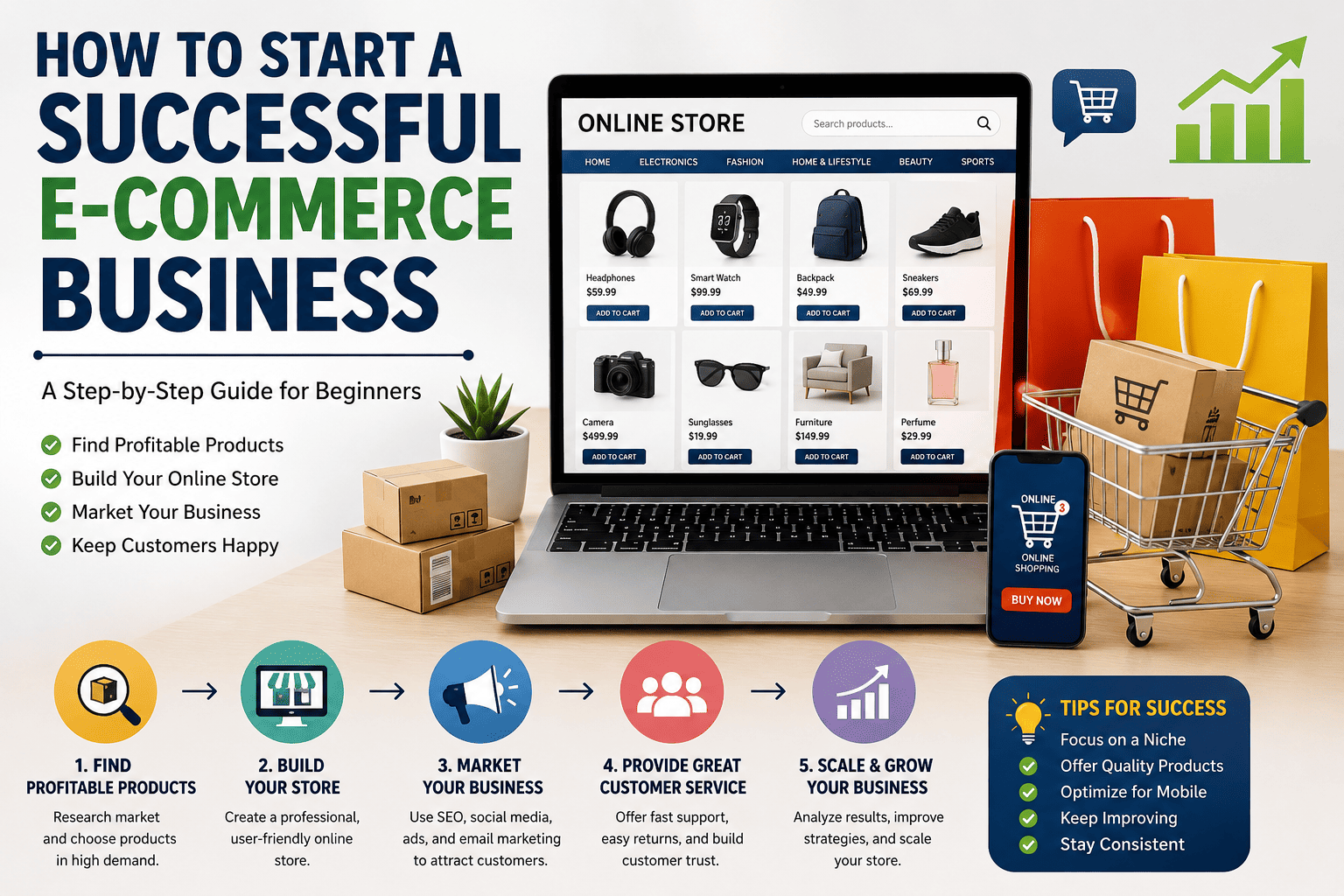
- Start with a niche market.
- Focus on solving customer problems.
- Invest in branding and customer experience.
- Optimize your website for mobile users.
- Learn basic SEO techniques.
- Build an email list from day one.
- Monitor business analytics regularly.
- Continuously improve your products and services.
Consistency and patience are essential for long-term success.
Frequently Asked Questions (FAQs)
1. Is starting an e-commerce business expensive?
No. Many business models, such as dropshipping and print-on-demand, can be started with relatively low investment.
2. What products are best for e-commerce?
Products with strong demand, healthy profit margins, and clear customer benefits are usually good options.
3. Do I need a website for my online store?
While marketplaces are useful, having your own website provides greater control over branding and customer relationships.
4. How long does it take to become profitable?
Profitability depends on your product selection, marketing strategy, and consistency. Many successful businesses require several months of continuous improvement.

You must be logged in to post a comment.