
 What Is Cash Flow Management?
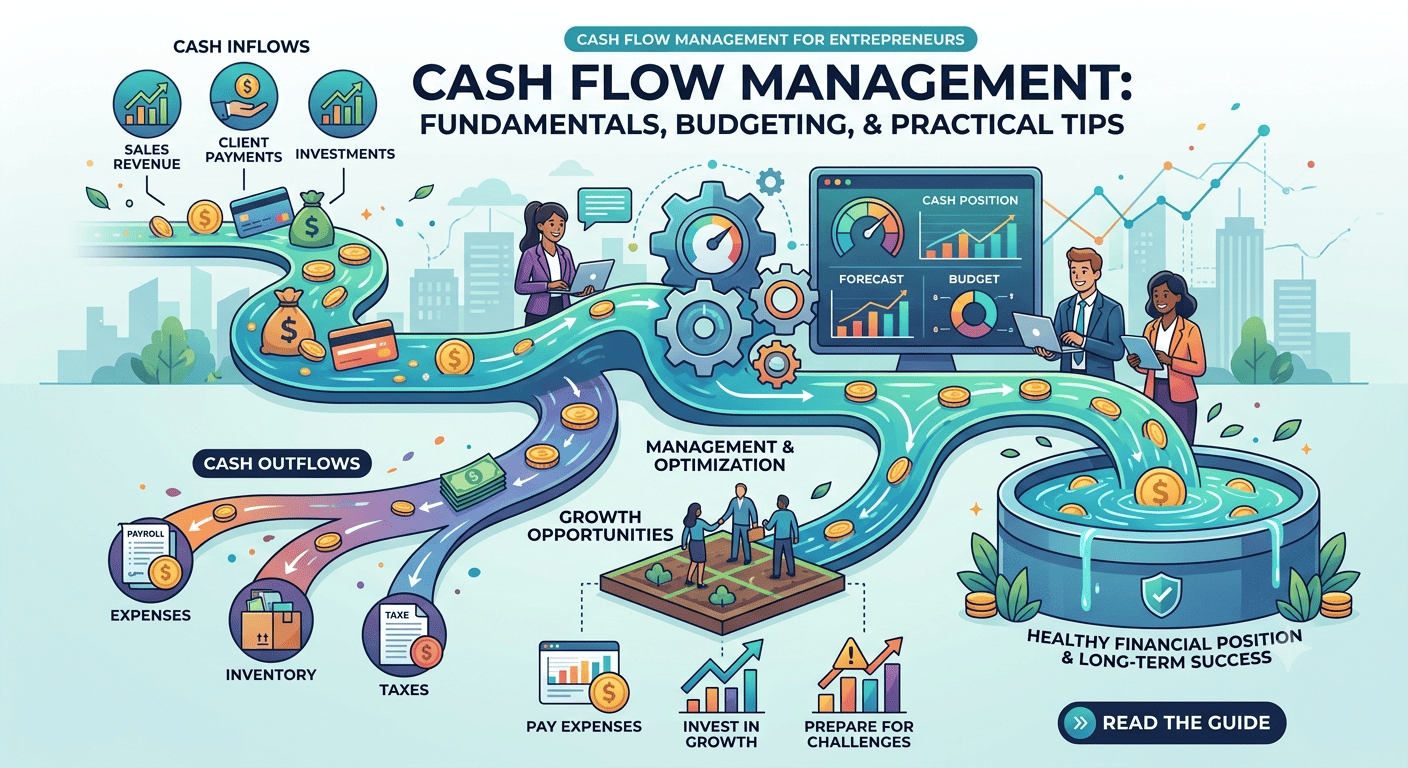
Cash flow management is the process of monitoring, analyzing, and optimizing the money entering and leaving your business.
There are two main types of cash flow:
Cash Inflow
Cash inflow includes:
- Sales revenue
- Investment income
- Loan proceeds
- Customer payments
- Other business income
Cash Outflow
Cash outflow includes:
- Rent and utilities
- Employee salaries
- Inventory purchases
- Marketing expenses
- Loan repayments
- Business subscriptions and software costs
Positive cash flow means your business earns more money than it spends, while negative cash flow means your expenses exceed your income.
Maintaining positive cash flow is essential for business sustainability.
Why Cash Flow Matters in Business
Many entrepreneurs focus only on profits without understanding their actual cash position.
Proper cash flow management helps businesses:
- Pay bills on time
- Avoid financial emergencies
- Improve business stability
- Make informed investment decisions
- Increase growth opportunities
- Build financial confidence
A business may generate significant revenue but still face problems if customer payments are delayed or expenses are poorly managed.
Cash flow provides a realistic picture of your business's financial health.
Tracking Income and Expenses
One of the most important habits for entrepreneurs is tracking every dollar that enters or leaves the business.
Monitor:
Income Sources
- Product sales
- Service payments
- Subscription income
- Affiliate commissions
- Investment returns
Business Expenses
- Fixed expenses
- Variable expenses
- Operational costs
- Marketing budgets
- Taxes and fees
Maintaining accurate records helps identify financial trends and areas that require improvement.
Using accounting software or spreadsheets can simplify this process.
Managing Business Budgets
A business budget acts as a financial roadmap.
When creating a budget, consider:
Essential Expenses
Prioritize:
- Salaries
- Rent
- Inventory
- Utilities
- Software tools
Growth Expenses
Allocate funds for:
- Marketing campaigns
- Business development
- Product improvements
- Employee training
Emergency Funds
Unexpected expenses are common in business. Maintaining a financial reserve can protect your company during difficult periods.
Budgeting allows entrepreneurs to make smarter financial decisions and avoid unnecessary spending.
Cash Flow Forecasting Techniques
Cash flow forecasting helps predict future financial performance.
Step 1: Estimate Monthly Revenue
Review:
- Sales trends
- Customer payment schedules
- Seasonal demand
Step 2: Estimate Expenses
Calculate expected costs such as:
- Inventory
- Payroll
- Advertising
- Operational expenses
Step 3: Identify Potential Cash Shortages
Forecasting helps entrepreneurs prepare for periods when income may temporarily decrease.
Step 4: Adjust Financial Strategies
Businesses can:
- Delay unnecessary expenses
- Increase marketing efforts
- Improve payment collection processes
Forecasting improves financial planning and reduces business risks.
Practical Cash Flow Management Strategies
Successful entrepreneurs follow disciplined financial habits.
1. Separate Personal and Business Finances
Maintaining separate accounts improves financial organization and simplifies tax reporting.
2. Monitor Cash Flow Weekly
Do not wait until the end of the month to review finances.
Track:
- Sales performance
- Expense reports
- Outstanding payments
3. Maintain Emergency Cash Reserves
Financial emergencies can occur unexpectedly. Maintaining cash reserves improves business stability.
4. Reduce Unnecessary Expenses
Review business expenses regularly and eliminate:
- Unused subscriptions
- Inefficient marketing campaigns
- Non-essential purchases
5. Improve Payment Collection
Late payments can damage cash flow.
Strategies include:
- Clear payment policies
- Automated invoices
- Payment reminders
- Multiple payment options
Common Financial Mistakes Entrepreneurs Make
Many businesses experience financial problems because of avoidable mistakes.
1. Ignoring Cash Flow Reports
Some entrepreneurs focus only on sales numbers while ignoring financial statements.
Regular cash flow analysis is essential.
2. Overspending During Growth
Rapid business growth often leads to increased expenses.
Avoid:
- Hiring too quickly
- Purchasing unnecessary equipment
- Overspending on advertising
Growth should be financially sustainable.
3. Mixing Personal and Business Money
This creates confusion and makes financial planning difficult.
Always maintain separate accounts.
4. Not Preparing for Seasonal Changes
Some businesses experience seasonal fluctuations in revenue.
Cash flow forecasting helps prepare for slower periods.
5. Poor Inventory Management
Excess inventory can reduce available cash and increase storage costs.
Maintain an inventory strategy based on customer demand.
Building a Healthy Cash Flow System
Creating a sustainable financial system requires consistency.
Successful businesses often follow these practices:
Daily Habits
- Monitor sales reports.
- Track business expenses.
- Review outstanding payments.
Weekly Habits
- Analyze cash flow trends.
- Update budgets.
- Review marketing performance.
Monthly Habits
- Prepare financial reports.
- Forecast future cash needs.
- Evaluate business profitability.
Small financial habits can significantly improve long-term business performance.
Technology Tools for Cash Flow Management
Modern entrepreneurs can use financial tools to simplify cash flow management.
Popular features include:
- Expense tracking
- Automated invoicing
- Financial reporting
- Budget planning
- Revenue forecasting
Using technology reduces human errors and improves financial visibility.
Benefits of Positive Cash Flow
Businesses with healthy cash flow can:
- Expand operations confidently.
- Invest in growth opportunities.
- Pay suppliers and employees on time.
- Handle unexpected expenses.
- Improve business valuation.
- Reduce financial stress.
Positive cash flow is one of the strongest indicators of business success.

You must be logged in to post a comment.